
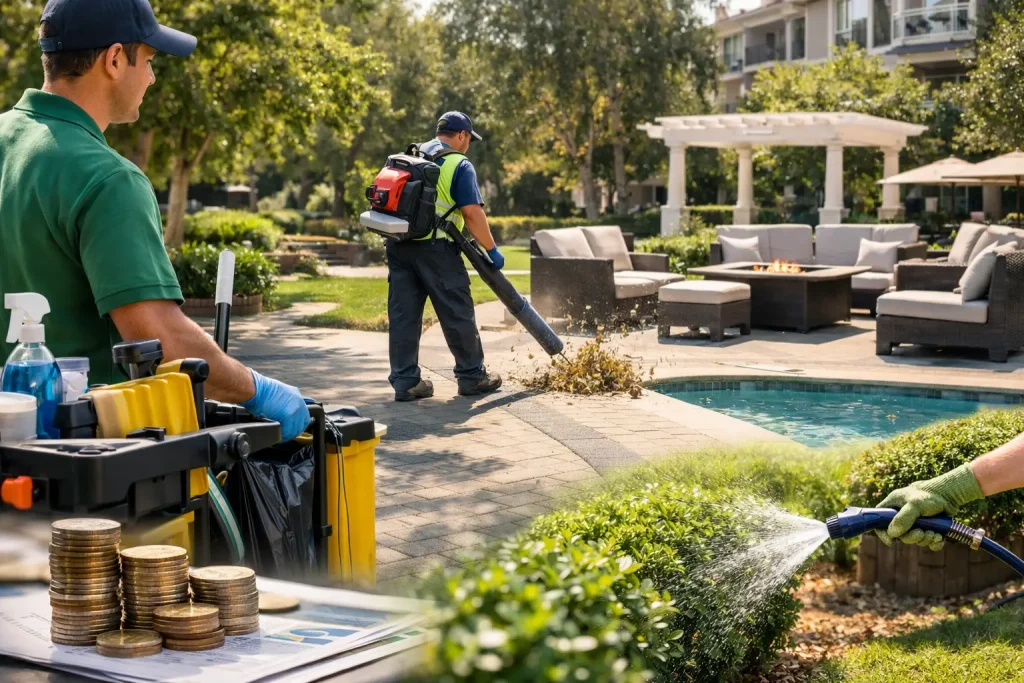
A stained entry walkway, algae-darkened pool deck, or oil-marked parking area can make an otherwise well-managed community feel neglected. HOA common area cleaning is not simply about making surfaces look better for the next inspection. It is routine property care that helps associations protect shared assets, reduce avoidable hazards, and preserve the curb appeal residents expect from their community.
For boards and property managers, the challenge is finding a cleaning plan that is thorough without being disruptive, tough on buildup without damaging surfaces, and responsible about where dirty runoff goes. The right approach depends on the surface, the source of the staining, pedestrian traffic, landscaping, drainage, and the community’s maintenance goals.
Why HOA Common Area Cleaning Needs a Planned Approach
Common areas receive more wear than most individual homes. Residents, guests, delivery drivers, maintenance crews, and service vehicles all use the same sidewalks, breezeways, trash enclosures, clubhouses, gates, drive lanes, and parking spaces. Over time, dirt settles into concrete, tire marks collect near turns and entrances, and moisture encourages algae and mildew on shaded surfaces.
Along the Southern California coast, salt air, morning moisture, windblown debris, and intense sun can create a particularly uneven pattern of buildup. A north-facing walkway may develop slick organic growth while a nearby stucco wall shows dusty streaks or irrigation overspray. Treating every surface with the same machine setting or chemical mix is a fast way to create damage, strip finishes, or leave inconsistent results.
Professional cleaning begins with an assessment. The crew should identify what the surface is made of, what is causing the discoloration, where runoff will travel, and whether residents need temporary access around the work area. This step matters because high-pressure cleaning may be appropriate for durable concrete in some situations, while painted surfaces, stucco, roofing, siding, and outdoor furniture often require a lower-pressure soft-wash method.
A maintenance-first mindset also helps an HOA budget more effectively. Maintain it, don’t replace it. Regular removal of grime, algae, salts, and corrosive residues can help shared surfaces age more evenly and reduce the need for premature repairs or replacement.
The Areas Residents Notice First
The most visible common areas are usually the first to generate resident comments. Entry monuments, gates, sidewalks, mail centers, pool areas, clubhouse patios, and outdoor seating set the tone for the entire property. When these areas are clean, the community feels cared for before anyone reaches a front door.
Parking areas and garage approaches deserve equal attention, even though they are often less decorative. Oil spots, tire marks, leaks, and accumulated grime can make pavement look poorly maintained. In some cases, oil-stain treatment and targeted surface cleaning can significantly improve the appearance of a drive lane or parking stall. Results depend on how long the stain has been present and how deeply it has penetrated, so a reputable contractor should set realistic expectations rather than promise that every mark will disappear completely.
Trash enclosures are another high-priority area. Leaks, residue, odors, and splatter can build up quickly, particularly during warm weather. Cleaning these spaces on a schedule improves appearance and helps keep unpleasant residue from spreading onto adjacent pavement.
Play equipment and outdoor furniture require extra care. These surfaces should be cleaned thoroughly, but aggressive pressure can damage coatings, force water into joints, or create rough spots on certain materials. Surface-specific cleaning methods protect the equipment residents use every day.
Safety and Runoff Are Part of the Job
A slippery walkway is not just a curb-appeal issue. Algae, mildew, moss, and damp grime can reduce traction on concrete, stairs, pool decks, and shaded paths. Cleaning can help restore a safer walking surface, especially in high-traffic areas, although damaged concrete, drainage problems, and worn coatings may need separate attention.
Runoff management is equally important. Water used to clean parking lots, sidewalks, dumpster pads, and building exteriors can carry sediment, oil residue, cleaning agents, and other contaminants toward storm drains. A contractor should not treat that water as an afterthought.
For communities that value environmental responsibility, closed-loop water recovery is a meaningful difference. This process captures wastewater during cleaning so contaminated runoff is kept out of storm drains and waterways. It also supports more controlled use of water on larger common-area projects. The exact setup depends on access, drainage, surface size, and the scope of work, but runoff planning should be discussed before the work begins.
What a Practical Cleaning Schedule Looks Like
There is no one schedule that fits every HOA. A quiet inland community with limited landscaping may need less frequent cleaning than a coastal property with mature trees, pool traffic, shaded walkways, and busy parking areas. The goal is to clean before buildup becomes a larger maintenance problem, not to wait until the property looks visibly neglected.
Many associations benefit from scheduling high-traffic zones more often than less-used areas. Walkways near entrances, pool decks, dumpster pads, parking sections, and clubhouse patios may need attention several times a year. Building exteriors, roof surfaces, solar panels, gutters, and remote sidewalks may follow a different interval based on their condition.
Seasonal planning makes the process easier. A spring cleaning can address winter moisture, windblown debris, and organic growth. A later service can prepare patios, pool areas, and entrances for heavier summer use. Before rainy periods, gutter clearing and targeted cleaning can help reduce the buildup that contributes to drainage issues.
A site walkthrough gives a board or manager a clearer picture of priorities. Instead of approving a vague request to pressure wash everything, they can divide the property into immediate needs, routine maintenance areas, and surfaces that need specialized treatment.
Choosing a Contractor for HOA Common Area Cleaning
Price matters, but it should not be the only deciding factor. A low quote can become expensive if the contractor uses excessive pressure on delicate finishes, leaves wastewater to run into drains, damages landscaping, or creates avoidable disruption for residents.
Look for a provider that can explain how it will handle different materials and conditions. Concrete, pavers, stucco, painted surfaces, composite furniture, tile, roofing, and solar panels should not be approached identically. Ask how the crew will manage access, protect nearby landscaping, address runoff, and communicate around resident traffic.
It also helps to work with a company that provides a clear estimate and a defined scope. The estimate should identify the areas to be cleaned, any specialty treatments such as oil-stain or graffiti removal, and factors that could affect the final result. Older stains, damaged coatings, loose paint, failed sealant, and deep discoloration can limit what cleaning alone can accomplish.
Channel Islands Pressure Washing approaches common-area work with surface-appropriate methods, professional equipment, detailed finishing, and water-recovery practices when the project calls for them. A final walkthrough gives property managers a chance to review the completed work and identify any remaining concerns while the crew is still engaged.
Make Service Easy for Residents and Managers
The best cleaning projects are planned around the people using the property. For a pool deck or clubhouse patio, that may mean scheduling during lower-traffic hours. For parking areas, it may require advance notice, temporary space closures, or cleaning in phases so residents are not displaced all at once.
The process should stay simple: arrange a site assessment, receive a transparent no-obligation estimate, then schedule service around the community’s needs. Before the appointment, managers can send clear notices about parking restrictions, closed walkways, pet access, and expected work hours. A little communication prevents most frustrations.
After service, keep notes on what was cleaned, the condition of problem areas, and which surfaces may need attention next. That record makes future budgeting easier and helps the board spot recurring issues, such as irrigation overspray on stucco or repeated oil leaks in the same parking section.
A clean shared property does more than satisfy an appearance standard. It gives residents a safer, more welcoming place to come home to while helping the association care for the surfaces it has already invested in.
Pingback: Why Paver Sinking, Shifting, and Lifting Happens – Channel Islands Pressure Washing, LLC