
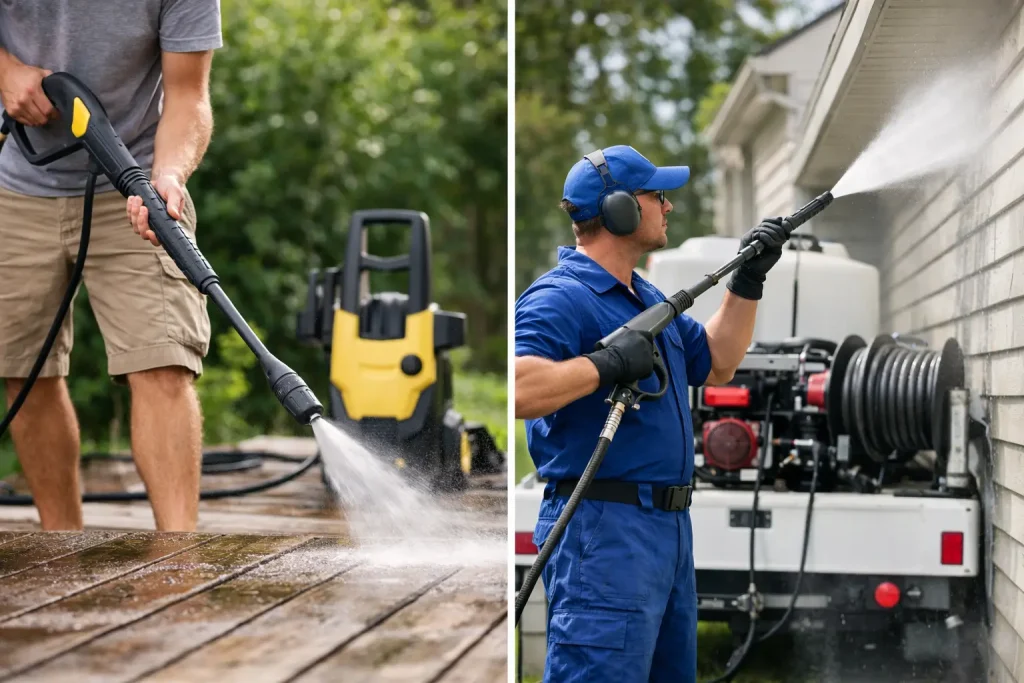
A rental pressure washer can make a driveway look like an easy Saturday project – until the spray cuts a visible line into concrete, blasts water behind siding, or sends oily runoff toward a storm drain. The choice between DIY versus professional power washing is not simply about who holds the wand. It is about the surface, the stain, the equipment, the surrounding landscape, and what happens to the water after the cleaning is done.
For a lightly dusty patio or a small patch of surface dirt, doing the work yourself may be reasonable. For roofs, stucco, painted surfaces, commercial walkways, oil-stained parking areas, and properties near landscaped drainage or waterways, professional service is often the safer and more cost-effective route. The right decision protects your property now and helps you avoid replacing materials before their time. Maintain it, don’t replace it.
DIY Versus Professional Power Washing: The Real Difference
A consumer pressure washer and a professional exterior-cleaning service can both move dirt. That is where the similarity often ends. Effective cleaning depends on matching the correct water pressure, nozzle, cleaning solution, dwell time, rinse method, and finishing work to the material being cleaned.
DIY equipment is designed for general household use. It can be useful for rinsing loose dirt from durable concrete, pavers, or outdoor furniture when operated carefully. But higher pressure is not automatically better. Too much force can etch concrete, strip paint, scar wood, loosen mortar, damage window seals, force water under shingles, and leave permanent streaks on stucco.
Professional crews use commercial-grade equipment, but the most valuable difference is judgment. A trained technician knows when to use pressure, when to use a low-pressure soft wash, when a degreaser or targeted stain treatment is needed, and when manual detail work will produce a better result than more water pressure. Cleaning a roof, solar panels, siding, gutters, and a heavily trafficked sidewalk should not involve the same setting or method.
The cost question is more than the rental fee
DIY can look less expensive at first. You may only need to pay for a machine rental, cleaning products, protective gear, and a few hours of your time. That can make sense for a modest, low-risk task where you already understand the surface and have a safe area to work.
The calculation changes if the job requires multiple rentals, specialty solutions, stain removers, hose extensions, ladders, or repeat attempts. It changes even faster when an incorrect technique creates a repair bill. Repainting a pressure-marked wall, replacing damaged wood, repairing compromised roof materials, or correcting a streaked driveway can cost far more than a professional cleaning appointment.
For commercial properties, labor time also matters. A property manager who assigns staff to clean a storefront walkway or parking area may pull them away from tenant needs and routine operations. Professional cleaning can be scheduled around foot traffic, business hours, resident access, or deliveries, helping the property stay presentable without disrupting the day.
When DIY Power Washing Can Be a Sensible Choice
DIY is not always a bad idea. A homeowner with a clean water source, appropriate safety equipment, and a small durable surface may get good results by taking a cautious approach. The key is to keep the scope limited.
A lightly soiled concrete patio, a small section of pavers, or outdoor furniture that can tolerate rinsing may be manageable when there are no oil stains, paint concerns, delicate finishes, or drainage issues. Start with the lowest effective pressure, test an inconspicuous area, keep the nozzle moving, and maintain a safe distance from the surface. Never treat a pressure washer like a paint scraper.
DIY becomes less suitable when the work involves heights, electrical components, chemical cleaners, extensive staining, delicate materials, or runoff that could carry contaminants into gutters and storm drains. Roof cleaning is a clear example. Walking on a roof can create a fall hazard and may damage roofing materials, while aggressive washing can remove protective granules or push water where it does not belong.
Where Professional Cleaning Delivers More Value
Professional service is especially worthwhile when appearance, safety, preservation, and environmental responsibility all matter at once. That includes homes with stained stucco, grimy tile roofs, algae buildup, oil-marked driveways, dirty gutters, and neglected patios. It also includes HOA common areas, retail centers, restaurant exteriors, parking garages, loading areas, and sidewalks where the condition of the property reflects directly on the people who manage it.
Delicate surfaces need a surface-specific method
Not every exterior needs power washing in the traditional sense. Low-pressure soft washing is often the safer method for roofs, siding, painted trim, and other sensitive materials. Instead of relying on force, this approach uses the right cleaning treatment and a controlled rinse to address organic buildup such as algae, mildew, and grime.
This distinction matters along the Southern California coast, where marine moisture, dust, landscaping debris, and shade can leave exterior materials looking worn long before they are ready for replacement. A careful cleaning can restore color and curb appeal without the avoidable damage caused by excessive pressure.
Professional work also tends to include the details that change the finished appearance. Edges, corners, splash zones, tire marks, dog-urine staining near patios, and grime around exterior fixtures can require manual attention. A broad rinse may make a surface look better from the street, but detail work is what makes it look cared for up close.
Tough stains require more than water
Oil spots, tire marks, rust staining, graffiti, and embedded buildup in concrete are not always removed by pressure alone. In fact, simply blasting an oil stain can spread contaminated residue across a wider area. The right treatment may involve a surface-safe degreaser, dwell time, agitation, hot-water equipment where appropriate, and controlled recovery of the resulting wastewater.
There is no honest promise that every old stain will disappear completely. Age, previous treatments, porosity, sun exposure, and the type of contaminant all affect the result. A professional assessment should explain what is likely to improve, what may remain, and whether a second treatment or maintenance plan makes sense.
Runoff Is Part of the Job
One of the biggest differences in DIY versus professional power washing is what happens after the water leaves the surface. Wash water can pick up oil, dirt, detergents, heavy residue, paint particles, and other contaminants. Letting that water flow into a storm drain can carry it toward local waterways.
For homes and commercial sites, runoff handling is not an afterthought. It is part of responsible exterior maintenance. A qualified provider can assess drainage, contain wash water where needed, and use recovery methods appropriate for the site. Channel Islands Pressure Washing uses a closed-loop water recovery approach to capture runoff, reduce unnecessary water use, and help keep contaminated water out of waterways.
This is particularly valuable for parking areas, drive-through lanes, dumpster pads, shopping-center walkways, and any location with oil, grease, or high foot traffic. It also gives HOAs and facility managers greater confidence that their cleaning plan supports both property standards and environmental obligations.
Safety, Time, and Accountability Matter
Pressure washing is physical work with real risks. The spray can cause injury, ladders add fall hazards, and wet surfaces become slippery quickly. Improper use around electrical outlets, windows, rooflines, landscaping, and vehicles can create problems that are not obvious until later.
A professional team brings more than equipment. It brings a defined process: a site assessment, a clear estimate, scheduling that works for the property, careful cleaning, and a final walkthrough. That accountability matters when you are responsible for tenants, customers, residents, family members, or a property investment.
Ask practical questions before hiring anyone. How will they clean your particular material? Will they use pressure or soft washing? How do they protect plants, windows, and adjacent surfaces? How will they handle runoff? What result is realistic for the stains you have? Clear answers are usually a good sign that the provider has looked beyond the first layer of dirt.
Make the Decision Based on Risk, Not Just Price
If your project is small, low-risk, and limited to a durable surface, DIY may save money and give you acceptable results. Take your time, use minimal pressure, and stop if the surface begins to change color, texture, or finish.
If the job involves a roof, siding, stucco, windows, solar panels, deep stains, high traffic, sensitive landscaping, difficult drainage, or a commercial setting, professional cleaning is usually the stronger investment. You are paying for proper methods, safer operation, a more complete result, and fewer costly surprises.
Before you rent a machine or postpone the work another season, look closely at the surface and the water path around it. The best cleaning choice is the one that leaves your property cleaner, your materials intact, and your runoff handled responsibly.