
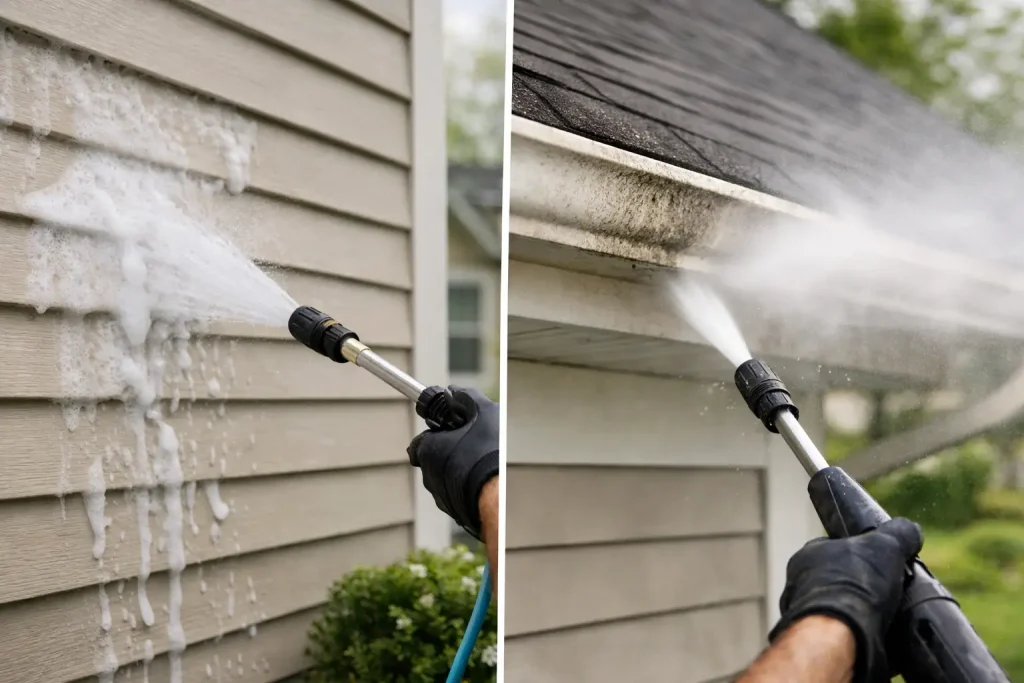
A black-streaked roof, green patio, stained stucco wall, and tire-marked driveway may all look like the same problem: dirt. They are not. Soft washing versus pressure washing is a decision about the material underneath the stain, the cause of the buildup, and how to clean it without creating expensive damage.
The right method can restore curb appeal, improve safety on slippery walkways, and help a property last longer. The wrong one can scar concrete, force water behind siding, strip paint, damage roof materials, or send dirty runoff toward storm drains. That is why a professional cleaning plan starts with the surface, not the machine.
Soft Washing Versus Pressure Washing: The Real Difference
Pressure washing removes surface contamination with a controlled stream of water at higher pressure. It is especially effective on durable hardscape materials that can handle mechanical force, such as properly cured concrete, pavers, brick, and some commercial walkways. Depending on the surface and stain, a technician may also use heat, detergent, degreaser, or specialty treatment to improve results.
Soft washing uses low pressure combined with surface-appropriate cleaning solutions. Rather than blasting away organic growth, the solution does the primary work by treating algae, mildew, mold, lichen, and other biological buildup. The area is then rinsed gently. Soft washing is designed for surfaces where high pressure could cause damage or drive water where it does not belong.
Neither method is automatically better. A concrete loading area covered in tire marks needs a different approach than a composite deck, clay tile roof, painted fence, or stucco exterior. The best result comes from matching the method to the material and the condition of the property.
Pressure Washing: Best for Durable, Hard Surfaces
Pressure washing is a practical choice when a surface is structurally sound, built to withstand cleaning force, and carrying embedded dirt, mud, gum, tire residue, or surface-level stains. Driveways, sidewalks, patios, parking areas, retaining walls, and many pool-deck surfaces often benefit from this method.
For commercial properties, a clean walkway does more than look better. It can reduce slip hazards from algae and grime, support a well-kept tenant environment, and help a storefront or retail center make a stronger first impression. In parking areas, targeted cleaning can address oil spots, mud, and tracked-in grime that make a property appear neglected.
Pressure must still be controlled. More pressure is not a mark of better work. Too much force can leave wand marks on concrete, damage mortar, erode joint sand between pavers, chip coatings, or create a visibly uneven finish. Experienced technicians adjust pressure, nozzle selection, water flow, distance, and cleaning pattern for the surface in front of them.
Soft Washing: Best for Roofs, Siding, and Sensitive Materials
Soft washing is generally the safer choice for roofs, painted siding, stucco, vinyl, wood, screens, gutters, and other delicate exterior materials. These surfaces may look tough from the ground, but they can be damaged easily by aggressive washing.
Roof stains are a common example. The dark streaks on shingles and tile are often biological growth, not simply loose dirt. High pressure may remove some visible staining while loosening granules from shingles, cracking or shifting fragile tile, or compromising the roof surface. A properly applied soft-wash treatment addresses the growth with low pressure and helps preserve the roof rather than wearing it down.
The same principle applies to stucco. A pressure setting that is fine for a driveway can scar a stucco finish or push water into small cracks. On siding, high pressure can force water behind panels and create moisture problems that are far more serious than the original dirt.
Which Cleaning Method Fits Each Surface?
A site assessment matters because material age, coatings, drainage, previous repairs, and the type of stain all affect the recommendation. As a general rule, these are the common matches:
- Concrete driveways, sidewalks, and parking areas: Controlled pressure washing is often effective for ground-in dirt, tire marks, mud, and many surface stains. Oil may require pretreatment and specialized spot treatment.
- Roofs: Soft washing is usually the appropriate method for removing algae, moss, mildew, and dark staining without aggressive force.
- Stucco, vinyl, painted exteriors, and gutters: Soft washing protects finishes while treating organic buildup, dust, and splatter marks.
- Patios, pavers, and pool decks: The right choice depends on the material, sealer condition, joint sand, and staining. These surfaces may need low to moderate pressure, specialty treatment, or both.
- Outdoor furniture and play equipment: Low-pressure cleaning and careful manual work help avoid damage to finishes, joints, and sensitive components.
There are exceptions. Older concrete can be more fragile than it appears. A sealed paver patio may need a gentler process than an unsealed one. Painted concrete, decorative coatings, solar panels, and weathered wood require their own methods. A reputable contractor should explain why a certain process is recommended instead of applying one setting to every surface.
Cleaning the Stain Without Creating Another Problem
For property owners near coastal waterways and storm-drain systems, runoff handling should be part of the conversation. Cleaning wastewater can carry dirt, oil, detergent residue, paint particles, and other contaminants. Letting that water flow unchecked into a gutter is not responsible property maintenance.
Channel Islands Pressure Washing uses a closed-loop water recovery approach when conditions call for it, capturing runoff for proper handling rather than allowing contaminated water to enter waterways. This is especially valuable for commercial sidewalks, parking areas, oil-stained drive lanes, and other locations where wash water can collect pollutants.
Water recovery is not a substitute for careful cleaning chemistry. The cleaning method, solution choice, dilution, dwell time, rinsing process, nearby landscaping, and drainage pattern all need attention. Plants should be protected, sensitive areas should be identified before work begins, and cleaning agents should be selected for the job rather than used carelessly.
This level of planning also reduces waste. A surface that is pretreated correctly often does not need to be repeatedly blasted with water. Thoughtful soft washing can use less unnecessary water than trying to force away organic growth with high pressure alone.
Why DIY Results Can Be Risky
Renting a pressure washer can seem straightforward until the wand cuts a line into a deck, strips paint from trim, or turns a small stain into a wide patch of uneven concrete. Consumer equipment can still produce enough force to cause damage, especially when used too close to the surface.
There is also a safety concern. Wet algae on patios and walkways can be slippery, cleaning solutions require proper handling, and ladders create additional risk around roofs and second-story exteriors. For commercial properties, crews also need to work around customers, vehicles, entrances, tenants, and operating hours.
Professional work is not just about having commercial-grade equipment. It includes knowing when to use low pressure, when to pretreat, when manual detail work is needed, how to protect landscaping, and how to inspect the finished area. A final walkthrough gives the property owner a chance to review the results and point out anything that needs attention before the job is complete.
A Better Maintenance Plan for Your Property
Waiting until stains become severe makes cleaning harder and can shorten the life of exterior finishes. Regular maintenance keeps algae from taking over shaded walkways, prevents roof discoloration from becoming a larger concern, and helps driveways, patios, storefronts, and common areas stay presentable between major projects.
The right schedule depends on the property. Homes near the coast may see faster algae growth from moisture and marine air. Retail centers and multifamily communities may need more frequent attention in high-traffic areas. A driveway with recurring oil leaks needs targeted treatment, while a roof may only need periodic inspection and cleaning.
A straightforward process starts with a site assessment, followed by a clear estimate and a scheduled service time that works for the property. The work should be tailored to the surfaces involved, not sold as a one-size-fits-all wash. Maintain it, don’t replace it – a careful cleaning decision now can help protect the exterior materials you paid to install.
Pingback: Is Runoff Recovery Required for Pressure Washing? – Channel Islands Pressure Washing, LLC
Pingback: Roof Wash Care That Protects Your Property – Channel Islands Pressure Washing, LLC
Pingback: How to Read Exterior Cleaning Reviews Well – Channel Islands Pressure Washing, LLC
Pingback: Playground Equipment Cleaning That Protects Kids – Channel Islands Pressure Washing, LLC