
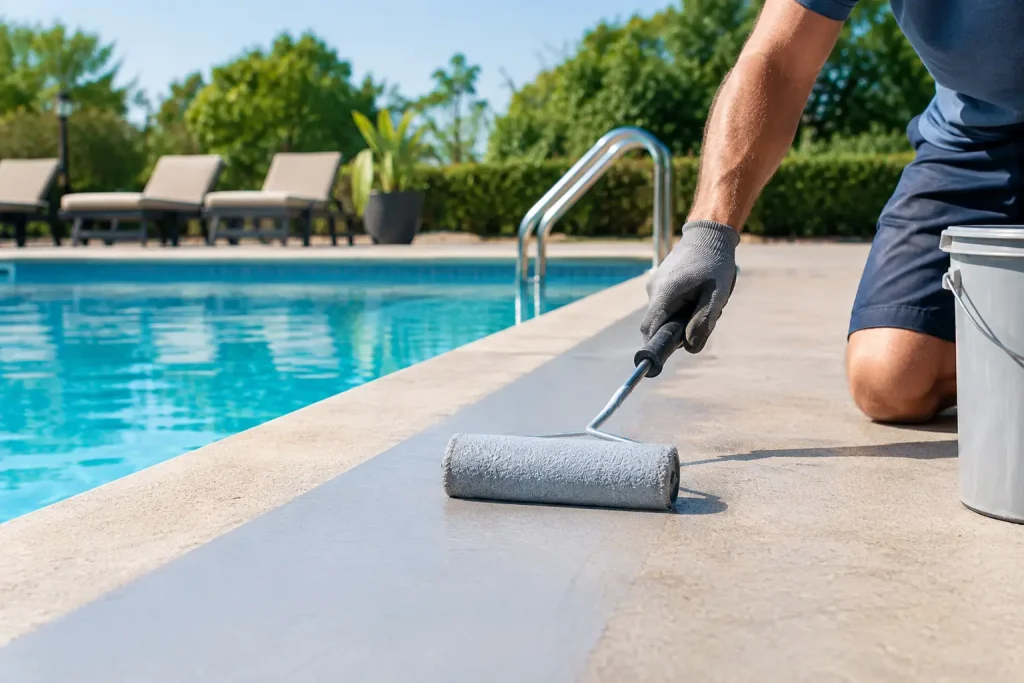
A pool deck can look worn out long before it is ready to be replaced. White mineral haze, sunscreen residue, leaf stains, algae, rust marks, and dark foot traffic paths often make concrete or pavers appear permanently damaged. This pool deck restoration guide helps property owners separate surface-level grime from true material failure, so they can make a sensible plan that protects safety, appearance, and their budget.
For homes, HOAs, apartment communities, and hospitality properties, the deck is more than a border around the pool. It is a high-visibility walking surface exposed to chlorinated water, bare feet, furniture drag marks, weather, and constant moisture. Restoring it thoughtfully can improve curb appeal and help prevent a small maintenance issue from turning into a larger repair project.
Start by Identifying What the Deck Actually Needs
“Restoration” can mean several different things. Sometimes it means a deep professional cleaning that reveals a sound surface underneath. Other times, it involves crack repair, joint stabilization, stain treatment, resealing, or a new coating. The right approach depends on the deck material and the condition below the dirt.
Concrete decks may show discoloration from algae, hard-water deposits, fertilizers, barbecue grease, and pool chemicals. Paver decks can collect debris and organic growth in the joints, while natural stone may develop mineral staining or surface dullness. Painted and coated decks need special care because aggressive pressure or the wrong chemical can remove the finish along with the grime.
Before scheduling any work, inspect the deck when it is dry. Look for these four signs that cleaning alone may not be enough:
- Cracks that are widening, uneven sections, or loose pavers that create a trip hazard.
- Flaking sealer, peeling coating, or a chalky finish that transfers easily to shoes or furniture.
- Persistent white deposits that may point to efflorescence, mineral buildup, or moisture moving through the slab.
- Slick green or black growth in shaded areas, especially near planters, drains, gates, and the waterline.
A sound deck with embedded dirt is usually a strong candidate for restoration through cleaning and targeted treatment. A deck with structural movement, failed drainage, or widespread coating failure may need repair work before cleaning can provide lasting results.
Why Pool Deck Cleaning Is Not a One-Pressure Setting Job
A common mistake is treating a pool deck like a driveway. While some concrete can handle carefully controlled pressure washing, pool areas include more variables: decorative finishes, coping, expansion joints, sealers, drains, nearby landscaping, glass fencing, and pool water itself.
Too much pressure held too close to the surface can etch concrete, expose aggregate, scar pavers, and strip coatings. It can also blow out sand or joint material between pavers. On the other hand, insufficient cleaning may leave behind the organic film that causes slippery conditions and quickly returns after the surface dries.
A professional approach starts with surface identification and a test area. The cleaning method should match the material, stain type, and existing finish. This may include controlled pressure washing, soft washing for delicate adjacent surfaces, pre-treatment for organic growth, and manual detail work around coping, furniture bases, corners, drains, and railings.
The goal is not to make the deck look artificially new for a day. It is to remove the buildup without shortening the life of the surface. As we say at Channel Islands Pressure Washing, “Maintain it, don’t replace it!”
A Practical Pool Deck Restoration Guide: The Right Order of Work
The order matters because each stage affects the next. Cleaning a deck before identifying loose material can make an existing problem worse. Sealing before moisture, algae, or residue is removed can trap staining below the finish.
1. Clear the Area and Protect What Is Nearby
Move furniture, umbrellas, rugs, toys, and portable planters from the deck. Cover or relocate sensitive items when appropriate, and make sure electrical connections and outdoor kitchen components are protected. Pool equipment, drains, landscaping, and the pool basin itself should be considered before water or cleaning solutions are introduced.
This is also the time to check drainage. Standing water near the pool deck is not just an appearance problem. It encourages algae growth, leaves mineral deposits, and can contribute to slippery pathways. If water consistently pools in one location, cleaning will improve the appearance but will not correct the drainage issue.
2. Treat Stains Based on Their Cause
Not all stains respond to the same cleaner. Organic growth from shade and moisture needs a different treatment than rust from patio furniture, oil from an outdoor grill, or calcium deposits from splash-out. A generic harsh cleaner may lighten one spot while damaging the surrounding surface.
For example, dark patches near planters or in shaded corners are often organic growth. Orange-brown marks may be rust, while white crusty residue near the pool edge may be mineral buildup. A trained technician can identify the likely cause, select a surface-appropriate treatment, and allow proper dwell time before rinsing.
Avoid mixing household chemicals or applying products without confirming they are safe for the deck material and the pool environment. Chemical runoff can harm landscaping, enter storm drains, or affect pool-water balance.
3. Clean Evenly, Then Detail the Edges
An uneven cleaning pattern is one of the most noticeable outcomes of rushed work. Professionals use consistent passes, appropriate pressure, and the right tools to clean broad sections without leaving stripes or zebra marks. Then they detail the places machines miss: expansion joints, coping edges, stair treads, drain covers, fence lines, and tight corners.
This finishing work makes a real difference on commercial properties and HOA common areas, where guests notice the perimeter as much as the open deck. It also helps remove the grime that can keep moisture in place and allow algae to return.
4. Manage Runoff Responsibly
Pool deck restoration should not send dirty water, stain residue, and cleaning products toward a storm drain. This is especially relevant in coastal Southern California, where runoff can reach local waterways.
A water-recovery system captures and contains wastewater rather than allowing contaminated runoff to travel across the property. For properties with larger deck areas, nearby drains, or visible staining from oils and chemicals, this step is part of responsible maintenance, not an optional extra. It protects the surrounding environment while keeping the work area cleaner and more controlled.
5. Let the Surface Dry Before Repairing or Sealing
A deck should be fully dry before a sealer or coating is evaluated or applied. Moisture below a finish can lead to whitening, peeling, bubbles, and early failure. Drying time varies with weather, humidity, deck material, shade, and whether the slab has drainage or moisture issues.
Sealing can be valuable for certain concrete, stone, and paver surfaces because it helps resist staining and can simplify future cleaning. But it is not automatic. Some textured finishes require specific breathable sealers to preserve traction, while a coating that is already failing may need to be removed or repaired first. The wrong product can make a wet deck more slippery or create a glossy appearance that does not suit the property.
Safety and Appearance Go Together
A clean pool deck is easier to inspect and safer to walk on. Algae, mildew, sunscreen film, and grime can create slick areas that are easy to overlook when the deck is wet. This is especially concerning around steps, handrails, shallow-entry areas, and paths between the house and pool.
For managers of multifamily and commercial properties, regular deck maintenance also supports a better guest and tenant experience. A stained, slippery common area can make an otherwise well-maintained property feel neglected. A clean deck, clear drainage paths, and properly maintained surfaces signal that the property is cared for.
That does not mean every deck needs annual sealing or major restoration. High-use pool areas, tree-covered yards, coastal properties, and shaded decks may need more frequent cleaning. A lightly used, fully exposed deck with good drainage may need less. The best maintenance schedule reflects the conditions on the property, not a one-size-fits-all calendar.
Know When to Call a Professional
DIY cleaning can be reasonable for light debris and routine rinsing, but a professional assessment is worthwhile when stains have resisted normal cleaning, the deck feels slippery, a coating is peeling, or runoff management is a concern. It is also a practical choice when the pool deck is large, heavily used, close to landscaping, or part of an HOA or commercial common area.
A reliable service provider should inspect the site, explain what cleaning can and cannot correct, provide a clear estimate, and use methods appropriate for the surface. After the work, walk the area together. Check the edges, stairs, drains, shaded spots, and high-traffic paths instead of judging the job only from the center of the deck.
A clean, stable pool deck makes the next gathering easier to enjoy. Address the buildup while it is still a maintenance issue, and you give the surface its best chance to look good, drain properly, and serve the property for years to come.