
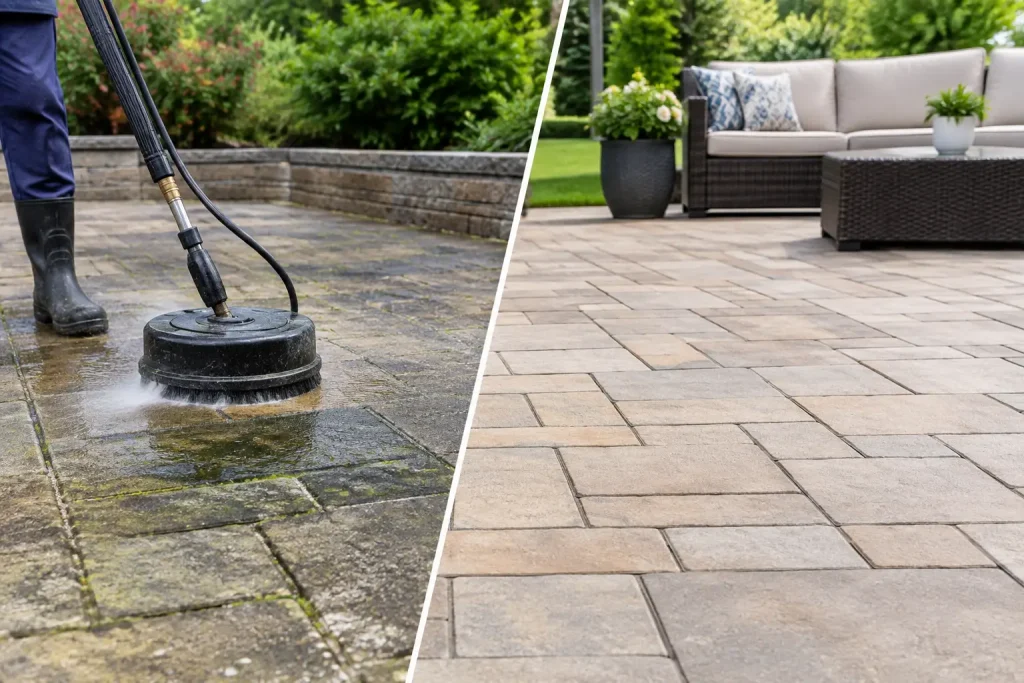
A patio or driveway can look far beyond saving when dark mildew, oil spots, tire marks, weeds, and faded color take over. But in many cases, paver cleaning versus replacement is not a close call: properly cleaned and restored pavers can look dramatically better for a fraction of the cost of tearing them out.
Replacement has its place, especially when the base has failed or individual stones are badly damaged. Still, surface staining is often mistaken for permanent damage. Before committing to demolition, new material, and weeks of disruption, it pays to understand what professional paver cleaning and restoration can realistically accomplish.
Paver Cleaning Versus Replacement: Start With the Cause
The right decision depends less on how dirty the pavers look and more on why they look that way. Southern California patios, pool decks, walkways, and driveways deal with sun exposure, irrigation overspray, coastal moisture, foot traffic, vehicle leaks, and windblown soil. These conditions leave behind stains that can make a sound paver installation look worn out.
Organic growth, such as algae, mildew, moss, and surface grime, is generally a cleaning issue. So are many oil drips, rust marks, tire tracks, food spills, pet stains, and embedded dirt. A surface-specific cleaning process can lift contamination from the paver face and joints without needlessly damaging the material.
Replacement becomes more appropriate when the problem is structural. Pavers that are cracked through, crumbling, severely chipped, rocking underfoot, or sinking in broad areas may point to a failed base, drainage problem, tree-root movement, or poor installation. Cleaning can improve their appearance, but it will not correct movement below the surface.
A professional assessment separates these two categories. That matters because replacing pavers to solve a stain problem is expensive, while pressure washing unstable pavers without addressing the base can create another problem.
When Cleaning Is the Better Investment
For many homeowners, HOAs, and commercial property managers, cleaning is the practical first step because it restores the existing material and preserves the character of the property. Mature landscaping, established hardscape patterns, and matching older pavers can be difficult and costly to recreate after replacement.
Professional cleaning can remove years of buildup from patios, courtyard paths, entryways, pool areas, and driveways. It can also improve traction by reducing slick organic growth, which is especially valuable around common areas, storefronts, and shaded walkways.
The financial difference is substantial. Replacement costs can include demolition, hauling, base repair, new pavers, sand, installation labor, drainage work, and landscape repairs. Cleaning and restoration generally require far less disruption and can often be scheduled around a home, retail center, or HOA’s daily activity.
Cleaning also supports the maintenance-first approach: maintain it, don’t replace it. Preserving usable pavers keeps material out of the waste stream and avoids the unnecessary use of new materials. When runoff is managed responsibly, cleaning can be the more environmentally considerate choice as well.
What a Professional Paver Cleaning Can Address
Not every stain disappears completely, particularly if it has penetrated deeply or reacted with the paver material. But the right treatment can make a major visible difference. A trained crew can evaluate whether a surface needs controlled pressure washing, a targeted oil-stain treatment, detergent application, manual detail work, or a combination of methods.
Care matters. Excessive pressure can scar pavers, expose aggregate, strip joint sand, or blow debris into surrounding beds. Harsh chemicals can damage nearby plants, affect finishes, or send contaminated runoff toward storm drains. The goal is not simply to make a surface look cleaner for one afternoon. It is to remove buildup safely while protecting the pavers, landscaping, and surrounding property.
For properties near sensitive drainage areas, water recovery is particularly valuable. Channel Islands Pressure Washing uses closed-loop water recovery practices to capture runoff and help keep dirty water, oil residue, and cleaning debris out of local waterways. That is a meaningful advantage for commercial sites, HOA common areas, and homeowners who want their maintenance handled responsibly.
Signs Replacement Is Worth the Cost
Cleaning is not a cure for every paver problem. Replacement or repair is the better long-term investment when pavers have lost their structural integrity or when the installation has shifted beyond a simple reset.
Look closely at the surface after it is dry. Widespread cracking, broken edges that create trip hazards, loose pavers, major settlement, standing water after irrigation or rain, and recurring joint washout deserve attention. On a driveway, ruts and low spots can indicate a compromised base. Around a pool or entry path, uneven pavers are more than a cosmetic concern because they can become a liability issue.
Sometimes the answer is not full replacement. A contractor may be able to lift and reset a limited section, repair drainage, replace a small number of damaged pavers, and then clean the entire area for a more consistent finish. This middle ground often makes sense for older patios and HOA walkways where most of the installation remains solid.
Color loss also requires a realistic conversation. Cleaning removes dirt and dulling buildup, revealing the color that remains in the paver. It cannot always reverse years of UV fading. If uniform color is the priority and the original pavers are significantly faded, replacement or a compatible restoration solution may be considered after the surface is cleaned.
Don’t Replace Pavers Before Checking These Issues
Before approving a replacement project, determine whether the pavers are truly damaged or simply neglected. A site assessment should consider the age of the pavers, the condition of joints, drainage patterns, traffic level, stain type, and the stability of the base.
For example, a restaurant walkway with grease spots may need targeted treatment and recurring cleaning, not new pavers every few years. A residential driveway with dark marks may have oil staining compounded by dust and irrigation minerals. An HOA courtyard that appears faded may be covered with years of organic buildup and soil. In each case, cleaning first gives decision-makers a clearer view of the underlying condition.
This approach also helps with budgeting. Property managers can reserve replacement funds for genuine repairs while using scheduled maintenance to keep high-visibility areas clean. Homeowners can improve curb appeal before listing a property or hosting an event without taking on a full hardscape project.
A Smarter Paver Maintenance Plan
Once pavers are restored, regular care keeps dirt from becoming a replacement conversation again. Sweep leaves and soil before they settle into joints, address vehicle leaks promptly, and watch for irrigation that constantly wets the same areas. Trim back dense vegetation where shade and moisture encourage organic growth.
For high-traffic commercial areas and HOA common spaces, routine professional service is often more cost-effective than waiting until surfaces look neglected. A recurring plan can be timed around seasons, tenant activity, inspections, or community events. It also allows crews to spot early drainage and joint-sand concerns before they become larger repairs.
Sealing may be useful for some paver systems, but it is not automatic. The pavers must be properly cleaned, dry, and suitable for the selected sealer. A poor application can create blotchy color, trapped moisture, or slippery conditions. Ask for an evaluation rather than assuming every cleaned surface needs to be sealed.
How the Decision Process Should Work
A straightforward process keeps the project focused on the actual problem. First, schedule a site assessment to identify stains, surface condition, drainage concerns, and any damaged or unstable areas. Second, review a clear estimate that separates cleaning, stain treatment, minor repairs, and any recommended replacement work. Third, schedule the work around your household, tenants, customers, or community needs, followed by a final walkthrough of the completed area.
For a clean but honest comparison, do not judge pavers by their worst day. Have the surface evaluated before removing it. If the pavers are structurally sound, professional cleaning may restore the look, safety, and curb appeal you want while protecting your budget and reducing waste. If replacement is necessary, you will know it is being done for the right reason – not because dirt was mistaken for damage.
Pingback: 12 Property Maintenance Ideas That Prevent Repairs – Channel Islands Pressure Washing, LLC