
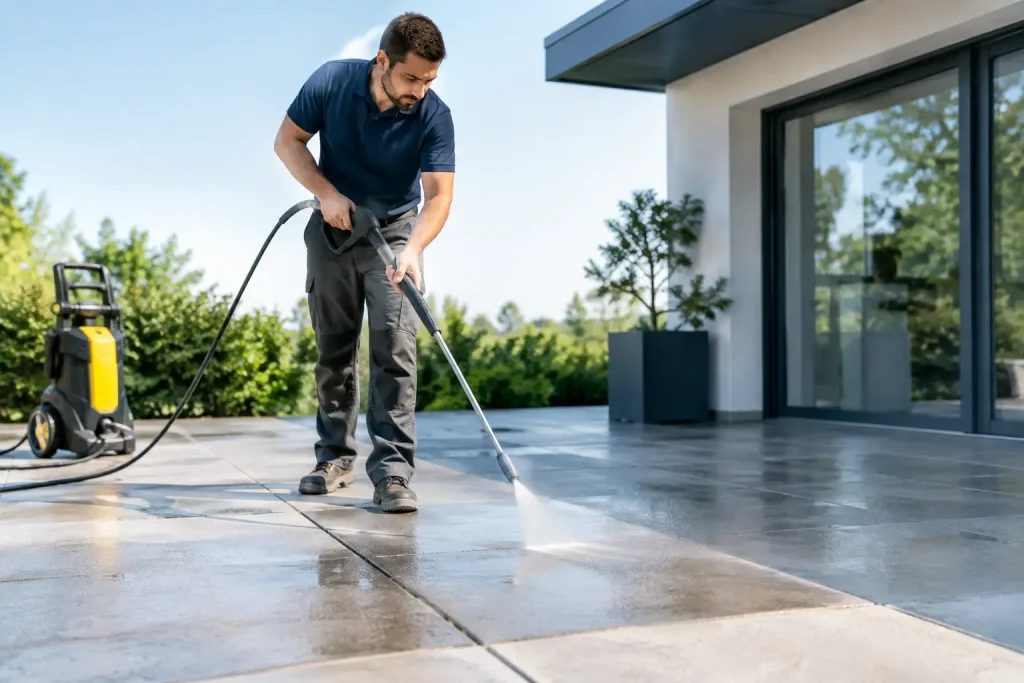
A dark driveway, green-streaked stucco, slippery walkways, and a roof covered in organic growth do more than make a property look neglected. They can shorten the life of the materials underneath. Consistent outdoor surface maintenance gives homeowners, HOAs, and commercial property managers a practical way to protect appearance, safety, and long-term value before small problems become expensive repairs.
Along the Southern California coast, outdoor surfaces take a steady beating from dust, irrigation overspray, moisture, salt air, tree debris, vehicle traffic, and everyday use. Waiting until a surface looks severely stained can make cleaning more difficult and may allow mold, algae, oil, or grime to settle deeper into the material. A maintenance-first approach is simpler: clean surfaces on an appropriate schedule, use the right method for each material, and address problem areas before replacement becomes the only option.
Why Outdoor Surface Maintenance Pays Off
Exterior cleaning is often treated as a cosmetic project. Curb appeal absolutely matters, especially for storefronts, multi-family communities, and homes preparing for sale. But the practical benefits go further.
Moisture-loving growth on concrete, pavers, stairs, and pool decks can create slippery conditions. Grease and oil in parking areas can track into walkways and leave a poor impression on customers and tenants. Clogged gutters can send water where it does not belong, contributing to staining, wood damage, and drainage issues. On roofs and siding, organic buildup holds moisture against the surface and makes a well-maintained property look older than it is.
Regular cleaning also helps property owners spot concerns early. When layers of dirt, leaves, and stains are removed, it is easier to notice loose pavers, cracked concrete, failing sealant, damaged gutters, or areas where irrigation is hitting the building. Cleaning is not a substitute for repair, but it makes maintenance decisions clearer.
For HOAs and commercial sites, consistency matters as much as the initial result. Common-area walkways, entryways, dumpster pads, parking areas, and building exteriors represent the entire property. A planned cleaning schedule keeps those areas from reaching the point where tenants, residents, or visitors start making complaints.
Match the Cleaning Method to the Surface
Not every dirty surface needs high-pressure washing. In fact, using too much pressure in the wrong place can etch concrete, damage paver joints, force water behind siding, strip paint, or harm delicate roof materials. Professional outdoor cleaning starts with identifying the surface, the type of buildup, and the safest effective method.
Concrete and hardscape cleaning
Concrete driveways, sidewalks, patios, loading areas, and parking lots collect tire marks, oil spots, mud, food spills, algae, and general traffic grime. Professional concrete cleaning combines the correct pressure, temperature when needed, surface cleaners, and targeted treatments for stubborn stains. Oil requires a different approach than algae, and old rust discoloration requires different chemistry than vehicle leaks.
The goal is not simply to make concrete lighter. It is to remove the contaminants safely and evenly without leaving obvious wand marks or damaging the surface. High-traffic commercial areas may need more frequent service than a residential patio, particularly near entrances, trash areas, and parking spaces.
Paver cleaning and restoration
Pavers can look excellent for years, but they need attentive care. Dirt and algae collect in textured faces and joints, while weeds, sand loss, and shifting can make the area look uneven or neglected. Cleaning pavers too aggressively may dislodge joint sand or leave a patchy finish. Cleaning too lightly may leave growth and discoloration behind.
A careful paver cleaning and restoration plan may include surface cleaning, treatment for organic staining, joint assessment, re-sanding where appropriate, and sealing when the pavers are dry and in good condition. Sealing is not automatically the right answer for every installation. It depends on the paver type, current condition, drainage, previous coatings, and the look the owner wants. The right plan should preserve the material, not create a shiny finish that becomes slippery or difficult to maintain.
Roofs, siding, and delicate exterior materials
Dark roof streaks and green buildup on siding are often signs of algae, mildew, or other organic growth. These surfaces should not be treated like a driveway. Roof soft washing uses low pressure and surface-appropriate cleaning solutions to treat growth without blasting roofing materials. The same careful approach applies to painted surfaces, stucco, trim, fences, and many exterior walls.
For building washing, the details matter. Water should be controlled around windows, vents, landscaping, electrical features, and entry points. A thorough crew also pays attention to the finishing work that pressure alone cannot handle, including edges, corners, and areas where grime gathers around fixtures.
Do Not Ignore Gutters and Drainage Paths
Gutters are easy to overlook because the problem is usually out of sight. But when leaves, roof granules, and debris prevent water from flowing, overflowing gutters can stain walls, soak landscaping, and direct water toward the foundation. In heavy rain, the damage can be much more than cosmetic.
Gutter clearing should include removing debris and checking that downspouts are flowing freely. If recurring blockages occur, the source may be overhanging trees, roof debris, or a drainage issue that needs separate attention. Scheduling gutter service before the rainy season is a sensible preventive step for homes, HOA buildings, and commercial properties.
Plan Maintenance Around Use, Weather, and Risk
There is no single cleaning schedule for every property. A shaded patio beneath mature trees may need attention more often than a sunny, open concrete area. A restaurant entry or retail center walkway has different needs than a private side yard. Properties near the coast may also see more salt residue and moisture-related growth.
For many homes, an annual exterior review is a good starting point, with more frequent attention for gutters, heavily used patios, driveways with oil leaks, and shaded areas. HOA and commercial properties often benefit from scheduled service at intervals based on foot traffic, tenant expectations, and the property’s cleaning priorities.
The best time to clean is before staining becomes deeply embedded or a walkway becomes hazardous. That timing can also reduce the need for harsher treatments. A site assessment helps determine what needs immediate work and what can be placed on a practical maintenance schedule.
Responsible Water Handling Matters
Exterior cleaning produces runoff, and runoff can carry detergents, oil, sediment, paint particles, and other contaminants toward storm drains. Those drains typically lead to local waterways rather than a treatment facility. That is why water handling should be part of the cleaning plan, not an afterthought.
For commercial pressure washing, oil-stain treatment, parking-area cleaning, and heavily soiled surfaces, closed-loop water recovery captures wastewater for proper handling instead of allowing it to enter storm drains. It is a responsible choice for the environment and an important consideration for property managers who need to meet site standards.
Water-conscious service also means avoiding waste. The right equipment, controlled application, and surface-specific methods can achieve a thorough result without using more water or pressure than the job requires. Channel Islands Pressure Washing pairs that approach with detailed manual work and a final walkthrough, so the finished property is assessed with the customer rather than simply sprayed and left behind.
A Straightforward Way to Get the Work Done
A good maintenance plan begins with a site review. The cleaner should look at the material, staining, access, drainage, sensitive landscaping, and any areas that require special treatment. This makes the estimate clearer and helps prevent surprises on service day.
Next comes scheduling around the property’s needs. Homeowners may prefer service while they are home for a walkthrough. HOAs and commercial operators may need work planned around resident access, customer traffic, deliveries, or business hours. Clear communication matters because even a well-cleaned surface can be frustrating if the work disrupts the property unnecessarily.
After cleaning, take a close look at the results. Confirm that stains were addressed as expected, note any damage that cleaning revealed, and discuss whether recurring service would help protect the surface. This is especially useful for pavers, roofs, common areas, and commercial concrete that see repeat exposure.
Maintain it, don’t replace it. A timely cleaning plan cannot reverse every form of wear, but it can keep everyday buildup from stealing years from the surfaces you already own. Start with the area that is creating the biggest concern, whether it is a slippery walkway, stained driveway, dirty roof, or neglected common area, and build a schedule that keeps it from becoming a larger problem.