
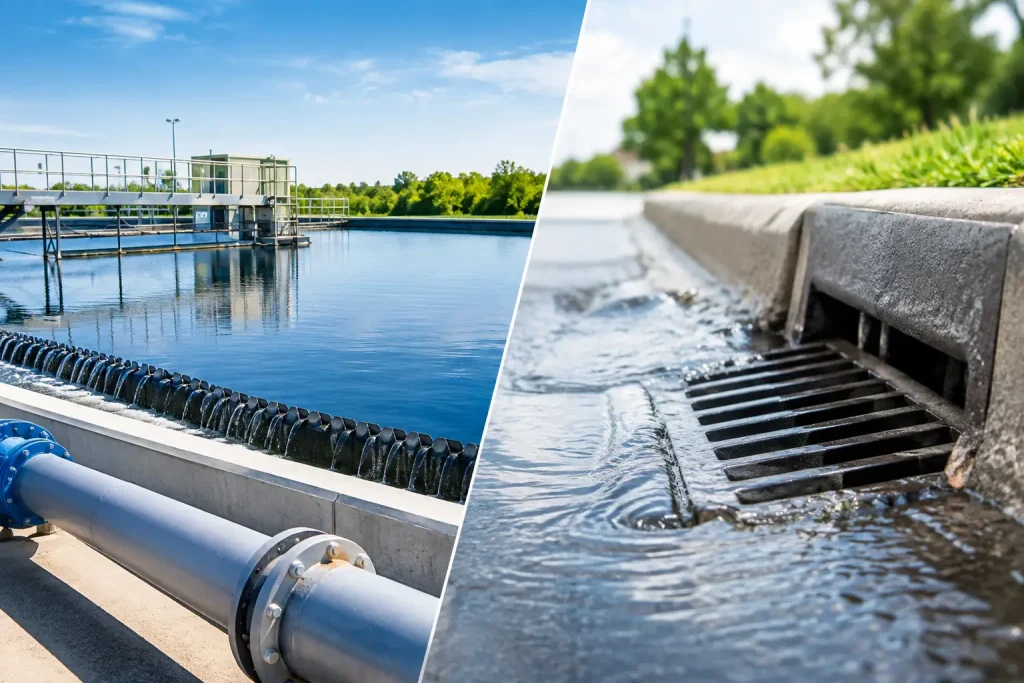
A freshly cleaned driveway, storefront walkway, or HOA common area should not leave dirty water headed for the nearest curb. Water reclamation versus storm drains is a practical issue for property owners because the runoff created during exterior cleaning can carry oil, sediment, cleaning solution, algae, paint residue, and other contaminants directly toward local waterways. The difference lies in what happens after the water leaves the surface.
For homes, retail centers, apartment communities, and commercial facilities, responsible runoff handling protects more than the appearance of the property. It helps protect nearby stormwater systems, supports site compliance, and shows tenants, customers, and neighbors that maintenance is being handled with care.
Water Reclamation Versus Storm Drains: The Key Difference
A storm drain is designed to move rainwater off streets, parking lots, roofs, and landscaped areas quickly. In much of Southern California, that water flows through a stormwater system and eventually reaches creeks, channels, beaches, or the ocean. Unlike wastewater from a sink or toilet, stormwater is generally not treated before it enters those waterways.
Water reclamation during exterior cleaning is a controlled process. Instead of allowing wash water to run into a gutter or catch basin, a professional crew contains the work area, captures the runoff with recovery equipment, and removes it from the surface. Depending on the job, the recovered water may be filtered, stored for proper disposal, or reused within a closed-loop cleaning process when appropriate.
That distinction matters. A storm drain is not a disposal point for pressure-washing wastewater. Water recovery is a way to keep the cleaning process contained and managed.
Why Pressure-Washing Runoff Is Different From Rainwater
Rainwater can pick up pollutants as it moves across pavement, but pressure washing actively lifts built-up material from a surface. That is the point of cleaning. A concrete driveway may hold years of vehicle drips, tire residue, fertilizer overspray, pet waste, dirt, and oil stains. A shopping-center walkway may contain food spills, gum residue, grease, and grime from heavy foot traffic.
When those materials are loosened, they become part of the runoff. Even a cleaner chosen for the surface can create an environmental concern if it is allowed to flow uncontrolled into a storm drain. The same is true for roof wash runoff, gutter debris, building-wash water, and paver-cleaning residue.
This does not mean every exterior-cleaning project requires the exact same containment plan. A light rinse on a small, clean residential surface is different from degreasing a restaurant loading area or washing a large commercial parking structure. Site layout, drain locations, soil conditions, the type of soiling, and local requirements all affect the right approach. The responsible question is not simply, “Can this be washed?” It is, “Where will the water go?”
The Property Risks of Letting Runoff Travel
Uncontrolled runoff can create problems that extend beyond environmental impact. On a commercial property, dirty wash water can cross sidewalks, enter landscaped areas, leave streaks at curbs, or flow toward neighboring spaces. It may also create a temporary slip hazard if the work area is not properly managed.
For HOAs and property managers, the issue is often consistency. A contractor may make one building look better while leaving drain inlets, curb lines, and lower walkways stained with the runoff from the job. That is not the finished result residents expect.
There is also a maintenance cost to consider. Sediment and debris carried into drains can contribute to clogged catch basins and drainage issues. Gutter cleaning presents a similar concern. Removing leaves, roof granules, and built-up debris is valuable preventive maintenance, but the material should be collected rather than pushed farther into the drainage system.
Careful cleaning protects the surface and the surrounding property. That is especially valuable for pavers, decorative concrete, stucco, solar panels, roofs, and other materials that need a more measured method than high pressure alone.
What a Closed-Loop Water Recovery Process Looks Like
A professional recovery setup begins before the equipment starts. The crew identifies storm drains, slopes, landscape edges, pedestrian routes, and the dirtiest sections of the property. On a parking lot or storefront project, drain covers, berms, vacuum recovery tools, and hoses may be used to keep wash water in the work zone.
As the surface is cleaned, runoff is directed to a recovery point and vacuumed into a holding system rather than left to travel down the curb. Solids can be separated from the water, and the recovered material is handled according to the needs of the job and applicable disposal requirements. The goal is simple: clean the surface without sending the removed contamination into the stormwater system.
This process also supports more efficient water use. Recovery equipment does not eliminate the need for water, and it cannot make every job water-free. It does help crews control where water is applied, prevent unnecessary runoff, and reduce waste during larger cleaning projects.
At Channel Islands Pressure Washing, this approach is paired with surface-specific methods. Soft washing can remove organic growth from roofs, siding, and delicate finishes without the damage risk of aggressive pressure. Concrete cleaning and oil-stain treatment may require more targeted equipment and products. In each case, the cleaning method and runoff plan should work together.
When Water Recovery Matters Most
Water reclamation is especially useful where surfaces are heavily soiled, drains are nearby, or a property has a high public profile. Commercial pressure washing, HOA exterior cleaning, paver cleaning and restoration, building washing, and concrete cleaning are common examples.
A retail center has customers walking through the work area and visible storm drains along the curb line. An HOA may have shared walkways, landscaped drainage paths, and residents who expect minimal disruption. A home with an oil-stained driveway may sit on a slope that sends water directly toward the street. These are all situations where planning for runoff is part of doing the job correctly.
Roof soft washing deserves particular attention. The low-pressure method is designed to preserve roofing materials while treating discoloration and organic growth, but the crew must still control rinse water and protect nearby landscaping. Quality work is not just about how clean the roof looks from the street. It is about the care taken around the entire property.
Questions to Ask Before Hiring an Exterior Cleaner
Before scheduling service, ask how the contractor handles runoff and whether they assess drain locations before starting. Ask whether the cleaning approach changes for oil, grease, algae, paint, or other specific contaminants. For commercial sites and managed communities, it is also reasonable to ask how pedestrian areas, parked vehicles, landscaping, and business operations will be protected.
Clear answers are a good sign. A professional should be willing to explain the plan in plain language, provide a transparent estimate, and identify any limits before work begins. For example, a severe oil stain may need specialized treatment and more than one visit. Older pavers may require careful cleaning before sealing or restoration. Honest expectations help prevent disappointment and protect the surface from unnecessary replacement.
A Better Standard for Ongoing Maintenance
Waiting until buildup becomes severe usually makes cleaning harder, more disruptive, and more expensive. Regular service helps keep oil spots, algae, leaf debris, gutter clogs, and traffic grime from becoming larger property issues. It also gives a cleaning crew the opportunity to spot drainage concerns before a heavy rain exposes them.
For property owners in Camarillo, Ventura, Oxnard, Thousand Oaks, and surrounding coastal communities, maintenance also has an environmental side. Streets, curbs, and drains are connected to the places people enjoy outside the property line. Choosing a contractor that plans for water recovery is a practical way to care for both.
Maintain it, don’t replace it. A well-managed cleaning program restores the surfaces people see every day while keeping the dirty water from becoming someone else’s problem downstream.
Pingback: Coastal Property Runoff Compliance Guide – Channel Islands Pressure Washing, LLC