
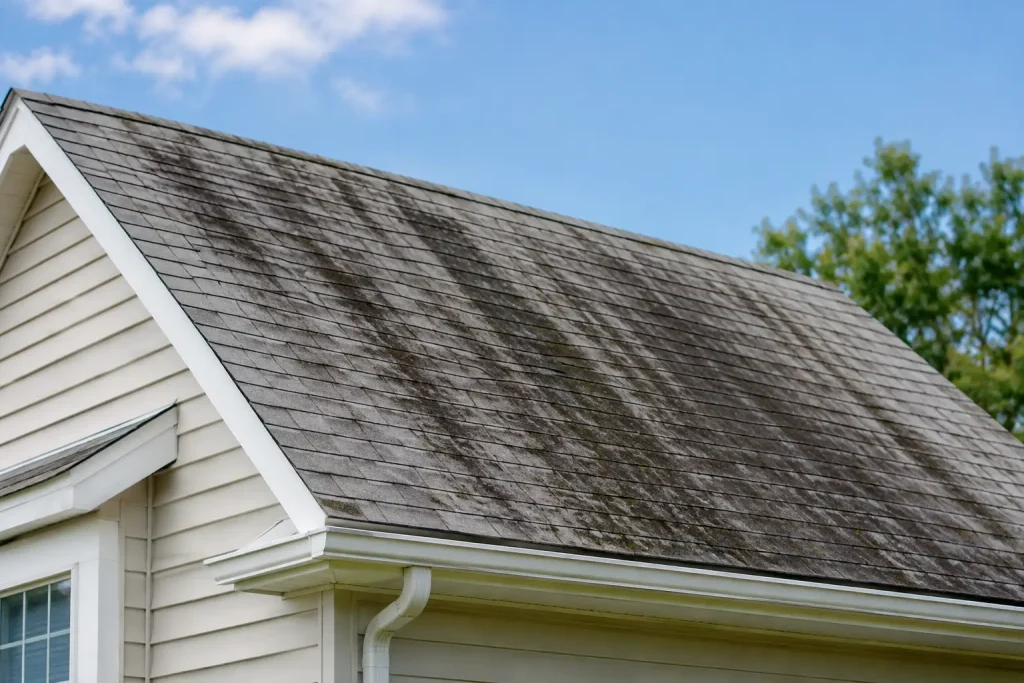
Those dark trails running down an otherwise sound-looking roof are easy to dismiss as dirt. But in most cases, they are living growth feeding on the conditions your roof provides: moisture, shade, airborne nutrients, and time. Knowing what causes roof black streaks helps you address the problem early, before a cosmetic issue becomes a maintenance concern.
For homeowners, HOAs, and property managers, a streaked roof can make the entire property look neglected, even when the landscaping and exterior are well maintained. The right cleaning method can restore a cleaner appearance without putting delicate roofing materials at risk.
What Causes Roof Black Streaks?
The most common cause of black roof streaks is a type of blue-green algae called Gloeocapsa magma. Despite its name, this algae often appears black, dark brown, or charcoal gray from the ground. It settles on roofing materials through the air, then begins growing where moisture and nutrients are available.
This algae is especially common on asphalt shingle roofs. Many shingles contain limestone filler, and the algae can use that material as a food source. As the colony grows, it forms the familiar vertical streaks that follow rainwater down the roof slope.
Black streaks are not always algae alone. Depending on the property, they can also include mold, mildew, lichen, moss, soot, pollen, dust, and residue from nearby trees. Southern California homes can experience all of these conditions, particularly on roof sections that stay shaded, face north, sit below mature trees, or receive little direct airflow.
Why streaks often appear on one side first
A roof does not weather evenly. The north-facing slope, areas under overhanging trees, valleys where debris collects, and sections near chimneys or roof penetrations tend to dry more slowly. That extended moisture gives organic growth a better foothold.
Coastal humidity can add to the issue. In communities from Ventura and Oxnard to Santa Barbara and Montecito, morning moisture and marine air can keep roof surfaces damp longer than homeowners realize. Inland properties are not immune either. Shaded roofs in Thousand Oaks, Simi Valley, Moorpark, and Ojai can develop the same dark staining when leaves, dust, and limited sunlight create the right environment.
Are Black Roof Streaks Harmful?
A few faint streaks do not automatically mean your roof is failing. However, leaving organic growth in place for years is rarely a good maintenance strategy. The buildup holds moisture against the surface, makes the roof look older, and can contribute to more stubborn staining over time.
On asphalt shingles, heavy algae growth can affect how the roof absorbs heat. Darkened areas may retain more heat than clean shingles, which can add stress during hot weather. More significantly, moss and lichen can grow beneath or around shingle edges. Their root-like structures may lift materials, trap water, and create conditions that deserve attention from a roofing professional.
The condition of the roof matters. An older roof with brittle shingles, loose granules, cracked tiles, or existing leaks needs a careful assessment before any cleaning is considered. Cleaning can improve appearance and remove growth, but it cannot repair worn-out roofing materials. A responsible contractor will recognize that difference instead of treating every streaked roof the same way.
Why Pressure Washing Is the Wrong Choice for Most Roofs
The word “pressure washing” can cause confusion here. High-pressure water has a place on durable surfaces such as concrete, some masonry, and commercial hardscapes. It is not the standard method for cleaning an asphalt shingle roof.
A strong pressure stream can strip protective granules from shingles, force water under roofing materials, damage flashing, and shorten the useful life of a roof. It can also crack or dislodge delicate tile when used incorrectly. A roof may look cleaner immediately after aggressive washing, yet the damage may show up later as premature wear or leaks.
Roof soft washing uses a low-pressure application and a surface-appropriate cleaning solution designed to treat algae, mold, mildew, and organic staining. Rather than blasting the roof clean, the process addresses the growth at its source. The solution needs adequate dwell time, careful application, and controlled rinsing only when appropriate for the roof type and manufacturer guidance.
That distinction matters: cleaning should preserve the roof, not trade a short-term visual improvement for costly replacement. Maintain it, don’t replace it.
How a Professional Roof Soft Wash Addresses the Problem
A professional roof cleaning starts with the roof itself, not a one-size-fits-all machine setting. The technician should look at the roofing material, slope, visible damage, drainage paths, landscaping, solar equipment, gutters, and nearby exterior surfaces before recommending a method.
For a typical soft-wash service, the crew protects sensitive plants and surrounding areas, applies the treatment at low pressure, and watches how the growth responds. Heavy moss or lichen may need careful manual attention rather than forceful removal. The goal is to remove staining while avoiding damage to shingles, tiles, gutters, paint, and landscaping.
Runoff management also deserves attention. Cleaning solutions, roof debris, and contaminated water should not simply flow untreated toward storm drains or landscaped areas. At Channel Islands Pressure Washing, surface-specific methods and water-recovery practices are part of protecting both the property and the environment. This is especially valuable for commercial properties, HOA common areas, and sites where runoff control is a compliance concern.
When Roof Streaks Point to a Bigger Problem
Black streaks usually signal organic growth, not a roof leak. Still, certain signs should prompt a roofing inspection before scheduling cleaning. These include missing shingles, broken tile, visible sagging, soft spots, granules collecting heavily in gutters, recurring interior water stains, or moss growing deep beneath roofing edges.
Gutter condition matters too. Clogged gutters can allow water to back up around the roofline, keep fascia boards wet, and create more favorable conditions for algae and mildew. If leaves and roof debris are present, gutter clearing may be the practical first step before roof washing.
Tree branches are another consideration. Branches that touch or hang directly over a roof drop leaves, seed pods, and shade onto the surface. Trimming them back can improve airflow and reduce how quickly stains return. That said, tree trimming is not a complete prevention plan. Airborne algae can still settle on an exposed roof.
How to Slow the Return of Black Streaks
No roof cleaning can promise that algae will never return. Weather, tree cover, roof orientation, and neighborhood conditions all affect how quickly new growth appears. A property beneath dense foliage may need attention more often than one in full sun.
The most effective approach is regular exterior maintenance. Keep gutters flowing, remove accumulated leaves before they break down, and address overhanging branches where practical. Watch shaded roof sections after damp seasons, rather than waiting until the stains are visible from the street.
Some homeowners ask about zinc or copper strips near the roof ridge. When rainwater washes over these metals, it can help discourage algae growth below. Their effectiveness depends on roof design, rainfall patterns, existing growth, and proper installation. They are best viewed as a possible preventive measure, not a substitute for professional cleaning or roof repair.
Avoid harsh DIY experiments. Bleach mixtures, abrasive scrubbing, and rented pressure washers can damage roofing, kill landscaping, discolor exterior finishes, or create unsafe conditions on a sloped surface. Walking on a roof also presents a serious fall risk and can crack tiles or disturb aging shingles.
A Better Next Step for a Streaked Roof
If black streaks are changing the look of your home, retail center, or HOA property, start with an assessment rather than assuming replacement is necessary. A qualified exterior-cleaning professional can identify whether the staining is algae, moss, lichen, or general grime, then recommend a cleaning approach suited to the roof material and condition.
The process should be straightforward: inspect the site, receive a clear no-obligation estimate, schedule service around the property’s needs, and review the results once the work is complete. For property managers, this also creates a useful opportunity to coordinate gutter cleaning, building washing, or common-area exterior maintenance in one planned visit.
A clean roof does more than improve curb appeal. It gives you a clearer view of the roof’s true condition and helps you make maintenance decisions before neglect turns into a larger expense. When streaks first appear, careful action is usually the most cost-effective one.