
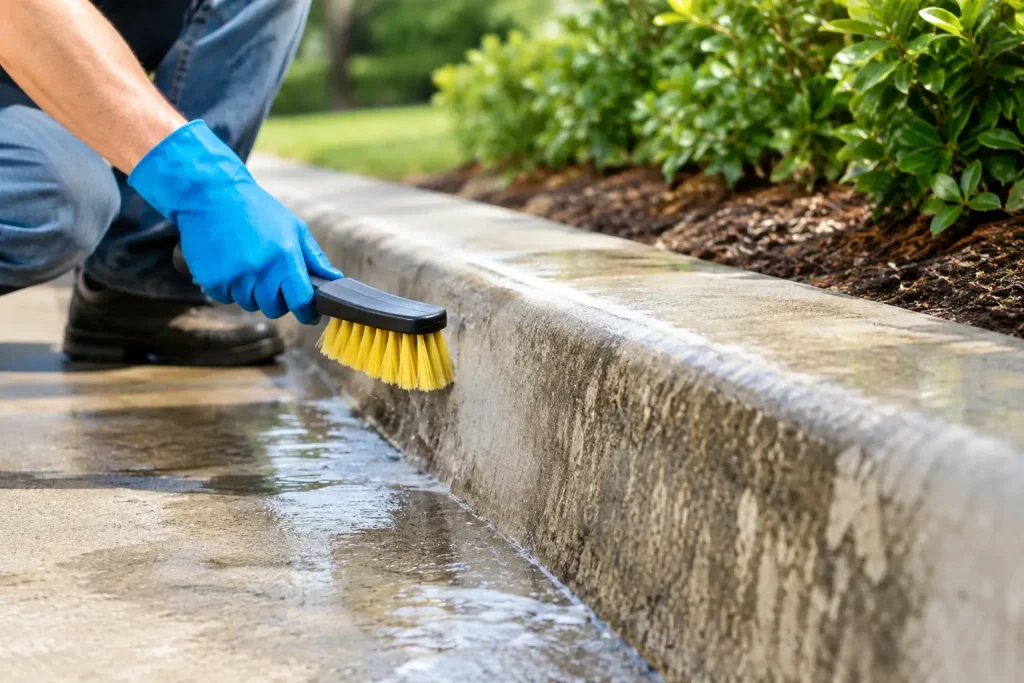
Concrete curbs collect the evidence of everyday use. Tire marks, oil drips, sprinkler stains, algae, mud, pet residue, and windblown debris can turn a clean driveway, parking lot, or community walkway into something that looks neglected. Knowing how to clean concrete curbs properly helps protect curb appeal, reduce slippery buildup, and avoid spreading dirty wash water into storm drains.
The right method depends on what is staining the curb, how old the concrete is, and where the runoff will go. A light rinse may work for fresh dust, while black algae or petroleum stains need pretreatment and more controlled cleaning. The goal is not simply to blast the surface. It is to restore a uniform appearance without etching the concrete, damaging nearby landscaping, or creating an environmental problem.
Why Concrete Curbs Need Regular Cleaning
Curbs sit at ground level, where water, vehicle residue, fertilizer, soil, and organic growth naturally collect. In Southern California coastal communities, morning moisture and shaded areas can encourage algae and mildew, especially along landscaped parking areas, walkways, and HOA common spaces.
For homeowners, a dirty curb can make an otherwise tidy driveway or front yard feel unfinished. For property managers and commercial operators, curb staining can affect how tenants, customers, and visitors perceive the entire site. Buildup can also become slick when wet, which is a concern near pedestrian paths, loading areas, and storefront entrances.
Routine cleaning is usually easier and less expensive than waiting for stains to set deeply into the concrete. Maintain it, don’t replace it. Consistent maintenance can extend the useful appearance of curbs, sidewalks, pavers, and adjacent concrete surfaces without unnecessary replacement work.
How to Clean Concrete Curbs Safely
Start by identifying the stain. Dirt and light organic film respond differently than rust, oil, paint, or irrigation mineral deposits. Using the wrong chemical or too much pressure can leave permanent streaks, pale spots, or etched lines that are more noticeable than the original stain.
Clear and Protect the Area
Remove loose leaves, gravel, and trash from the curb line before introducing water. Sweep debris away from drainage inlets rather than pushing it toward them. If the curb borders grass, shrubs, or flower beds, wet the surrounding plants first and keep cleaning products off foliage whenever possible.
Pay attention to where water will travel. Curb cleaning often happens next to streets, parking lots, and storm drains, which means dirty water may carry soil, detergents, oil, and contaminants into waterways. Block or capture runoff when needed, particularly for commercial properties, HOA communities, and areas with visible vehicle residue.
Apply a Surface-Appropriate Cleaner
For general grime and organic buildup, use a concrete-safe cleaner according to the label directions. Allow it to dwell long enough to loosen the staining, but do not let it dry on the surface. A stiff nylon-bristle brush can help work the cleaner into textured concrete and along the edge where the curb meets asphalt or landscaping.
Oil-stained curbs need a degreaser formulated for concrete. Treat the stain before pressure washing so the cleaner can break down the petroleum residue rather than simply spreading it across the curb or into nearby drains. Older oil stains may require more than one treatment, especially on porous, unfinished concrete.
Avoid using acidic cleaners as a default solution. They can remove some mineral staining, but they may also alter the concrete’s finish, harm nearby plants, and create runoff concerns. Rust or irrigation stains are better handled with a product designed specifically for that type of discoloration, followed by careful rinsing and runoff control.
Use Controlled Pressure, Not Maximum Pressure
A pressure washer can clean a curb quickly, but maximum pressure is rarely the best setting. Too much force, a narrow spray tip, or holding the wand too close can scar the concrete and create visible wand marks. This is especially common on older curbs, repaired sections, decorative concrete, and concrete that has already begun to wear.
Use a wider fan tip and keep the spray moving in smooth, overlapping passes. Begin with lower pressure and increase only as needed. Test a small, inconspicuous section first, then compare the cleaned area with the rest of the curb. If the curb looks uneven after one pass, the surrounding concrete may need cleaning as well for a consistent finish.
For heavily soiled curbs, professional surface-cleaning equipment often produces a more even result than a wand alone. Detail work along corners, drain openings, landscape edges, and vertical curb faces may still require a wand and manual brushing.
Rinse, Inspect, and Address Remaining Spots
Rinse the curb thoroughly after cleaning, directing water toward a controlled collection point rather than a storm drain whenever possible. Inspect the surface while it is still wet and again after it dries. Some stains, particularly oil, rust, and deep organic discoloration, may look lighter while wet but reappear as the concrete dries.
If one treatment does not fully remove a stain, do not immediately increase pressure. Reapply the appropriate cleaner and allow adequate dwell time. Patience and targeted treatment are safer than gouging the surface in an attempt to force a quick result.
Common Curb Stains and What They Require
Most concrete curb cleaning falls into a few familiar categories:
- Dust, soil, and tire marks usually respond to a concrete-safe cleaner, brushing, and moderate pressure.
- Algae, mildew, and dark organic buildup need a cleaner that treats biological growth, followed by a controlled rinse.
- Oil and grease require a concrete degreaser and proper containment of contaminated wash water.
- Rust and sprinkler mineral stains need a targeted stain remover, not aggressive pressure alone.
- Paint or graffiti may require specialized removal products and spot testing to avoid ghosting or concrete discoloration.
The age of the stain matters. Fresh spills are generally easier to lift, while stains that have baked into porous concrete may improve significantly without disappearing completely. A reputable cleaning professional should set clear expectations before treatment rather than promising a result the concrete cannot realistically deliver.
When DIY Curb Cleaning Is Not the Best Option
A small residential curb with light dirt may be manageable with a garden hose, brush, and the right cleaner. The situation changes when the property has extensive curbs, recurring vehicle oil, drainage concerns, or a need to keep pedestrian and vehicle areas open.
Commercial centers, apartment communities, and HOAs often need cleaning that protects landscaping, coordinates with residents or tenants, and addresses runoff responsibly. Water recovery is especially valuable where cleaning produces contaminated water from parking areas, loading zones, or heavily stained curb lines. Capturing and properly handling that water keeps grime, chemicals, and petroleum residue out of storm drains.
Professional cleaning is also a sound choice when curbs connect to pavers, painted striping, stucco, storefronts, or delicate landscape features. Surface-specific methods matter. The same pressure that may be acceptable on sturdy concrete can damage paint, loosen joint sand, scar a coated surface, or send dirty water where it does not belong.
Channel Islands Pressure Washing approaches concrete cleaning with this larger picture in mind: the visible result, the condition of nearby surfaces, and the responsible handling of runoff. A site assessment can determine whether targeted stain treatment, pressure washing, water recovery, or recurring maintenance is the most practical solution.
Keep Curbs Cleaner Between Services
The most effective curb-maintenance plan is simple: do not let small problems become deep stains. Sweep curb lines regularly, remove fresh oil drips promptly, trim back vegetation that holds moisture against the concrete, and correct sprinkler overspray that leaves mineral deposits or encourages algae.
For commercial and HOA properties, schedule cleaning before grime becomes a tenant complaint or a safety concern. High-traffic entrances and parking areas may need more frequent attention than quiet residential streets. Seasonal weather, shade, landscaping, and traffic volume all affect the right schedule.
A clean concrete curb is a small detail with a noticeable impact. Treat it as part of the property, not an afterthought, and it will support a cleaner, safer, better-maintained exterior for everyone who arrives at your home or site.