
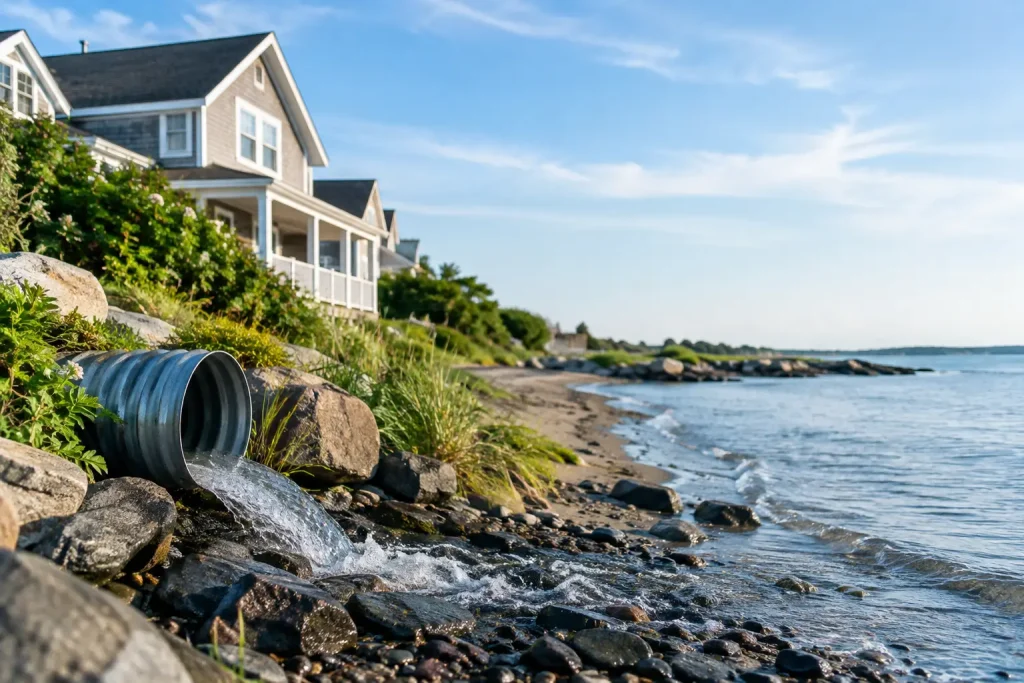
A clean driveway, roof, storefront, or HOA walkway should not leave dirty water flowing toward a curb drain. Along the Southern California coast, that water can carry sediment, oil, soap, algae, paint residue, and cleaning chemicals into the storm-drain system and, ultimately, local waterways. This coastal property runoff compliance guide explains what property owners and managers should look for before scheduling exterior cleaning.
The goal is straightforward: restore the property without creating a water-quality problem. That takes more than a powerful pressure washer. It requires planning, surface-specific cleaning methods, containment, water recovery, and a crew that understands where runoff goes once it leaves the surface.
Why Runoff Is a Property-Management Issue
Storm drains are not designed to treat wash water. In most coastal communities, they carry rainwater and anything picked up along the way directly to channels, beaches, creeks, or the ocean. When exterior cleaning sends contaminants into those drains, the problem is not just visual. It can affect local water quality and expose a property owner, HOA, or business operator to complaints, cleanup obligations, or enforcement action.
Runoff is often more contaminated than it looks. A parking area may release vehicle fluids, tire residue, and fine sediment. A restaurant-adjacent sidewalk can contain grease and food residue. Roof and building washing can loosen algae, bird droppings, leaf debris, and treatment solution. Even routine concrete cleaning can create a slurry of dirt and detergent that should not be allowed to enter a storm drain.
For commercial sites and managed communities, runoff practices also reflect on the property. Tenants, residents, customers, and neighbors notice when dirty water flows through common areas or toward the street. A responsible cleaning plan protects curb appeal, helps preserve surfaces, and shows care for the surrounding community.
Coastal Property Runoff Compliance Guide: Start Before Cleaning
Compliance begins during the site assessment, not after the equipment is running. Before any work starts, identify drains, gutters, low points, landscaping, nearby waterways, and areas where water can leave the property. A professional contractor should walk the site with these details in mind, especially at shopping centers, multifamily communities, parking lots, paver courtyards, and older properties with uneven drainage.
The condition of the surface matters too. Oil-stained concrete needs a different approach than a stucco wall with mildew. A tile roof requires low-pressure soft washing, while durable flatwork may need controlled pressure washing and targeted treatment. Using excessive pressure or unnecessary chemicals can damage surfaces and create more contaminated runoff to manage.
Ask the contractor what will be cleaned, what products may be used, and how wash water will be contained and recovered. The answer should be specific to your property, not a vague promise to be environmentally friendly. A good plan accounts for the direction of flow and provides a practical method for keeping wash water out of curb drains.
Know the Difference Between Storm Drains and Sewer Connections
One of the most common mistakes is assuming every visible drain leads to a treatment system. It may not. Storm-drain inlets, catch basins, curb openings, and channel drains can connect to a stormwater network. Wash water, detergents, sediment, and pollutants generally do not belong there.
A sanitary sewer system is different, but that does not mean it is automatically available or appropriate for disposal. Local requirements, site plumbing, and the nature of the waste all matter. Property managers should avoid making assumptions in the field. When disposal questions arise, the cleaning provider should follow applicable local requirements and use a recovery process suited to the job.
What Responsible Water Recovery Looks Like
Closed-loop water recovery is one of the clearest signs that an exterior-cleaning company is prepared for coastal properties. Rather than allowing water to spread across the pavement, the crew controls the work area, captures the wash water with recovery equipment, and keeps it from reaching storm drains.
The method may include temporary drain protection, berms, vacuum recovery tools, hoses, and tanks. The exact setup depends on the property. A compact courtyard has different challenges than a large retail parking area, and a sloped driveway requires more attention than a level patio. The important point is that runoff control is built into the work plan rather than treated as an afterthought.
Recovery also helps reduce unnecessary water use. When crews work deliberately, they can clean the surface effectively without flooding the area. That is especially valuable for paver cleaning and restoration, concrete cleaning, and commercial pressure washing, where a large amount of water can otherwise travel quickly toward drains.
At Channel Islands Pressure Washing, water recovery is part of the service approach because clean surfaces and clean waterways should go together. The focus is not simply on removing visible grime. It is on completing the job in a way that respects the property, its drainage, and the community around it.
Cleaning Methods Affect Compliance and Surface Life
Runoff compliance is closely connected to how the surface is cleaned. A one-method approach can cause avoidable damage and make containment harder. Delicate roofs, siding, painted surfaces, and some exterior finishes often respond best to soft washing, which uses lower pressure and appropriate treatment rather than force.
For concrete, pavers, walkways, and parking areas, the process may involve pre-treating stains, using controlled pressure, recovering water as the work progresses, and manually finishing edges or stubborn spots. Oil-stain treatment is a good example. Simply blasting the stain can spread the contamination and push it into joints, landscaping, or drains. Targeted treatment and recovery produce a cleaner, more responsible result.
Gutter cleaning also deserves attention. Leaves, roof grit, and accumulated debris can block drainage paths, causing water to overflow onto walls, walkways, and landscaping. Clearing gutters and downspouts helps manage rainwater before it becomes a maintenance issue. It does not replace proper wash-water recovery, but it is an important part of keeping a coastal property functioning as intended.
Questions to Ask Before Hiring an Exterior Cleaner
A price quote matters, but it should not be the only basis for choosing a contractor. The lowest bid can become expensive if it damages a roof, leaves dirty water at the curb, misses the details, or creates a complaint from a tenant or neighbor.
Ask whether the company performs a site assessment before quoting. Confirm that it can explain how it will protect storm drains and capture wash water. Find out whether it uses soft washing for delicate materials, how it handles oil stains and chemical treatments, and whether it will inspect the completed work with you.
For HOAs and commercial properties, it is also reasonable to ask about scheduling. Cleaning should be coordinated around resident access, tenant operations, customer traffic, and parking needs. A well-planned appointment reduces disruption while allowing the crew to set up containment and recovery equipment correctly.
A Practical Maintenance Plan Prevents Bigger Problems
Waiting until stains are severe can make cleaning more difficult, increase treatment needs, and allow pollutants to build up in high-traffic areas. Regular exterior maintenance is usually easier on the property and easier to manage responsibly. Maintain it, don’t replace it.
The right schedule depends on the surface and exposure. A shaded walkway with organic growth may need attention sooner than a covered entry. A busy retail center may need recurring concrete and gum removal, while a residential roof may only need periodic soft washing and gutter clearing. Coastal air, nearby landscaping, windblown debris, pets, vehicles, and foot traffic all affect the timeline.
A professional maintenance plan should be flexible rather than automatic. After a cleaning, take note of where stains return, where water pools, and which drains collect debris. Those details help determine what service is needed next and where runoff controls deserve extra attention.
Make the Next Cleaning Appointment Count
Before the crew arrives, move vehicles and outdoor furniture when possible, identify sensitive landscaping or drainage concerns, and provide access to the necessary areas. During the estimate, point out oil spots, slippery algae, stained stucco, clogged gutters, or areas where water tends to collect. Specific information helps create a safer and more accurate work plan.
The best exterior cleaning leaves behind more than a brighter surface. It leaves the property ready for daily use, with careful finishing work, a clear walkthrough, and no dirty runoff headed toward the nearest drain. That is the standard worth expecting from any coastal cleaning project.
Pingback: How to Clean Concrete Curbs Without Damaging Them – Channel Islands Pressure Washing, LLC