
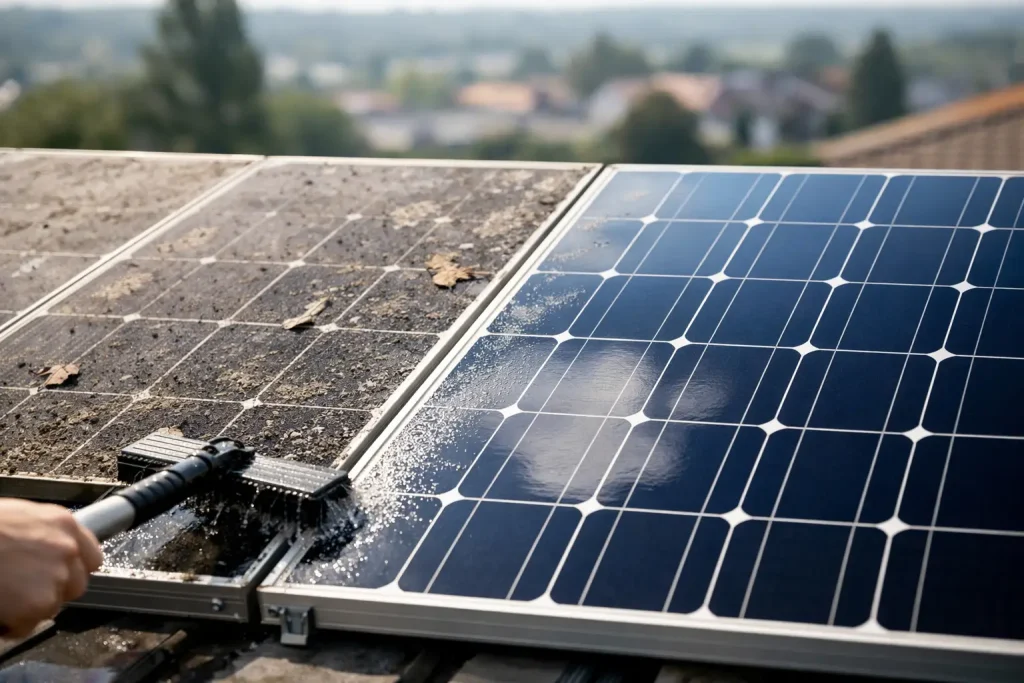
A solar monitoring app can make the problem easy to miss. Your system is still producing power, just a little less than it should. So, do dirty panels lose output? Yes. Anything that blocks sunlight from reaching the cells can reduce production, and Southern California’s dust, coastal salt, bird activity, pollen, and dry-season grime can all contribute.
The real question is not whether a perfectly clean panel produces more power. It does. The practical question is whether the buildup on your property is enough to justify cleaning, and how to clean the array without risking the glass, seals, roof, landscaping, or nearby storm drains.
How Dirty Panels Lose Output
Solar panels create electricity when sunlight reaches the photovoltaic cells beneath the glass. A light coating of dust may have a modest effect, especially after a good rain. But dirt does not always settle evenly. Bird droppings, leaves, salt residue, pollen clumps, and soot can create concentrated shaded areas that reduce output more than a thin, uniform layer of dust.
This is why a panel array can look only slightly dirty from the ground but still underperform. A small number of heavily soiled panels may affect the performance of a section of the system, depending on its design. Modern inverters and optimizers can limit that effect, but they do not make shade or grime disappear.
Buildup also tends to stick around longer in dry weather. A rare rain may rinse loose dust, but it may not remove dried bird droppings, mineral spots, oily residue, or salt film. In coastal communities, airborne salt can combine with dust and moisture to leave a stubborn haze on the glass.
How Much Production Can Dirt Cost?
There is no single percentage that applies to every roof. The loss depends on the type of debris, local weather, panel tilt, roof access, surrounding trees, bird activity, and how long the panels have gone without a proper cleaning.
For some homes, ordinary dust causes only a small seasonal dip that is largely corrected by rain. For others, particularly properties near busy roads, construction sites, agricultural areas, open fields, or the coast, buildup can become significant. Panels installed at a flatter angle often shed less debris and water than steeper arrays, making spots and grime more likely to linger.
The best evidence is your own production data. Compare current output against the same season in prior years, while accounting for weather and system age. If production is down despite similar sunshine, or if you can see obvious debris from a safe viewing point, cleaning is worth considering.
A visual inspection can also reveal uneven soiling. Look for bird droppings, leaf accumulation along lower edges, streaks after rain, pollen buildup, or a gray film that dulls the glass. Do not climb onto the roof to investigate. A roof, electrical equipment, and wet glass create a poor combination for do-it-yourself maintenance.
Why Coastal Properties Need More Attention
The Channel Islands region offers plenty of sun, but coastal air creates its own maintenance conditions. Salt spray and airborne minerals can settle on panels, windows, roofs, railings, and exterior walls. When that residue mixes with dust and morning moisture, it can adhere more firmly than dry soil alone.
Windy conditions can carry grit onto rooftop arrays, while nearby palms and landscaping can add pollen, seeds, leaves, and bird activity. Commercial properties may also deal with vehicle exhaust, parking-lot dust, and rooftop debris from neighboring buildings.
That does not mean every solar array needs frequent cleaning. Overcleaning is unnecessary, and aggressive methods can do more harm than good. It means local conditions should guide the maintenance schedule rather than a one-size-fits-all rule.
When Solar Panel Cleaning Makes Sense
A good starting point is to inspect visible panel surfaces and production data once or twice a year. Cleaning may be appropriate when there is noticeable residue, persistent spotting after rain, bird droppings, nearby construction dust, or a verified production decline that cannot be explained by weather or equipment issues.
For many residential properties, an annual or semiannual professional assessment is enough. A home near the beach, a dusty road, or heavy bird traffic may need more attention. Property managers and commercial operators may prefer scheduled maintenance because rooftop solar performance is only one part of maintaining a clean, efficient-looking property.
It also helps to clean panels as part of broader exterior care. Gutter clearing can reduce leaf debris near the roofline. Roof washing, when appropriate for the roofing material, can help address adjacent organic buildup. Window and exterior cleaning can remove the same coastal grime that settles on solar glass. The work should always be planned around the condition of the property, not sold as an automatic package.
Do Not Pressure Wash Solar Panels
Solar panels are durable, but they are not a surface for high-pressure washing. Strong pressure can force water into vulnerable areas, damage seals, disturb mounting components, or create a safety issue around electrical equipment. Abrasive pads, harsh chemicals, and household glass cleaners can also leave residue or damage protective coatings.
A proper solar panel wash uses a low-pressure, surface-appropriate approach, clean water, and non-abrasive tools. The technician should work carefully around wiring, mounting hardware, roof materials, and skylights. If the panels are hot from direct sun, cleaning should be timed to avoid rapid temperature changes and premature drying that can leave mineral spotting.
Water use matters, too. Runoff from a roof can carry dirt, salt residue, cleaning agents, and other contaminants into drains and waterways. That is especially relevant for commercial sites and homes near sensitive coastal areas. Channel Islands Pressure Washing uses responsible water-recovery practices where appropriate, with the goal of keeping contaminated runoff out of waterways while avoiding unnecessary water waste.
Rule Out Other Causes of Low Output
Cleaning can help when soil is blocking sunlight, but dirty glass is not the only reason a solar system produces less power. Seasonal daylight changes, marine layer, cloud cover, new tree growth, equipment faults, inverter issues, shading from nearby construction, and normal panel degradation can all affect production.
Before assuming the panels need cleaning, check whether the monitoring system shows error messages or an unusual drop in one string or section of the array. If there is a possible electrical or inverter issue, contact your solar installer or a qualified solar technician. Exterior cleaners can address surface buildup, but electrical diagnosis belongs with the appropriate solar professional.
This distinction saves money and prevents frustration. If the panels are visibly soiled and output has gradually slipped, cleaning is a sensible maintenance step. If output drops suddenly on a clean-looking array, the cause may be mechanical or electrical instead.
A Safer Way to Maintain Your Investment
Solar is a long-term property investment, and routine care should protect that investment rather than create a new problem. Professional cleaning starts with a site assessment: the roof type, panel access, visible debris, drainage paths, and condition of surrounding surfaces all matter. From there, the right method can be selected without treating solar glass like a driveway or patio.
For homeowners, that means cleaner panels without risky roof work or harsh washing methods. For HOAs, retail centers, and commercial facilities, it means a maintenance plan that considers appearance, safety, water handling, and scheduling around tenants or customers.
Maintain it, don’t replace it. If your panels have lost their clear, reflective finish to salt, dust, pollen, or bird debris, a careful inspection can help you decide whether cleaning is the practical next step – and keep sunlight doing the work you paid for.
Pingback: Water Conservation for Cleaner Properties – Channel Islands Pressure Washing, LLC