
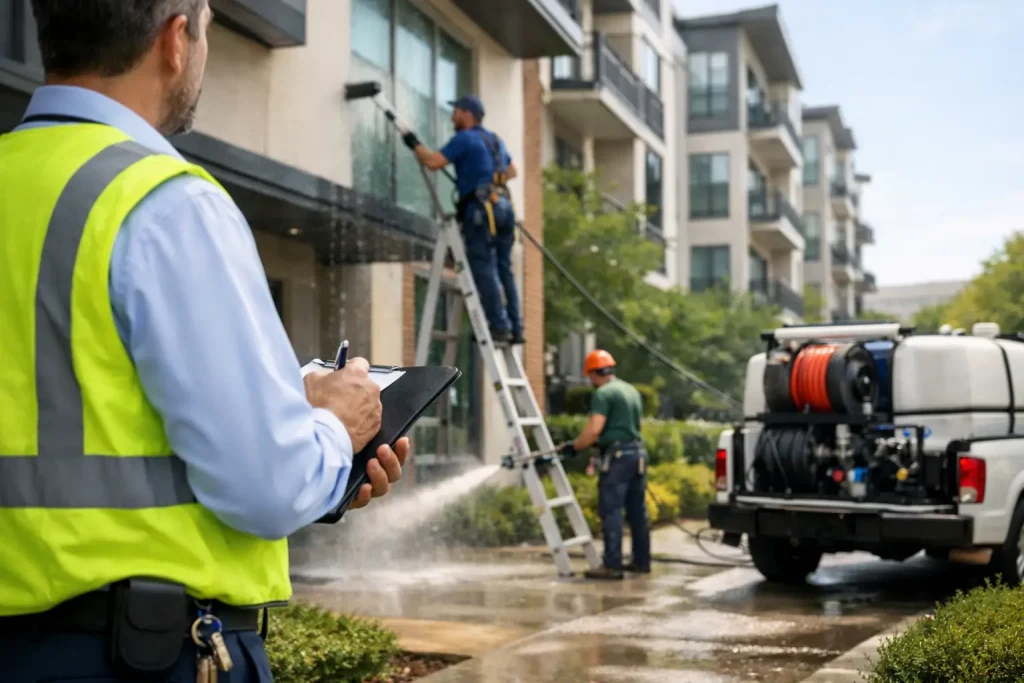
A dirty entry walk, oil-marked parking stall, or algae-stained breezeway can become a tenant complaint long before it becomes a line item in the maintenance budget. This property manager exterior cleaning guide is built for the practical reality of managing apartments, HOAs, retail centers, offices, and mixed-use properties: keep the site safe, presentable, and protected without disrupting residents, customers, or daily operations.
Exterior cleaning is not simply a cosmetic service. It helps prevent slippery conditions, reduces the buildup that can shorten the life of roofing and painted surfaces, and shows tenants and visitors that the property is actively cared for. The right approach also protects nearby storm drains and waterways from dirty runoff, cleaning chemicals, oil residue, and debris.
Start With the Areas That Affect Safety and Perception
Property managers have limited time and competing priorities. The most effective cleaning plan starts with the places people see and use every day. Main entrances, sidewalks, stairwells, pool decks, dumpster enclosures, parking areas, storefronts, and common patios usually deserve attention before less visible exterior surfaces.
Walk the property after a busy weekend, after rain, and at different times of day. Moisture and shade can reveal algae or mildew that is easy to miss in bright afternoon light. Early morning and evening can also show where exterior lighting makes stains, gum, and dirty walkways more noticeable.
Look closely for trip and slip risks. Algae, moss, wet leaves, food residue, grease, and leaking trash bins can turn a concrete walkway slick. In parking areas, oil spots, tire marks, and fluid leaks create a neglected appearance while also requiring more careful runoff control than routine surface washing.
Curb appeal matters, but cleaning priorities should not be based on appearance alone. A lightly stained sidewalk near a building entrance may be more urgent than a heavily stained service area with limited foot traffic. The right schedule depends on usage, shade, landscaping, tenant behavior, coastal moisture, and the material being cleaned.
Match the Cleaning Method to the Surface
One of the costliest mistakes in exterior maintenance is treating every surface as if it can handle high-pressure washing. Pressure is useful for durable concrete, certain hardscape areas, and parking surfaces. It is not automatically the right answer for stucco, painted siding, roofs, solar panels, windows, outdoor furniture, or play equipment.
Soft washing uses low pressure with surface-appropriate cleaning solutions to remove organic growth and grime without forcing water behind siding, stripping paint, or damaging fragile roof materials. For a property with stained stucco or a roof showing dark algae streaks, this method can provide a better result with less risk.
Concrete also requires judgment. A professional may use pressure and surface-cleaning equipment for broad walkways, then manually treat edges, corners, gum spots, and stubborn stains. Oil-stain treatment often needs a separate process rather than a quick pass with a pressure washer. The age of the stain, the type of fluid, the concrete finish, and local runoff conditions all affect what can realistically be removed.
Window cleaning, gutter clearing, and solar panel washing should be part of the same conversation. Dirty gutters can contribute to overflow and staining. Neglected solar panels can collect dust and grime that reduce their effectiveness. When work is coordinated around the property’s actual needs, managers avoid scheduling several vendors for related exterior issues.
Build a Practical Exterior Cleaning Schedule
There is no single cleaning frequency that works for every property. A small HOA with low foot traffic may need a focused common-area cleaning a few times per year. A retail center with restaurants, heavy parking use, and daily customer traffic may need more frequent service around entrances, sidewalks, and dumpster areas.
A useful schedule separates recurring work from periodic deep cleaning. Recurring maintenance keeps high-traffic areas from reaching the point where stains, grease, and organic buildup become difficult to remove. Periodic deep cleaning addresses building exteriors, roofs, gutters, parking areas, and other surfaces that do not need monthly attention.
For many Southern California properties, a seasonal inspection is a smart baseline. Check drainage paths before rainy periods, assess roof and gutter buildup, and inspect shaded walkways for algae. Coastal conditions may require more frequent attention because moisture, salt air, and windblown debris can accelerate surface buildup.
Document each service with notes and photos. This gives managers a clear maintenance history, helps with board or ownership reporting, and makes it easier to spot recurring trouble areas. If one stairwell repeatedly develops algae or one trash enclosure collects grease residue, the solution may involve drainage, landscaping, tenant communication, or a revised cleaning frequency.
Protect Storm Drains and Waterways
Runoff handling is a major part of responsible exterior cleaning, especially in parking lots, commercial centers, and properties near storm drains. Water that carries dirt, oil, cleaning residue, gum, animal waste, or other contaminants should not simply be pushed into the street or drain system.
Ask any exterior-cleaning provider how they manage wastewater before approving the work. The answer should be specific. A professional plan may include blocking drains, directing water to recovery equipment, capturing contaminated runoff, and disposing of it properly. This is particularly important when cleaning oil-stained pavement, dumpster pads, restaurant-adjacent sidewalks, or heavily soiled common areas.
Water recovery is not just a compliance detail. It is part of protecting the community surrounding the property. Channel Islands Pressure Washing uses a closed-loop water recovery approach to capture runoff while cleaning, helping keep contaminated water out of waterways and reducing unnecessary water use.
The cleaning crew should also protect landscaping, nearby vehicles, doors, electrical fixtures, and sensitive building materials. Good preparation takes time, but it prevents avoidable damage and complaints. A lower quote that ignores containment, recovery, or site protection can become expensive quickly.
Plan Around Tenants, Customers, and Site Operations
Exterior cleaning is more successful when it is treated as a short site project rather than a task a crew completes in isolation. Before work begins, identify access points, water sources, parking restrictions, pedestrian routes, loading areas, and any times when noise or temporary closures would create problems.
For apartment communities and HOAs, notice residents in advance when work affects parking, balconies, walkways, or shared amenities. For retail and commercial sites, schedule around opening hours, deliveries, and peak customer periods whenever possible. A crew may need to clean in sections so one entrance or walkway remains available.
Be clear about expectations for difficult stains. Gum, deep rust, old oil, paint, and embedded tire marks may improve significantly without disappearing completely. A dependable contractor will explain the likely result before work begins instead of promising a brand-new surface where the material itself has been permanently altered.
After the work, inspect the site while the crew is still available. Check the most visible areas, edges near landscaping, storefront glass, entryways, and drainage points. A final walkthrough creates accountability and allows small touch-ups to be handled before the team leaves.
What to Ask Before Hiring an Exterior Cleaning Company
A quote should tell you more than the total price. It should identify the areas being cleaned, the method planned for each surface, access assumptions, scheduling details, and whether runoff recovery is included. If the scope is vague, it is difficult to compare bids or hold a provider accountable for the result.
Ask whether the company is insured, how it handles delicate surfaces, and whether it has experience with occupied commercial or multifamily properties. Also ask how it treats oil spots, graffiti, roof algae, and other specialty issues. These services often require different equipment, solutions, and dwell times than standard walkway cleaning.
A site assessment is worth the time. Photos can help with an initial conversation, but an on-site review often identifies drainage limitations, fragile materials, access challenges, and areas that need manual finishing work. It also gives the provider a chance to recommend a maintenance plan that fits the property instead of selling a one-size-fits-all service.
Turn Cleaning Into Preventive Maintenance
The best exterior-cleaning program is not the one that produces the most dramatic before-and-after photo. It is the one that keeps costly buildup from taking hold, protects surfaces from unnecessary wear, and makes the property easier to manage between visits.
Maintain it, don’t replace it. With a clear scope, surface-specific methods, responsible runoff handling, and a schedule based on how the property is actually used, exterior cleaning becomes a straightforward way to protect both the site and the people who rely on it.