
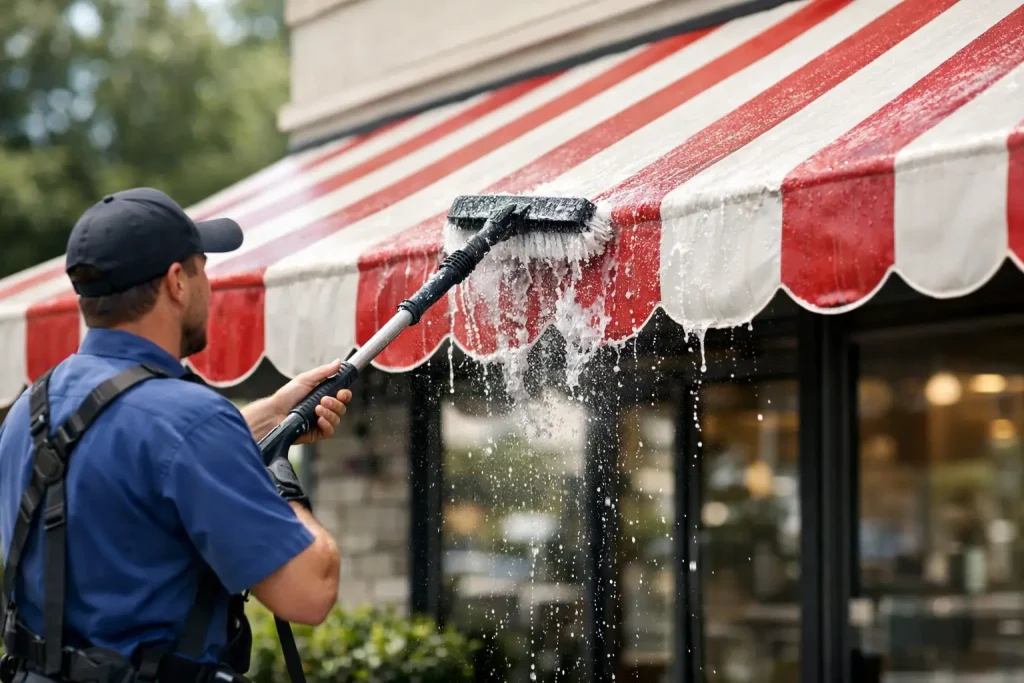
A faded, streaked awning can make an otherwise well-kept home or storefront look neglected. Mildew spots, bird droppings, airborne grime, tree debris, and coastal moisture build up gradually, often becoming noticeable only when the fabric begins to discolor. Professional awning cleaning restores a cleaner appearance without treating a delicate awning like a concrete driveway.
For homeowners, an awning may shade a patio, window, or outdoor living area. For property managers and business owners, it is often part of the first impression customers receive at an entrance or storefront. Cleaning it correctly helps preserve that investment, improve curb appeal, and reduce the chance that stains become permanent.
Why Awning Cleaning Requires a Careful Approach
Not every awning is made from the same material, and not every stain responds to the same treatment. Canvas, acrylic fabric, vinyl, coated fabric, aluminum, and retractable awnings each have different cleaning needs. A method that works well on a parking lot can damage fabric, strip a protective coating, force water into seams, or leave visible streaking on an awning.
This is why high pressure is rarely the right starting point. A pressure washer can be useful when it is paired with the right technique, but blasting an awning with excessive force may stretch fabric, loosen hardware, damage stitching, or drive contaminants deeper into the surface. A surface-specific soft-wash approach is usually the safer choice for fabric and other sensitive materials.
The goal is not simply to make the awning look brighter for a few days. The goal is to remove organic growth, accumulated soil, and staining agents while protecting the material underneath. Maintain it, don’t replace it.
What Builds Up on Awnings
Awnings sit outside year-round, where they collect more than most people realize. Along the Southern California coast, moisture in the air and marine-layer conditions can encourage mildew and algae growth. Inland dust, traffic residue, pollen, leaves, and irrigation overspray add another layer of grime.
Commercial awnings face additional challenges. Restaurant entrances may collect grease-laden residue from the surrounding area. Retail storefronts can develop fingerprints, cobwebs, bird droppings, and dark streaks near seams and edges. In busy shopping centers, a dirty awning can make a maintained property appear less inviting, even when the windows and walkways are clean.
Organic stains are especially worth addressing early. Mildew and algae may begin as light spotting, then become darker and more difficult to remove if they are allowed to remain. The longer contaminants sit on fabric or coated materials, the more likely they are to affect color, water resistance, and the overall life of the awning.
The Right Cleaning Method Depends on the Awning
A professional assessment should come before cleaning begins. The crew needs to identify the material, inspect the frame and fasteners, note tears or weakened seams, and determine whether stains are caused by mildew, rust, grease, mineral deposits, or ordinary soil. That inspection shapes the cleaning plan.
Fabric and Retractable Awnings
Fabric awnings generally need a low-pressure process with cleaning solutions selected for the material and level of buildup. The cleaner must be applied evenly, allowed appropriate contact time, and rinsed carefully so residue does not remain in the fibers. Scrubbing may be necessary in heavily stained areas, but it should be controlled and gentle enough to avoid damaging the fabric.
Retractable systems require added caution. Water should not be forced into the housing, motor components, or moving hardware. The awning should also be fully dry before it is retracted. Rolling up damp fabric can trap moisture and create the exact mildew problem the cleaning was meant to solve.
Metal, Vinyl, and Fixed Commercial Awnings
Metal and vinyl awnings can often tolerate more agitation than fabric, but they still need the correct approach. Oxidation, chalking, rust streaks, and traffic film may call for different cleaning solutions than organic growth. A knowledgeable cleaner will work in manageable sections, rinse thoroughly, and avoid runoff that could carry dirty water into landscape areas or storm drains.
Fixed commercial awnings may also include signage, lighting, glass, painted trim, or sensitive landscaping nearby. Cleaning only the visible awning surface without protecting surrounding features can create a new problem. Detail work around edges, brackets, signs, and wall connections is part of a complete result.
Why DIY Awning Cleaning Can Backfire
Light maintenance is reasonable for some property owners. Removing loose leaves, checking for standing water, and wiping a fresh bird-dropping spot with a manufacturer-approved method can help prevent buildup. But larger cleaning jobs become risky when the material is unknown, stains are widespread, or access requires a ladder.
The common DIY mistake is using too much pressure or an overly strong cleaning chemical. Bleach-heavy mixtures, harsh degreasers, and aggressive brushes can fade colors, weaken fibers, or leave blotchy sections that are difficult to correct. Another issue is rinsing dirty water directly onto walkways, planting beds, or drains without considering where the runoff goes.
There is also the practical matter of safety. Awning cleaning often involves ladders, wet surfaces, overhead work, and slippery patios or storefront entries. For multi-unit properties and commercial locations, a professional service can plan the work around customer traffic and tenant access rather than creating an avoidable hazard during business hours.
Clean Awnings, Responsible Runoff Handling
The water leaving an awning does not disappear when the cleaning is finished. It can carry grime, mildew residue, cleaning agents, and airborne pollutants onto sidewalks, landscaping, parking areas, and ultimately toward storm drains. That matters in coastal communities where protecting local waterways is part of responsible property maintenance.
Channel Islands Pressure Washing uses a closed-loop water recovery approach when conditions call for it, capturing runoff rather than allowing contaminated water to travel unchecked. This method supports cleaner properties while reducing unnecessary water use and helping keep pollutants out of the drainage system.
Responsible cleaning is not an optional extra for commercial properties, HOAs, and facilities teams. It is part of doing the work properly. A good contractor should consider the cleaning method, the surrounding surfaces, pedestrian areas, nearby drains, and the disposal of collected water before the first rinse begins.
How Often Should an Awning Be Cleaned?
There is no one schedule that fits every property. A shaded awning beneath trees may need attention more often than an exposed metal awning in a dry location. A restaurant, medical office, retail center, or hospitality property may choose more frequent service because storefront appearance directly affects visitors and customers.
For many homes and commercial sites, an annual professional cleaning is a practical baseline. Properties near the coast, beneath heavy tree cover, or in high-traffic areas may benefit from cleaning every six months. The best timing is before stains become deeply set and before the awning begins to look like it needs replacement.
Regular exterior maintenance can also be coordinated. Cleaning awnings alongside windows, storefronts, walkways, patios, gutters, and building exteriors creates a more consistent result and can make scheduling easier for property managers. It also prevents a freshly cleaned facade from being overshadowed by a visibly dirty shade structure.
What to Expect From Professional Awning Cleaning
A reliable service begins with a site assessment and a clear, no-obligation estimate. The estimate should reflect the awning material, size, access requirements, staining, surrounding surfaces, and runoff-control needs. Transparent pricing is especially valuable for HOAs and commercial managers who need to plan maintenance budgets without surprises.
Once the work is scheduled, the cleaning team should protect nearby windows, furniture, landscaping, signage, and pedestrian areas. The awning is treated with the appropriate process, rinsed carefully, and inspected for remaining stains or detail work. Some deeply embedded discoloration may be permanent, particularly on older fabric, but an honest provider will explain what improvement is realistic before work begins.
A final walkthrough gives the property owner or manager an opportunity to review the results and point out any areas needing attention. That level of follow-through matters because an awning is not just another exterior surface. It is a visible part of how people experience your property.
A clean awning can make a patio feel ready to use again, give a storefront a more cared-for appearance, and help a well-maintained building look the part. Address buildup before it becomes damage, and choose a cleaning method that protects both the material overhead and the environment below it.