
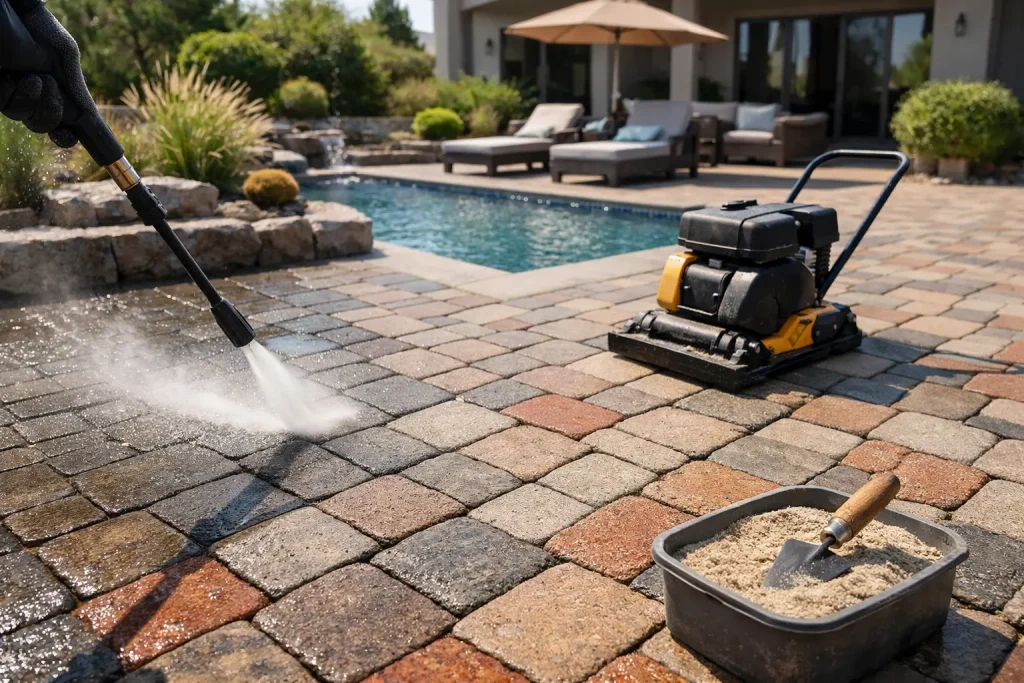
A faded patio, oil-marked driveway, or weed-filled walkway can make an otherwise well-kept property feel neglected. Paver restoration is a practical way to bring those surfaces back without rushing into expensive replacement. When it is done correctly, the process removes embedded grime, treats problem stains, refreshes joint areas, and helps protect the appearance and function of your hardscape.
For homeowners, that can mean enjoying an outdoor living area again. For HOAs, retail centers, and property managers, it can mean cleaner common areas, safer walking surfaces, and a stronger first impression for residents, tenants, and customers. The key is using the right cleaning method for the paver material, the condition of the surface, and the runoff requirements at the property.
What Paver Restoration Actually Includes
Pavers collect more than ordinary dust. Over time, their textured surfaces hold soil, tire marks, algae, mildew, irrigation residue, food spills, leaf tannins, pet stains, and oil. Sand between the joints can wash away, weeds can take hold, and the original color may become hidden under a dull film of buildup.
Restoration begins with an evaluation, not a one-setting cleaning approach. Concrete pavers, natural stone, clay brick, and permeable pavers can all require different treatment. A surface with light seasonal grime may need a careful wash and detail work. A driveway with old vehicle leaks may need targeted oil-stain treatment before cleaning. A heavily shaded patio with algae growth may need a surface-safe treatment to address organic growth rather than simply blasting the visible discoloration away.
The goal is not to make every older paver look brand new. Some fading, chips, settling, and permanent staining are signs of age or physical damage that cleaning cannot reverse. Good restoration makes the surface cleaner, more uniform, and easier to maintain while identifying areas that may need repair, releveling, or replacement.
Why Cleaning Pavers Is Not Just About Curb Appeal
The difference after professional cleaning is often immediate, but the benefit goes beyond appearance. Organic growth can make patios, pool decks, and walkways slippery, especially in shaded areas or where sprinkler overspray keeps surfaces damp. Removing that buildup helps create safer paths for family members, guests, residents, and customers.
Regular cleaning can also prevent stains from becoming harder to treat. Oil that sits in a driveway, rust marks near metal furniture, and mineral deposits around irrigation zones tend to set deeper over time. Addressing them early usually produces better results and may reduce the need for aggressive treatments later.
For commercial properties, clean pavers support the overall condition of the site. Storefront walkways, restaurant patios, entry plazas, and common areas receive constant foot traffic. When these surfaces are darkened by gum, spills, tire marks, and tracked-in dirt, people notice. Maintaining them helps the property look managed and protects the investment already made in the landscape and hardscape.
That is the maintenance-first approach: maintain it, don’t replace it. Cleaning cannot solve structural failure, but it can extend the useful life and visual appeal of pavers that are still in sound condition.
The Right Method Matters in Paver Restoration
Pressure can be useful, but more pressure is not automatically better. Improper use can scar the paver face, remove too much joint material, push water where it should not go, or create uneven cleaning marks. This is especially true when a homeowner uses a narrow spray tip too close to the surface in an attempt to remove a stubborn stain.
A professional approach matches the equipment and treatment to the surface. Pre-treatment may be used for algae, mildew, grease, or deeply embedded dirt. Controlled washing lifts the buildup from the paver surface and joints. Detailed finishing work addresses edges, corners, and areas around furniture, planters, gates, and walls where surface equipment cannot reach.
Oil stains deserve special care. Fresh spots are generally more responsive than older stains that have penetrated the paver. Depending on the material and severity, treatment may improve an old oil mark substantially without making it disappear completely. A transparent assessment should set that expectation before work begins.
Joint sand is another consideration. Cleaning can dislodge loose or deteriorated material between pavers. In some cases, the surface may benefit from re-sanding after cleaning to help stabilize the joints and discourage weed growth. Whether that is necessary depends on the paver system, current joint condition, drainage, and the level of cleaning required.
Responsible Runoff Is Part of a Quality Job
Cleaning a hardscape should not mean sending dirty water, chemicals, oil residue, and debris toward a storm drain. In coastal Southern California, runoff control is a serious property and environmental responsibility, particularly at commercial sites, parking areas, and locations near waterways.
A closed-loop water recovery process captures wastewater during cleaning so it can be properly handled rather than allowed to enter drainage systems. This is especially valuable when treating driveways with oil, high-traffic walkways with accumulated grime, or areas where cleaning solutions are needed for organic growth.
Water recovery also reflects a more careful work process. It takes planning, appropriate equipment, and attention to where water is moving throughout the job. For property owners and facility managers, that means the work can improve the surface without creating a separate cleanup or compliance concern.
When to Schedule Paver Cleaning
There is no single calendar that fits every property. A covered residential patio may only need professional service every one to two years. A sunny driveway with little tree cover may stay cleaner longer than a shaded walkway near landscaping. Pool decks, pet areas, restaurant patios, and busy retail entries often need more frequent attention because moisture, foot traffic, food spills, and organic debris build up faster.
Watch for dark patches that return after rain, slippery green growth, visible tire marks, weeds pushing through joints, or discoloration that does not rinse away with a hose. These are signs that routine sweeping is no longer enough.
For HOAs and commercial operators, scheduled maintenance is often easier to manage than waiting until the surface looks severely neglected. Cleaning smaller problem areas on a planned basis can support property standards and help avoid disruptive, large-scale restoration later.
A Straightforward Process From Estimate to Final Walkthrough
The best results start with a site assessment. Before providing an estimate, a professional should look at the paver type, square footage, staining, accessibility, drainage, nearby landscaping, and any areas requiring special care. This helps establish a clear scope of work and avoids surprises on service day.
After the estimate is approved, the work should be scheduled around the property’s needs. Residential clients may want a patio, walkway, and driveway cleaned before hosting guests. Commercial clients may need service timed around customers, tenants, deliveries, or quieter operating hours.
Once cleaning is complete, a final walkthrough gives the customer an opportunity to review the work and ask questions about maintenance. Channel Islands Pressure Washing approaches paver and exterior cleaning with that same hands-on accountability, using surface-specific methods and recovered-water practices where needed.
How to Keep Restored Pavers Looking Better Longer
After restoration, simple habits make a noticeable difference. Sweep leaves and soil before they become damp, stained debris. Address vehicle leaks quickly, and rinse food or beverage spills on patios as soon as practical. Adjust sprinklers that repeatedly soak the same paver area, since excess moisture encourages algae and mineral buildup.
Keep planter drainage and downspouts directed away from paver joints when possible. Standing water can carry soil into the joints, feed weed growth, and contribute to uneven discoloration. If you see loose joint sand or shifting pavers, deal with the issue before it expands into a larger repair.
Sealing may be an option after cleaning for certain paver surfaces, but it is not always the right answer. The pavers must be clean and adequately dry, and the selected product should suit the material and desired finish. A sealer can enhance color or help with stain resistance, but a poor application can leave blotchiness, trapped moisture, or a slippery surface. It is worth discussing the trade-offs before making that decision.
A clean patio or driveway does more than improve a photo or prepare for a gathering. It gives you a better-maintained property to use every day, with less buildup to fight and fewer reasons to think replacement is the only option.
Pingback: Curb Appeal Starts With Clean, Cared-For Surfaces – Channel Islands Pressure Washing, LLC