
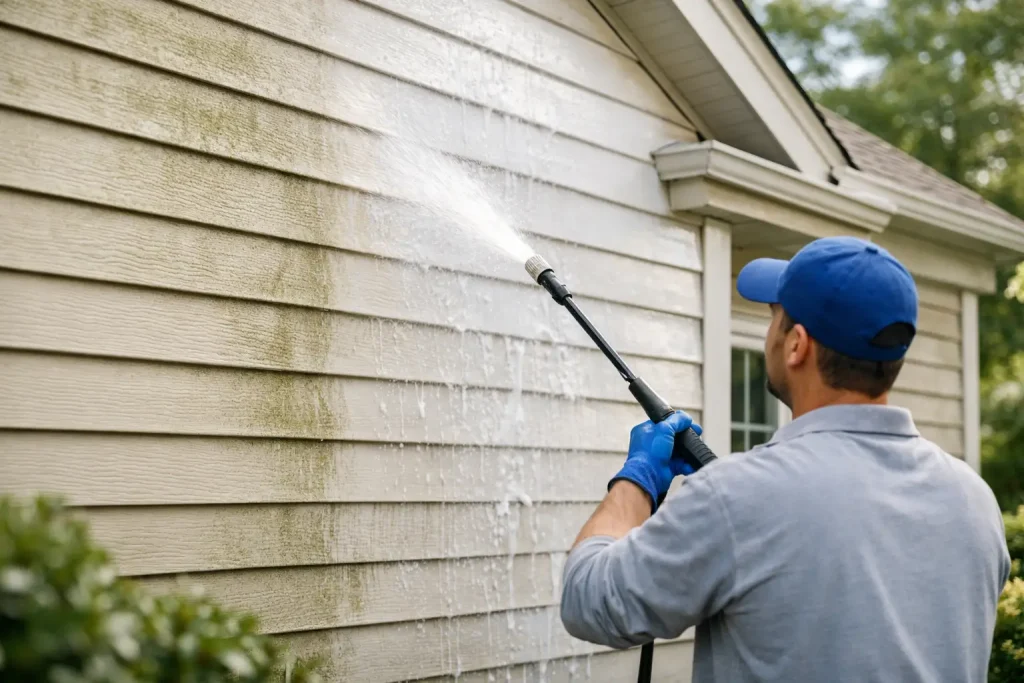
A green film along shaded walls, dark streaks below gutters, and salt haze near the coast can make an otherwise well-kept property look neglected. Soft wash siding addresses that buildup without blasting the exterior with high pressure that can scar paint, force water behind panels, or damage delicate finishes.
For homeowners, HOAs, and property managers, the goal is not simply a brighter building for a day or two. It is to remove the organic growth and surface contamination that hold moisture, affect curb appeal, and gradually shorten the life of exterior materials. Maintain it, don’t replace it.
What Soft Wash Siding Means
Soft washing is a low-pressure cleaning method designed for surfaces that need care. Instead of relying on force to strip away visible dirt, a trained technician applies a surface-appropriate cleaning solution, allows it time to work, then rinses at controlled, low pressure.
That distinction matters. Traditional pressure washing can be effective on durable concrete, certain hardscape areas, and heavily soiled parking surfaces. Siding, painted trim, stucco, fiber cement, and older exterior finishes often require a gentler approach. The right method depends on the material, its condition, the type of staining, and how water can safely be directed around the property.
A proper soft wash targets the cause of discoloration, not just the outer layer. Algae, mildew, mold-like growth, pollen, dust, spider webs, bird droppings, and coastal salt residue can all collect on siding. If a surface is only rinsed aggressively, some of that growth may remain in pores, seams, and textured finishes. It can return quickly, leaving the owner with a short-lived result and unnecessary wear on the exterior.
Why Coastal Properties Need Extra Attention
Southern California properties face a combination of conditions that are hard on exterior walls. Morning moisture, marine air, windblown debris, landscaping overspray, and shaded elevations create ideal conditions for grime and organic buildup. Walls beneath eaves and gutters can show dark streaks, while the north or shaded side of a building may turn green long before the sunny side does.
Stucco deserves particular attention. Its textured surface traps dust and residue, but excessive pressure can leave visible etching or uneven clean spots. Painted siding can fade or peel when it is already failing, and vinyl panels can be damaged if water is driven into laps, vents, or openings. Even brick and stone may need a more deliberate process if there are vulnerable mortar joints, nearby windows, or sensitive landscaping.
That is why the best cleaning plan begins with an inspection rather than a one-setting-fits-all approach. A technician should identify the surface material, check for loose paint or failed caulking, locate drainage paths, and note plants, electrical fixtures, open vents, and areas where water should not collect.
Soft Washing Protects More Than Curb Appeal
Clean siding makes a strong first impression, whether it is the exterior of a home, condominium community, storefront, or office building. But regular exterior cleaning also supports practical maintenance.
Organic buildup can retain moisture against a surface. Over time, that moisture may contribute to staining, paint deterioration, and premature wear, especially around trim, window frames, gutters, and shaded wall sections. Removing the buildup early is generally easier and less costly than waiting until stains have deeply set in or paint has begun to fail.
For commercial properties and HOAs, appearance also affects daily perception. Residents and customers notice dirty walls, streaked entryways, and neglected common areas. Clean building exteriors help reinforce that the property is cared for, while reducing the need for more expensive cosmetic restoration later.
There is a trade-off worth stating clearly: cleaning cannot repair a surface that is already damaged. Soft washing can remove grime that hides peeling paint, cracked stucco, or deteriorated caulk, but it should not be used to disguise those issues. A careful provider will point out maintenance concerns rather than washing over them.
How a Professional Soft Wash Is Performed
The process should be methodical, especially around landscaping, windows, and drainage areas. Before cleaning begins, surrounding plants and sensitive features are protected and pre-rinsed as appropriate. The crew then applies the cleaning treatment at a controlled rate, working in manageable sections so it does not dry unevenly on the surface.
After the treatment has had time to break down algae, grime, and staining, the siding is rinsed with low pressure. Detailed manual work may be needed around trim, fixtures, ledges, and stubborn spots. The final appearance should be even, not striped or patchy.
Runoff handling is part of doing the work responsibly. Cleaning water can carry loosened dirt, residue, and treatment products toward storm drains if it is not managed correctly. Channel Islands Pressure Washing uses closed-loop water recovery practices to capture runoff where needed and help keep contaminated water out of local waterways. This is especially relevant for commercial sites, HOA common areas, and properties where drainage leads directly toward curbs or landscaping.
A final walkthrough gives the owner or manager a chance to review the work, ask questions, and identify any areas that need additional attention. It also creates a useful record of the property’s condition for future maintenance planning.
When Soft Washing Is the Right Choice
Soft washing is often the preferred approach for painted exterior walls, vinyl siding, fiber-cement siding, stucco, trim, soffits, and many delicate architectural details. It is also useful when staining is primarily organic, such as algae, mildew, or dark moisture-related streaking.
It may not be the entire answer for every exterior problem. Heavy rust staining, irrigation mineral deposits, paint oxidation, grease, or construction residue can require specialty treatment. Severely deteriorated siding may need repair before cleaning. On a mixed-material property, the walls may be soft washed while concrete walkways, drive lanes, or parking areas receive a separate pressure-washing method.
The right question is not, “Can this be pressure washed?” It is, “What will clean this surface effectively without creating a new problem?” That surface-specific mindset helps prevent expensive mistakes.
How Often Should Siding Be Cleaned?
Most properties benefit from an annual inspection and cleaning schedule based on their exposure. A home near the coast, beneath large trees, or beside irrigated landscaping may need service more often than a dry, open property with full sun. HOA buildings and storefronts may also require more frequent cleaning because common areas and visible facades set the standard for the entire property.
Rather than waiting for thick green growth or black streaking, watch for early signs: dull walls, light green shading, salt film, drip lines under gutters, cobweb accumulation, or visible dirt around entryways. Addressing those conditions sooner usually means a lighter cleaning process and a more consistent appearance.
Between professional visits, keep sprinklers aimed away from exterior walls, clear overflowing gutters, trim vegetation that stays pressed against siding, and report leaks promptly. These small steps reduce the moisture and debris that make staining return.
A Straightforward Way to Plan the Work
A dependable siding-cleaning service should make the process simple. First, request a site assessment so the exterior material, staining, access, and runoff needs can be reviewed. Next, receive a clear, no-obligation estimate that explains the recommended approach. Then schedule the work at a time that fits the property’s residents, customers, or operating hours.
For larger communities and commercial facilities, it also helps to coordinate around parking access, pedestrian traffic, tenant notices, and water-recovery requirements before the crew arrives. Good preparation protects the property and keeps disruption to a minimum.
Clean siding should look like careful property ownership, not aggressive cleaning. When discoloration starts to take hold, a low-pressure, surface-specific service can restore the exterior while respecting the materials, landscaping, and waterways around it.