
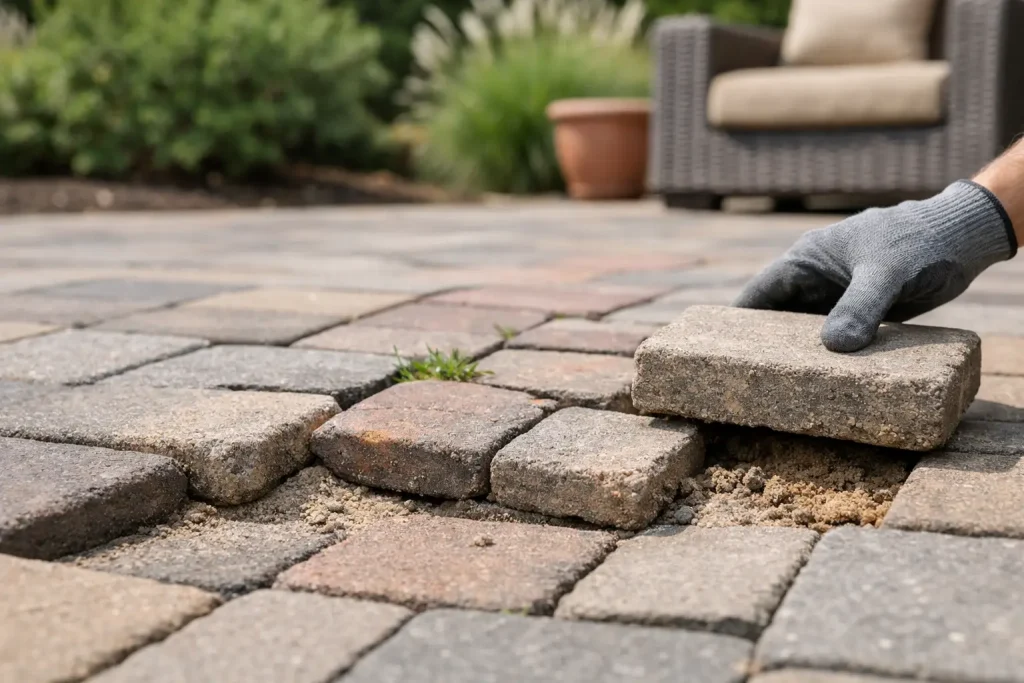
A patio can look freshly cleaned and still have a problem hiding underfoot. Paver sinking, shifting, lifting, or separating at the joints changes more than curb appeal. It can create a tripping hazard, direct water toward a building, make outdoor furniture wobble, and turn a once-level walkway into a liability for a home, HOA, or commercial property.
On Southern California properties, paver movement often develops gradually. A single low spot near a downspout, a raised edge beside a tree, or loose joint sand after a rainy season may seem minor at first. Addressing it early usually costs less and protects the surrounding surface from further damage. Maintain it, don’t replace it.
What Causes Paver Sinking, Shifting, and Lifting?
Pavers are designed to move slightly as conditions change, but they should remain supported, level, and tightly interlocked. When that support system is compromised, the visible surface begins to tell the story.
Poor base preparation
The most common cause is an unstable base beneath the pavers. Proper installation requires excavating to the right depth, placing compacted base material, leveling the bedding layer, and securing the edge restraints. If the base was too shallow, poorly compacted, or installed over unsuitable soil, traffic and moisture can gradually create low spots.
This is especially noticeable on driveways, parking areas, and walkways that handle frequent vehicle or foot traffic. A paver that dips in one area often means the base below it has settled, not that the paver itself has failed.
Water moving beneath the surface
Water is one of the biggest threats to a stable paver system. Runoff from gutters, irrigation overspray, leaking outdoor plumbing, or poor grading can wash away bedding sand and base material. Once water creates a path below the pavers, the surface may sink, separate, or become uneven.
Look closely at areas near downspouts, hose bibs, pool decks, planters, and driveway edges. Repeated puddling is not just a cleaning concern. It may indicate that water is collecting where it should be draining away.
Tree roots and soil expansion
Paver lifting is often linked to roots pushing upward from below. Mature trees add value and shade to a property, but their roots can exert enough pressure to raise pavers, crack nearby concrete, and distort edging.
Soil also expands and contracts with changing moisture levels. Coastal conditions, irrigation patterns, and periods of heavy rain followed by dry weather can all affect the ground beneath a hardscape. In these situations, a repair may need to address drainage and root management, not just reset a few loose pavers.
Failed edge restraints and lost joint sand
Pavers rely on edge restraints to hold the field of pavers in place. When those restraints crack, loosen, or were never installed correctly, pavers at the perimeter can spread outward. Gaps then develop, joint sand washes away, and the surface becomes more vulnerable to movement.
Joint sand is not decorative filler. It helps lock pavers together while allowing the system to flex. When it is missing, weeds can take hold, ants may tunnel through the bedding layer, and individual units can start shifting under normal use.
When Uneven Pavers Become a Safety Issue
Not every shifted paver requires a full rebuild. A small, stable imperfection in a low-traffic garden path may be mostly cosmetic. But uneven pavers deserve prompt attention when they create a raised edge, a depression that holds water, loose units, or a change in elevation where people walk.
For property managers and HOA boards, these areas can become slip-and-fall concerns in common spaces. Retail walkways, entrance paths, pool surrounds, and outdoor dining areas need particular attention because visitors may not notice a change in elevation until it is too late. A visibly uneven surface can also affect how tenants, guests, and customers view the overall condition of the property.
Driveways need a separate level of evaluation. Sinking pavers beneath parked vehicles may point to base failure, drainage issues, or soil movement that will continue under the weight of cars. Simply adding sand to the joints will not correct a depressed driveway section.
Cleaning Can Reveal the Real Condition of Your Pavers
Dirt, algae, mud, leaf stains, and oil residue can conceal uneven areas. Once a paver surface is professionally cleaned, drainage paths, loose joints, cracked edging, and settled sections are often easier to see. That is one reason cleaning and maintenance work well together.
However, cleaning is not a structural repair. Pressure that is too aggressive can dislodge loose joint sand or worsen a failing area, particularly when the pavers are already unstable. The right approach depends on the surface condition, the type of staining, and whether the pavers need repair before a full cleaning.
For example, an oil-stained driveway with solid, level pavers may be a good candidate for targeted treatment and controlled pressure washing. A driveway with active sinking around a drain or downspout should be assessed for the underlying water issue first. Cleaning can improve appearance, but it should not mask a problem that needs correction.
Channel Islands Pressure Washing uses surface-appropriate methods and water-recovery practices to help keep contaminated runoff out of local waterways. For paver areas, careful cleaning can remove grime and reveal maintenance needs without treating every surface like it can handle maximum pressure.
How Paver Repairs Usually Work
A qualified paver contractor can determine whether the issue is isolated or part of a larger drainage or base problem. For a limited settled area, the process commonly involves removing the affected pavers, correcting the base material, restoring the bedding layer, reinstalling the pavers level with the surrounding surface, and replenishing joint sand.
When roots are involved, the decision is more complicated. Cutting roots without guidance can harm a tree or lead to more movement later. A contractor may recommend adjusting the affected section, installing a root barrier where appropriate, or involving an arborist for significant root conflicts.
A larger repair may be necessary when multiple areas are sinking, water consistently flows toward the structure, or the entire installation lacks adequate base depth. This can feel discouraging, but correcting the foundation of the surface is more durable than repeatedly patching the same low spots.
Maintenance Habits That Help Keep Pavers Stable
A few routine checks can catch trouble before it spreads. After rain or irrigation, watch where water collects and where it leaves the paved area. Clear gutters and downspouts so runoff does not pour directly onto a patio or walkway. Adjust sprinkler heads that soak paver joints day after day.
Keep joints filled with the appropriate sand after cleaning or repair, and inspect perimeter restraints for separation or cracking. Remove weeds before their roots widen the joints, and address ant activity early if it is disturbing the sand beneath pavers.
Avoid using a concentrated pressure-washer stream directly into open joints or along loose edges. A professional can clean deeply while managing pressure, flow, and runoff based on the material and condition of the surface. That care matters around pavers near landscaping, drains, stucco, pool areas, and neighboring properties.
A Better Next Step Than Waiting
If a paver has started to sink, shift, or lift, mark the area mentally and check it again after the next rain or period of regular irrigation. Movement that continues, pooling water, or a noticeable trip edge should be evaluated before the issue affects a larger section of hardscape.
A clean, level paver surface makes an outdoor space safer, more usable, and easier to maintain. Deal with the water, base, root, or edge-restraint issue causing the movement, then keep the surface clean enough to spot changes early. That is how a patio, walkway, or driveway stays worth enjoying instead of becoming a replacement project.
Pingback: Paver Leveling Repair Guide for Safer Walkways – Channel Islands Pressure Washing, LLC
Pingback: How to Clean Lifting Pavers Without Damage – Channel Islands Pressure Washing, LLC