
A dirty driveway, storefront walkway, or parking area can look like a simple cleaning job until the wash water starts moving toward a curb drain. That is where property owners often ask: is runoff recovery required? In many cases, contaminated pressure-washing water cannot be allowed to enter a storm drain, gutter, or waterway. Whether a recovery system is specifically required for your job depends on the surface, the contaminants, the location, and local rules.
For Southern California properties, the safest working assumption is straightforward: if wash water may carry dirt, oil, detergents, paint residue, animal waste, algae treatment, or other pollutants, it needs to be contained and managed properly. Clean-looking water is not always clean water once it has passed over a roof, driveway, sidewalk, or commercial loading area.
When Is Runoff Recovery Required?
Runoff recovery is generally required when pressure-washing wastewater could discharge into the storm-drain system or reach a waterway. Storm drains are designed to carry rainwater away from streets and properties. They are not sanitary sewers, and water entering them may flow untreated to local creeks, beaches, and coastal waters.
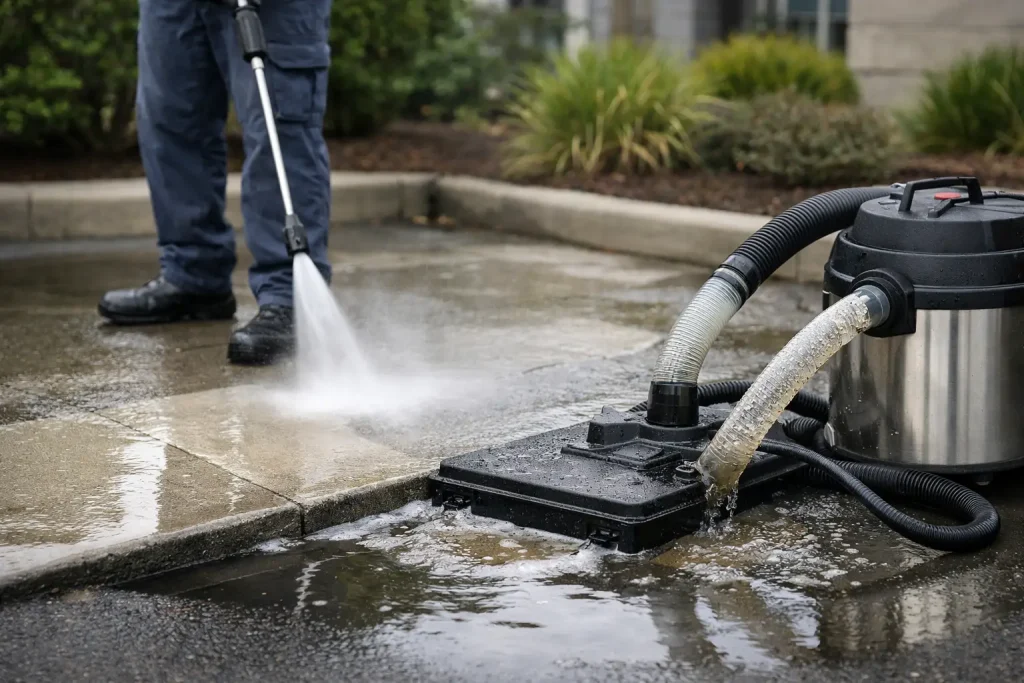
A recovery setup captures wash water before it reaches those drains. The water may be vacuumed into a holding tank, filtered, or removed for proper disposal based on the job conditions and applicable requirements. This is especially relevant in coastal communities, where a nearby gutter can lead to the ocean faster than many people realize.
The exact obligation is not identical for every property or city. Local municipal codes, stormwater permits, HOA rules, site-management requirements, and commercial lease terms can all affect what is required. A property manager may also require documented recovery practices even where a small residential job appears low risk.
The practical question is not simply whether a pressure washer is being used. It is what the water will pick up and where that water can go.
Jobs That Commonly Need Water Recovery
Recovery is commonly needed for cleaning projects involving visible contaminants or locations close to storm drains. Parking lots with vehicle fluids, restaurant sidewalks with grease, dumpster pads, service areas, gas-station concrete, and oil-stained driveways are clear examples. The resulting water can contain pollutants that should not be sent down the curb.
Roof washing and soft washing also require careful containment. Treatment solutions, moss, algae, roof grit, and accumulated debris can travel down gutters and onto pavement. The right approach may include temporarily blocking drains, directing flow away from sensitive areas, using lower-pressure methods, and recovering wastewater where necessary.
Commercial properties deserve particular attention because of their scale and traffic. A shopping-center walkway may have gum, food residue, tire marks, fuel drips, and cleaning products on the surface. Cleaning it without a plan for runoff can create a compliance issue while solving the appearance issue.
Even residential work may call for recovery. A driveway with an old oil spot, a patio affected by pet waste, or stucco with heavy mildew runoff can produce wastewater that should be contained. Smaller does not automatically mean exempt.
What Is Different About Rainwater and Wash Water?
Rainwater is naturally occurring runoff, although it can still pick up pollutants as it travels across hard surfaces. Pressure-washing wastewater is different because it is generated during an active cleaning process and often contains loosened contaminants, soaps, degreasers, or treatment chemicals.
That distinction matters. Letting a hose run across a clean surface may not present the same issue as washing a grease-stained dumpster enclosure with detergent. Likewise, rinsing dust from a small area is not equivalent to removing oil, tire marks, algae, paint, or graffiti residue.
This is why a qualified cleaning contractor begins with a site assessment rather than treating every surface the same. The team should identify drains, slopes, landscaping, nearby waterways, surface materials, and the type of buildup before equipment is started.
Who Is Responsible for Managing the Runoff?
Both the contractor and property owner have a role. A professional cleaning company is responsible for using appropriate procedures, equipment, and disposal practices for the work it performs. The property owner, HOA, or facility manager is responsible for selecting qualified vendors and understanding any site-specific rules that apply to the property.
For commercial sites, responsibility can involve several parties. The property manager may set vendor requirements, the tenant may control access to a service area, and the contractor may need to coordinate cleaning around deliveries or customer traffic. A written scope of work should make runoff handling clear before the appointment.
Do not assume that a contractor will handle this simply because they own a pressure washer. Ask how they plan to prevent wash water from entering storm drains, especially when cleaning oil stains, roofs, dumpster areas, garages, sidewalks, or large paved areas.
How a Closed-Loop Recovery System Protects Your Property
A closed-loop water recovery system is designed to keep wastewater contained during cleaning. Rather than allowing water to spread toward curbs and drains, technicians use barriers, vacuum recovery equipment, hoses, and collection tanks to capture it at the source.
This process offers more than environmental protection. It also keeps dirty water from streaking across adjacent walkways, settling into landscape beds, or leaving residue near building entrances. For businesses, that can mean fewer slip hazards and a cleaner result at the end of the job.
There is a trade-off: recovery work can take more planning and labor than simply spraying a surface and rinsing it away. Access, drainage layout, the number of storm drains, and the amount of contamination all affect the scope. But that added care helps prevent a routine maintenance project from becoming a complaint, cleanup expense, or avoidable compliance problem.
At Channel Islands Pressure Washing, recovery practices are paired with surface-specific cleaning methods. Delicate siding, roofs, and painted finishes may need soft washing rather than aggressive pressure. Concrete with oil staining may need pretreatment and detailed manual work before recovery. The goal is to clean thoroughly without damaging the material or sending the mess somewhere else.
Questions to Ask Before Scheduling Pressure Washing
Before approving a quote, ask whether there are storm drains near the work area and whether the contractor has inspected the site slope. Ask what products will be used, whether containment is needed, and how wastewater will be collected or disposed of.
For an HOA or commercial property, also ask whether the contractor can work around tenant hours, pedestrian access, parked vehicles, and loading schedules. A responsible runoff plan should not create a new problem for residents, customers, or neighboring businesses.
It also helps to ask about the surface itself. Older concrete, loose pavers, cracked sealant, aging stucco, and fragile roof materials require a different approach than newer hardscape. The best cleaning method is not always the highest pressure setting. Careful maintenance can extend the life of surfaces that would be costly to replace.
A Simple Way to Plan a Compliant Cleaning Job
Start with a site assessment. Identify the stains, the surface material, nearby drains, water access, drainage direction, and any sensitive landscaping or public walkways. This allows the contractor to recommend the right cleaning method and determine whether recovery equipment is necessary.
Next, get a clear estimate that identifies the cleaning scope and any runoff-control work. Transparent pricing matters because recovery needs can vary significantly between a small patio and a large commercial parking area.
Finally, schedule the work for a time when the area can be safely managed. Moving vehicles, closing a section of walkway, or coordinating with tenants may be necessary to protect people and give technicians room to contain and recover water properly.
A cleaner property should not come at the expense of the drainage system, nearby waterways, or the surfaces you are trying to preserve. When in doubt, treat wastewater as something that needs a plan, not something to rinse toward the curb. That is how routine exterior maintenance stays responsible, effective, and built to last – maintain it, don’t replace it!
Pingback: Commercial Runoff Compliance for Cleaner Properties – Channel Islands Pressure Washing, LLC
Pingback: Water Reclamation Versus Storm Drains Explained – Channel Islands Pressure Washing, LLC