
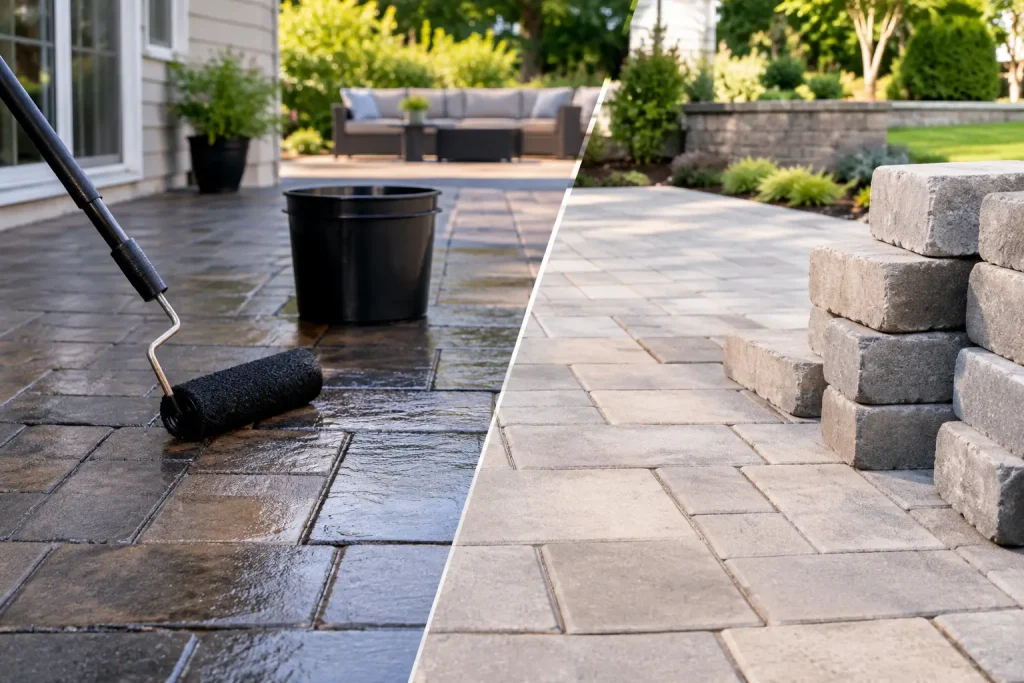
A patio can look ready for demolition when the real problem is years of surface grime, algae, oil, faded color, and neglected joints. For homeowners, HOAs, and property managers, paver sealing versus replacement is not simply a cosmetic decision. It affects safety, drainage, curb appeal, maintenance budgets, and the amount of material sent to a landfill.
The right answer depends on what is happening below the surface. If pavers are structurally sound, professional cleaning, joint repair, and sealing can often restore a cleaner, more uniform appearance for a fraction of replacement cost. If the base has failed or the pavers are badly broken, sealing may only hide a larger problem for a short time.
Channel Islands properties also face coastal moisture, salt air, irrigation overspray, foot traffic, and occasional oil staining. Those conditions can make a serviceable paver surface appear much worse than it really is. Maintain it, don’t replace it – but only when maintenance is the responsible choice.
When Paver Sealing Makes Sense
Sealing is usually worth considering when the pavers themselves remain intact and stable. A few small stains, light fading, sandy joints, or isolated chips do not automatically justify tearing out an entire patio, walkway, pool deck, or common-area plaza.
A proper restoration starts with inspection and cleaning, not with applying sealer over dirt. Embedded grime, mildew, tire marks, food spills, rust, and oil can all alter the color of pavers. In many cases, a surface-specific cleaning process removes the buildup that made the area look worn out in the first place.
After cleaning, the pavers need time to dry completely. Damaged or depleted joint sand can be replaced, then a suitable sealer can be applied to help stabilize the surface, enhance color where desired, and reduce how readily moisture and stains enter the paver face. The goal is not to make every installation look artificially glossy. The right finish should suit the material, the location, and the owner’s expectations.
Signs Your Pavers Are Good Candidates for Sealing
Paver sealing is often the practical option when the surface is generally level, most units are unbroken, and water drains away as intended. A patio that looks dull but feels solid underfoot is very different from one that rocks, sinks, or collects water after every irrigation cycle.
It can also be a strong choice when the main concern is recurring staining. Driveways and parking areas with minor vehicle-fluid marks, restaurant-adjacent walkways with spills, and pool decks with leaf stains can benefit from thorough cleaning followed by protection. Sealer does not make a surface maintenance-free, but it can give future spills less opportunity to soak deeply into porous pavers.
For commercial and HOA properties, sealing can improve consistency across high-visibility common areas. Clean, protected pavers support a cared-for appearance without the disruption, noise, and budget impact of a full replacement project.
What Sealing Can and Cannot Fix
A quality sealer is a protective maintenance product, not a structural repair. It cannot level a sunken walkway, correct improper slope, rebuild a failed base, or permanently bond together severely cracked pavers.
It also cannot compensate for poor preparation. Sealing over algae, trapped moisture, residual detergent, or oil stains can leave a blotchy finish and may cause whitening, peeling, or premature failure. This is one reason professional assessment matters. Different pavers absorb moisture and sealers differently, and the cleaning method must be appropriate for the surface.
Homeowners should also be careful with overly aggressive pressure washing. Used incorrectly, high pressure can scar the paver face, blow out joint sand, force water where it should not go, and make an already aging installation less stable. Delicate areas may require lower pressure, targeted treatment, and detailed manual work instead of a one-setting approach.
When Replacement Is the Better Investment
Replacement becomes the better choice when damage is widespread or the problem starts beneath the pavers. Replacing a few individual units is often possible. Replacing the entire area may be necessary when the installation has persistent movement, major drainage trouble, or broad deterioration.
Look for patterns rather than isolated flaws. One cracked paver caused by a dropped planter is a repair issue. Dozens of cracked, loose, or uneven pavers may point to foundation movement, tree-root pressure, vehicle loading beyond the original design, or a failing base.
Red Flags That Go Beyond Surface Maintenance
Consider a replacement evaluation if people trip on raised edges, if large areas have settled, or if water pools near the building after rain or irrigation. Those are safety and drainage concerns, not just appearance concerns.
Replacement may also be necessary when roots are lifting a walkway, when pavers are crumbling extensively, or when years of incompatible coatings have left the surface patchy and difficult to restore. In a commercial setting, uneven pavers can create liability concerns and frustrate tenants, customers, and maintenance teams.
If a paver area was installed without adequate base preparation, a new sealer will not stop continued movement. The responsible solution may be to remove the pavers, repair grading and drainage, rebuild the base, and reinstall or replace materials as needed. That work costs more, but it addresses the reason the surface failed.
Comparing Paver Sealing Versus Replacement Costs
The cost difference is usually significant. Professional cleaning and sealing generally requires labor, cleaning products, joint-sand work when needed, sealer, and careful preparation. Replacement can add demolition, disposal, delivery, excavation, base material, drainage corrections, installation labor, and new pavers.
That does not mean sealing is always the cheaper choice in the long run. Sealing a surface with active settling or drainage problems can lead to paying twice: once for cosmetic work and again for the later reconstruction. A fair estimate should identify whether the surface is a restoration candidate before recommending service.
Property owners should also account for downtime. A replacement project can interrupt access to patios, entry walks, retail frontage, parking areas, and shared amenities. Cleaning and sealing is typically less disruptive, although the area still needs to remain clear while work is performed and the sealer cures.
For HOAs and commercial managers, the decision often comes down to the condition of the majority of the installation. If 85 to 90 percent of a paver system is stable and presentable after cleaning, targeted repairs plus sealing may protect the budget. If the defects are widespread and create hazards, replacement planning is more prudent.
Cleaning and Runoff Matter Before Any Sealer Is Applied
Paver cleaning can produce contaminated runoff containing dirt, algae, oil, cleaning solutions, and debris. That runoff should not simply wash into storm drains and local waterways. Responsible service means planning the job around both the property and the environment.
Channel Islands Pressure Washing uses closed-loop water recovery practices for appropriate projects, capturing runoff rather than allowing contaminated water to travel off-site. This approach is especially valuable around commercial walkways, parking areas, oil-stained drive lanes, and properties near sensitive drainage routes.
Water recovery is not just an environmental talking point. It reflects careful job setup. Protecting nearby landscaping, controlling water flow, selecting the right cleaning process, and finishing detailed edges all help produce a better result without creating a new problem downstream.
A Practical Decision Process for Property Owners
Start with a site assessment before choosing products or booking a replacement contractor. Walk the area when it is dry and again after irrigation or rain if possible. Note loose units, pooling water, unstable edges, recurring algae, stains, and places where joints have washed out.
Next, separate structural concerns from surface concerns. If the pavers are stable but dirty, faded, and stained, request an estimate for professional cleaning, joint-sand restoration, and sealing. If there are trip hazards, sinking sections, or clear drainage failures, ask for a repair or replacement evaluation first.
Finally, think about how the area is used. A lightly used backyard patio may need a different finish and maintenance plan than a restaurant walkway, condominium pool deck, or retail-center entrance. High-traffic areas may benefit from a more frequent cleaning schedule so stains and organic growth do not become deeply embedded.
Protect the Surface You Already Have
The best time to address pavers is before staining, joint loss, and moisture exposure turn into larger repairs. A professional cleaning can reveal the true condition of the surface, while a well-chosen sealer can help preserve a paver area that still has years of useful life.
If the inspection shows deeper failure, knowing that early is just as valuable. The next helpful step is a clear, condition-based estimate that protects your property, your budget, and the waterways around it.