
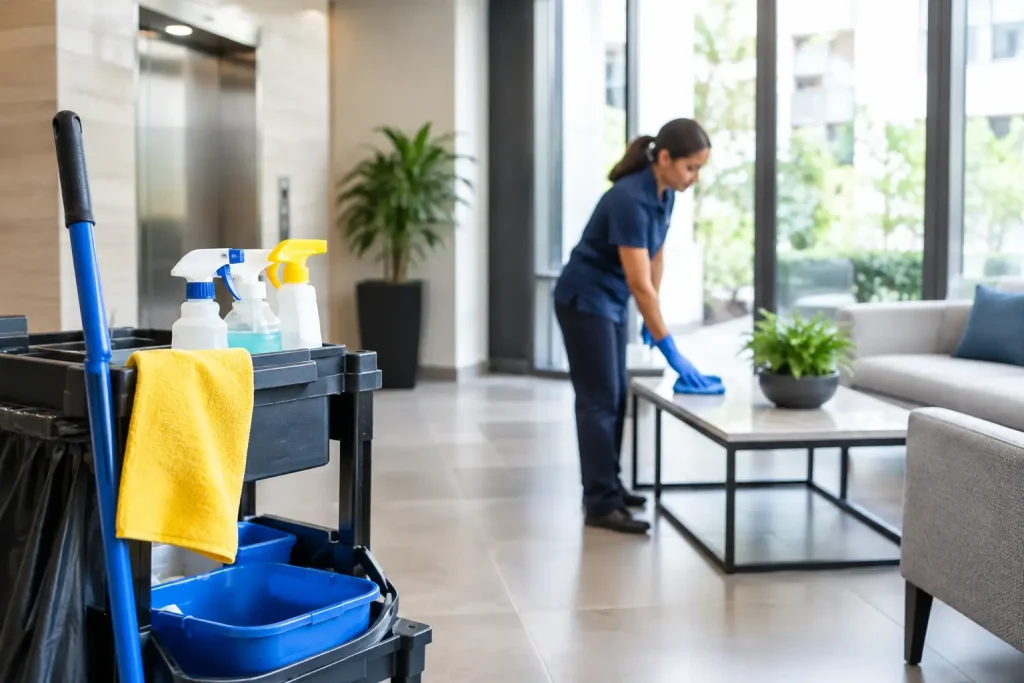
A neglected breezeway, oil-marked parking stall, or algae-darkened sidewalk can make an otherwise well-managed community feel uncared for. This condominium cleaning checklist helps HOA boards, property managers, and residents identify what needs attention, set reasonable maintenance intervals, and protect the surfaces that cost the most to replace.
For condominiums, cleaning is more than appearance. Regular care helps reduce slip hazards, prevent staining from settling into concrete and stucco, keep drainage paths clear, and support the property standards residents expect. The right plan also separates routine in-house tasks from jobs that require professional equipment, surface-specific methods, and responsible runoff control.
Start With Clear Cleaning Responsibilities
Before assigning tasks, confirm which areas belong to the HOA and which are the responsibility of individual residents. This avoids missed work, duplicate expenses, and disagreements about standards.
In most communities, the HOA or property manager oversees common areas such as sidewalks, stairwells, entryways, pool decks, parking areas, exterior building surfaces, roofs, shared patios, trash enclosures, and landscaped hardscapes. Individual owners may be responsible for private balconies, windows, patios, or interior spaces, depending on the governing documents.
A practical approach is to walk the property with a site map and make notes by zone. Identify high-traffic areas, surfaces exposed to shade or irrigation, drainage points, and places where residents or guests regularly enter the property. These are usually the areas where grime, algae, tire marks, pet stains, leaves, and debris become visible first.
Condominium Cleaning Checklist for Common Areas
Use this checklist during regular property inspections. It works best when the manager documents problem areas with photos and notes the last completed cleaning date.
Entrances, Walkways, and Stairwells
Entry areas set the first impression for residents, visitors, and prospective buyers. They also receive constant foot traffic and can become slippery when moisture combines with algae, mildew, dirt, or fallen leaves.
Check for:
- Dirt buildup, gum, beverage spills, and dark foot-traffic paths
- Algae or mildew on shaded sidewalks, stairs, ramps, and landings
- Rust marks below railings, planters, and metal fixtures
- Cobwebs around lighting, signage, corners, and entry canopies
- Clogged drains or low spots where water stands after irrigation or rain
Sweeping and spot cleanup should happen frequently, especially near entrances. When concrete has darkened or developed slippery organic growth, professional pressure washing may be needed. The correct method matters. Excessive pressure can scar concrete, damage coatings, and force water where it should not go.
Parking Areas, Garages, and Drive Lanes
Parking surfaces collect more than dust. Oil drips, tire marks, vehicle fluids, trash residue, and runoff can create stains that become harder to treat over time. In garages, poor cleaning can also leave a lingering odor and make the space look poorly maintained.
Inspect parking areas for fresh oil spots, old set-in stains, leaking dumpsters, tire-track buildup, debris along curbs, and blocked drains. Treat fresh oil as soon as possible. A quick response often improves the outcome and may reduce the need for aggressive treatment later.
For larger parking lots, garages, and loading areas, cleaning should include a runoff plan. Wash water can carry oils, sediment, detergents, and other contaminants toward storm drains. Professional water-recovery cleaning captures wastewater instead of allowing it to enter local waterways. That is especially important for coastal communities and properties with drains near high-traffic areas.
Building Exteriors, Stucco, and Siding
Stucco and siding can show dirt streaks, spider webs, irrigation overspray, bird droppings, mildew, and stains beneath windows or rooflines. Coastal moisture and shaded sides of buildings often need more attention than sunny elevations.
Walk around every building and look for discoloration under eaves, green or black organic growth, mud splatter near walkways, peeling paint, and staining around downspouts. Note the surface material before scheduling cleaning. Stucco, painted surfaces, wood trim, and delicate siding should not automatically receive high-pressure washing.
Soft washing uses low pressure and appropriate cleaning solutions to remove organic growth without blasting the surface. It is generally the safer choice for many exterior finishes, but the method should always match the material and condition. A good contractor will assess the surface first rather than treating every wall like concrete.
Roofs, Gutters, and Drainage Areas
A roof can look dirty long before it leaks, but roof debris and algae should not be ignored. Leaves, seed pods, and moss-like growth can hold moisture against materials and contribute to drainage issues. Gutters and downspouts that overflow can stain stucco, erode landscaping, and create pooling near foundations or walkways.
Inspect roofs visually from the ground for dark streaks, debris piles, visible plant growth, and blocked valleys. Check gutters for overflow marks and downspouts for discharge problems. Avoid sending untrained staff onto roofs. Besides the safety risk, improper foot traffic or high-pressure cleaning can damage shingles, tiles, and other roofing materials.
Roof cleaning should use a low-pressure, surface-appropriate process. The goal is to remove grime and organic growth while protecting the roof system – not to strip material away. Maintain it, don’t replace it.
Pool Decks, Patios, and Recreation Spaces
Pool decks, outdoor kitchens, playgrounds, courtyards, and shared seating areas need close attention because residents use them barefoot, with children, or while carrying food and drinks. Slippery surfaces, mildew, and neglected furniture affect both safety and enjoyment.
Look for algae near pool edges, sunscreen or food spills, dirty grout lines, mildew on furniture, debris beneath benches, and stains around grills or trash receptacles. Clean outdoor furniture according to its material. Wicker, wood, powder-coated metal, fabric cushions, and plastic all respond differently to water pressure and cleaning products.
Play equipment deserves the same care. Check for dirt, sticky residue, bird droppings, and buildup in handholds and slide areas. Cleaning should be thorough but gentle enough to protect coatings, decals, and safety surfaces.
Trash Enclosures and Utility Areas
Trash enclosures are easy to overlook until odors, pests, and stains become a resident complaint. These areas can accumulate leaking bag residue, grease, cardboard debris, and marks from bins being moved across the pavement.
Schedule regular sweeping and spot cleanup, then arrange deeper washing as needed. Inspect enclosure walls, gates, drains, and the concrete pad. If wastewater may contain grease or other contaminants, it should be managed carefully rather than washed toward a storm drain.
Set a Schedule That Matches Your Property
A cleaning schedule should reflect actual conditions, not just a calendar. A shaded complex with mature landscaping, frequent irrigation, or heavy resident traffic may need exterior service more often than a small, sunny community with limited common space.
Daily or weekly tasks often include sweeping entrances, removing litter, checking trash areas, and clearing visible debris from drains. Monthly inspections can cover walkways, stairs, common patios, parking areas, and exterior walls. Seasonal reviews are a good time to evaluate gutters, roof debris, algae-prone surfaces, and areas affected by wind, rain, or summer activity.
Deep exterior cleaning is often scheduled annually or semiannually, but it depends on the property. High-traffic commercial-style condominium communities, ocean-adjacent buildings, and complexes with shaded sidewalks may benefit from more frequent service. The most cost-effective plan is usually preventive: address buildup before stains set in or surfaces become unsafe.
When Professional Cleaning Is the Better Choice
Property staff can handle routine sweeping, litter removal, and simple spot cleaning. Professional help is appropriate when stains persist, organic growth returns quickly, surfaces require soft washing, roofs or gutters are involved, or cleanup could send contaminated water into storm drains.
Ask for a site assessment and a clear estimate that identifies the surfaces being cleaned, the method proposed, and how runoff will be handled. For condominium boards, this documentation makes it easier to compare quotes and explain the maintenance decision to residents.
Channel Islands Pressure Washing uses surface-specific cleaning methods and closed-loop water recovery to help keep contaminated runoff out of waterways. Detailed finishing work and a final walkthrough also give property managers the chance to address concerns before the job is considered complete.
A clean condominium property does not happen through one oversized annual project. It comes from regular inspections, prompt attention to stains and drainage, and professional care when a surface needs more than a hose and a broom. Keep the checklist active, adjust it as conditions change, and let preventive maintenance protect the property residents are proud to call home.