
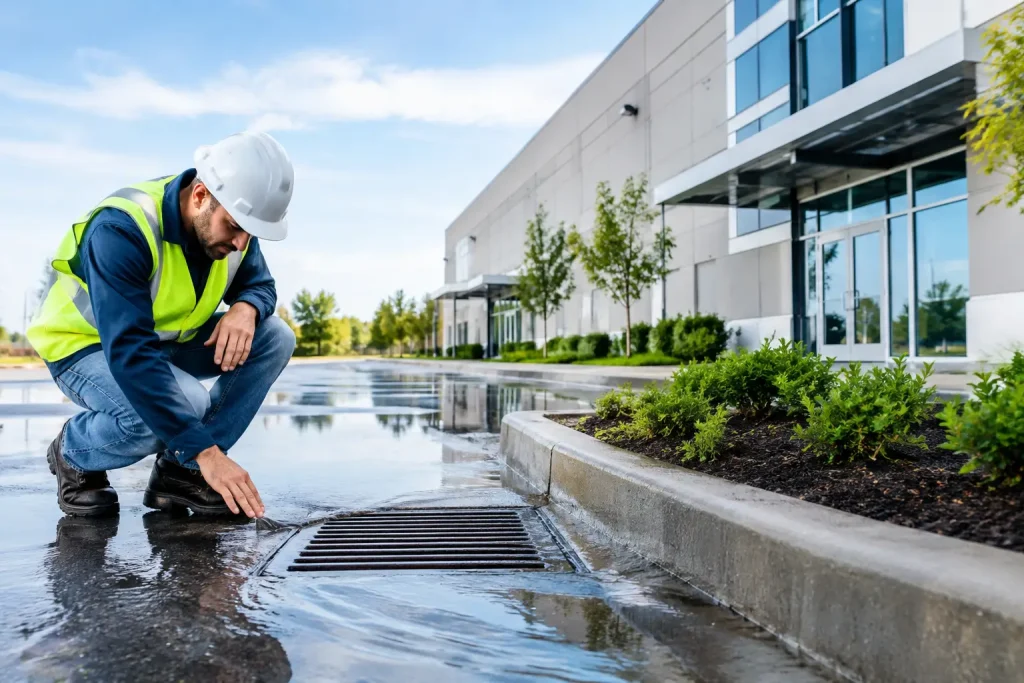
A clean storefront, parking area, or breezeway should not leave dirty water flowing toward a storm drain. Commercial runoff compliance is the practical responsibility of keeping wash water, oil residue, cleaning solutions, sediment, and other contaminants out of the local stormwater system. For property managers and business owners, it is also a direct reflection of how well the site is maintained.
In coastal Southern California, what enters a storm drain can travel quickly to creeks, beaches, and the ocean. That means the visible result of pressure washing is only part of the job. The water has to be handled correctly from the first rinse to the final cleanup.
Why Commercial Runoff Compliance Matters
Parking lots, sidewalks, loading areas, dumpster pads, storefront entries, and common areas collect more than surface dirt. Tire marks can carry petroleum residue. Food-service areas may have grease. Landscaped walkways can hold fertilizer, soil, and leaf debris. Even routine exterior cleaning can create wastewater that should not be allowed to enter a storm drain untreated.
For a commercial property, poor runoff handling creates several problems at once. It can expose the property to complaints or local enforcement, create slip hazards when water is left to spread across pedestrian areas, and damage the appearance of a site that tenants and customers expect to be well cared for. A clean property is a benefit. A clean property that sends contaminated water down the curb is not.
The right approach protects the surrounding environment while preserving the asset itself. Regular cleaning removes grime before it becomes staining, helps reduce buildup that can make surfaces slick, and allows facility teams to address oil spots, gum, mold, and neglected corners before they become more expensive restoration projects.
What Counts as Commercial Wash Water?
Wash water is not automatically clean just because it began as fresh water. Once water contacts a dirty surface, it may pick up oil, grease, trash residue, paint particles, detergent, animal waste, sediment, or chemicals. This is especially relevant in high-traffic commercial spaces where vehicles, foot traffic, landscaping, and deliveries all leave their mark.
A small amount of rinse water on a lightly dusty surface may call for a different plan than cleaning a heavily stained parking area or a dumpster enclosure. The method should match the conditions of the site. That is why a pre-service assessment matters: it identifies drainage paths, storm-drain locations, likely contaminants, surface materials, access points, and where recovered water can be collected safely.
Storm Drains Are Not Sanitary Sewers
This distinction is where many property owners get caught off guard. A sanitary sewer is designed to carry wastewater for treatment. A storm drain generally carries rainwater runoff away from streets and parking areas, often directly to local waterways. Sending pressure-washing wastewater into a storm drain can therefore be a serious compliance issue.
Requirements vary by city, county, site type, and the nature of the wastewater. Property managers should avoid assuming that a routine washdown is exempt from local rules. A professional cleaning provider should understand that drainage conditions are part of the scope of work, not an afterthought once the cleaning is finished.
How Water Recovery Supports Compliance
Closed-loop water recovery is one of the most effective ways to manage commercial cleaning runoff. Instead of letting wastewater flow across pavement and toward drainage inlets, the cleaning team contains the work area, vacuums the water, and transfers it for proper disposal based on the job conditions and applicable requirements.
This process has practical benefits beyond environmental responsibility. It keeps the site more controlled during service, reduces the chance of water spreading into landscaped areas or neighboring storefronts, and helps maintain a cleaner, safer work zone for customers and employees.
At Channel Islands Pressure Washing, recovered-water practices are part of the service approach because surface cleaning should improve the property without creating a new problem downstream. The team uses professional equipment to capture runoff while applying the cleaning method that fits the surface, whether that means pressure washing hardscape or using lower-pressure soft washing for more delicate materials.
Containment Is Not One-Size-Fits-All
Water recovery can involve drain covers, berms, vacuum equipment, hoses, and strategic work sequencing. The right setup depends on slope, surface condition, drain placement, traffic flow, and the amount of buildup being removed.
For example, a retail center with multiple entry points may need cleaning scheduled around business hours, with work completed in smaller contained sections. A warehouse loading area may require extra attention around vehicle oil, drains, and active deliveries. An HOA common area may need a quieter, lower-impact cleaning method near residents, landscaping, and pool-adjacent spaces.
The trade-off is simple: proper containment can require more planning and equipment than a quick wash-and-go service. But that preparation is what helps protect the property, its visitors, and the waterways beyond the curb.
A Better Process for Commercial Exterior Cleaning
Commercial runoff compliance starts before the machines are turned on. A careful contractor should walk the site, identify problem areas, and explain how water will be managed. This is also the time to discuss access, traffic control, tenant schedules, sensitive surfaces, and any recurring issues such as tire marks near entrances or grease buildup around waste areas.
After the site assessment, the cleaning plan should be clear. Property managers need to know which areas will be cleaned, what methods will be used, whether water recovery is necessary, and how the work will be scheduled to minimize disruption. Transparent planning makes it easier to coordinate with tenants, maintenance staff, and security teams.
During service, the goal is controlled cleaning rather than simply using more pressure. Concrete, pavers, stucco, metal, painted surfaces, awnings, and building exteriors do not all respond the same way. High pressure may be appropriate for durable hardscape in certain conditions, while soft washing is often the safer choice for surfaces that could be etched, chipped, or damaged.
Manual finishing also matters. Pressure washing can remove the broad buildup, but corners, edges, gum deposits, stains, and detail areas often need additional treatment. A final walkthrough gives the property representative a chance to review the work, confirm that drains and surrounding areas are clear, and identify any maintenance needs for the next service visit.
Maintenance Reduces Compliance Risk
Waiting until sidewalks are blackened, parking stalls are stained, or exterior walls are visibly neglected usually makes cleaning more difficult. It can also increase the amount of wastewater and treatment needed to restore the area. Routine maintenance is often the more practical option.
A recurring schedule can be tailored to the property. High-traffic shopping centers may need frequent attention at entrances, sidewalks, and trash areas. An office complex may need seasonal cleaning for walkways and building exteriors. Multifamily communities may benefit from regular service around pool decks, common paths, garages, and clubhouse areas.
There is no single schedule that fits every site. The best frequency depends on traffic, landscaping, weather exposure, tenant activity, nearby food service, and the property standard you are trying to maintain. The key is to address buildup early, before it becomes a visible liability or a costly cleaning challenge.
Questions to Ask Before Hiring a Cleaner
Before approving commercial cleaning, ask how runoff will be contained and recovered, where nearby storm drains are located, and whether the contractor has experience with your surface types. You should also ask how the crew handles oil-stained areas, cleaning solutions, pedestrian safety, and final site inspection.
Price matters, but the lowest quote may not include the equipment, labor, or planning required for responsible water handling. A provider who cannot explain their runoff plan may be offering a faster service, not necessarily a more complete one. For commercial properties, that difference can affect cleanliness, safety, tenant confidence, and compliance.
Maintain it, don’t replace it. With a thoughtful cleaning plan and responsible water recovery, your property can stay sharp, functional, and ready to make the right impression without sending the mess somewhere else.
Pingback: Are Pressure Washing Chemicals Biodegradable? – Channel Islands Pressure Washing, LLC