
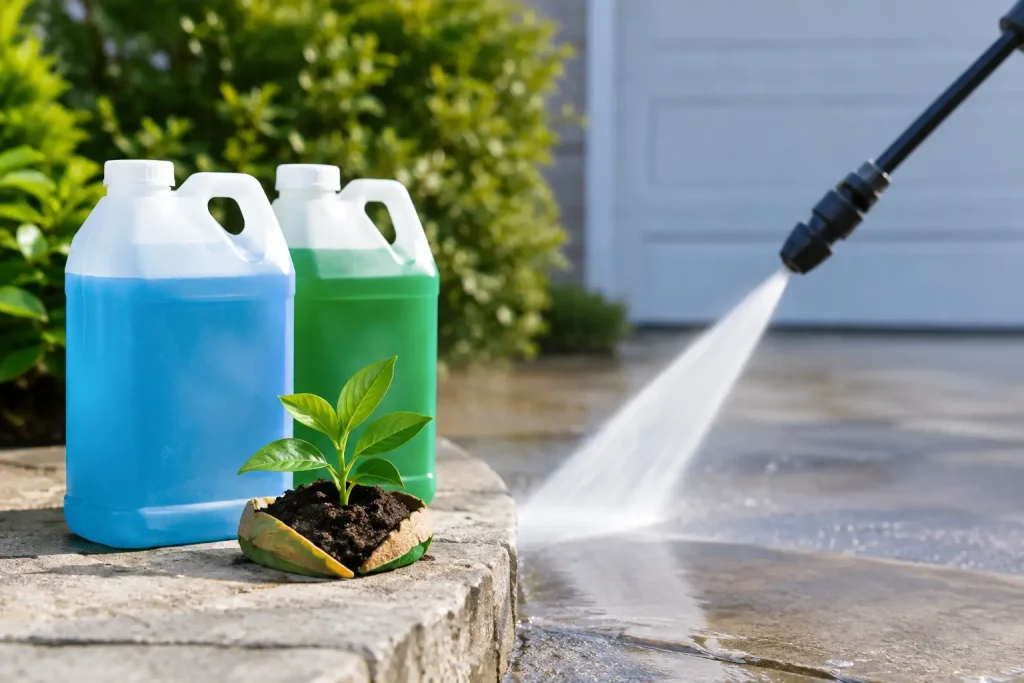
A clean driveway, roof, or storefront should not come at the expense of a storm drain, nearby landscaping, or local waterways. So, are pressure washing chemicals biodegradable? Some are, but that label alone does not tell you whether a product is safe to rinse into the environment. The chemical, the surface being cleaned, the soil being removed, and how the wastewater is handled all matter.
For homes, HOAs, and commercial properties across coastal Southern California, responsible exterior cleaning means looking beyond the before-and-after photo. It means choosing the right method for the material, using only the treatment needed, and keeping contaminated runoff under control.
Are Pressure Washing Chemicals Biodegradable? It Depends
Biodegradable means microorganisms can break a substance down over time into simpler compounds. Many modern detergents and surfactants – the ingredients that help water lift dirt, oils, and grime – are designed to biodegrade under specific conditions. That is a positive feature, but it is not a permission slip to allow wash water to flow into a gutter or storm drain.
A biodegradable cleaner may still carry pollutants off the surface. Think about what comes off a concrete driveway or shopping-center walkway: motor oil, tire residue, brake dust, food grease, pet waste, paint fragments, fertilizer, mildew, and sediment. Once mixed into wash water, those contaminants do not become harmless simply because the detergent itself can break down.
Biodegradation also takes time and depends on factors such as temperature, oxygen, microbial activity, concentration, and the receiving environment. A product that biodegrades in a controlled testing environment may still harm fish, plants, or water quality if it enters a stormwater system before it has broken down.
Not Every Cleaning Chemical Is Biodegradable
Pressure washing and soft washing use different types of products for different problems. General-purpose detergents may contain biodegradable surfactants. Degreasers used on oil-stained concrete can contain stronger alkaline ingredients or solvents. Rust removers and mineral cleaners may be acidic. Graffiti removers can contain specialized solvents. Disinfecting or algae-treatment solutions work through chemical reactions, not biodegradation.
For example, sodium hypochlorite, commonly used in properly managed soft washing for organic staining on roofs and siding, is not a biodegradable surfactant. It reacts and degrades over time, especially when diluted and exposed to sunlight, but it can still damage vegetation and affect aquatic life if used carelessly or allowed to enter waterways at an unsafe concentration.
The practical question is not just, “Is this chemical biodegradable?” It is, “What is being used, at what strength, on which surface, and where will the wastewater go?”
Why Runoff Is the Bigger Issue
In many California communities, curb gutters and storm drains lead to local waterways rather than a wastewater treatment plant. Water from pressure washing a patio, parking area, building exterior, or dumpster enclosure may look like ordinary rinse water, but it can carry a heavy pollutant load.
Oil and grease can create a sheen on water and harm aquatic habitats. Sediment can cloud waterways and affect drainage systems. Cleaning agents can change water chemistry. Organic debris washed from a roof or gutter can add nutrients to water, contributing to algae growth. On commercial properties, runoff may also contain metals, vehicle fluids, food waste, and other high-traffic contaminants.
This is why responsible cleaning is about containment as much as chemistry. Using a biodegradable detergent without managing runoff is not the same as environmentally responsible service.
Surface-Specific Cleaning Reduces Chemical Use
More pressure and more chemical are not signs of better cleaning. In many cases, they are signs that the wrong method is being used.
Concrete cleaning may require hot water, a surface cleaner, targeted degreasing, and recovery of wastewater, especially where oil stains or vehicle traffic are involved. Paver cleaning and restoration often call for controlled cleaning that protects joint sand and avoids driving contaminants into surrounding landscaping. A roof, painted stucco wall, or delicate siding usually needs a low-pressure soft-wash approach rather than aggressive pressure that can force water behind surfaces or strip finishes.
Choosing the proper method helps reduce the amount of product needed in the first place. It also protects the property. High pressure applied to aging concrete, roof materials, wood, window seals, or pavers can create expensive damage that a careful maintenance plan would have avoided.
That is the value of a professional site assessment. Before work begins, the team should identify the material, the type of staining, nearby drains, landscaping, access points, and areas where runoff needs to be captured or redirected. The goal is not simply to make a surface look new for an afternoon. It is to clean it effectively while protecting the materials and the surrounding environment.
What Responsible Water Recovery Looks Like
For projects where wastewater may contain contaminants, a closed-loop recovery process is one of the strongest safeguards available. Rather than letting wash water run along the curb, crews use containment and recovery equipment to collect it for appropriate disposal.
This is especially valuable for commercial pressure washing, HOA common areas, parking spaces, loading zones, dumpster pads, concrete walkways, and oil-stain treatment. These areas often collect more than dust. Recovering the water helps keep residues out of storm drains and supports a cleaner, better-maintained property for residents, tenants, customers, and neighbors.
At Channel Islands Pressure Washing, water recovery is part of a maintenance-first approach: maintain it, don’t replace it. A carefully cleaned paver patio, building exterior, or concrete entry can regain curb appeal and help prevent buildup from becoming a larger restoration problem. The right process also avoids turning a cleaning project into a runoff issue.
Questions to Ask Before Hiring a Cleaning Company
If environmental responsibility is a priority, ask direct questions before accepting an estimate. A qualified contractor should be able to explain what type of cleaning solution is appropriate for your surface, how they protect nearby plants, and what they do with wastewater.
Ask whether runoff will be captured when cleaning oily concrete, parking areas, or other contaminated surfaces. Ask whether the company adjusts pressure and chemistry for roofs, stucco, pavers, and painted finishes. It is also reasonable to ask how they handle a storm drain located near the work area.
Clear answers matter. A low quote can become costly if poor technique damages a roof, etches concrete, blows out paver joints, or sends polluted wash water into the drainage system.
Safer Choices for Homeowners and Property Managers
For light maintenance, start with the least aggressive effective option. Dry sweeping before washing can reduce the amount of dirt entering runoff. Spot-treating a small stain may avoid cleaning an entire area with chemicals. Scheduling regular gutter clearing can help prevent organic debris from washing off a roof or overflowing into walkways.
Avoid mixing cleaning products. Combining chemicals can create hazardous fumes or reactions, and using extra product rarely improves the result. Follow product directions, keep children and pets away from the work area, and do not rinse leftover chemicals toward the street.
For larger jobs, particularly those involving oil, algae treatment, heavy grime, commercial sidewalks, or sensitive landscaping, professional service is usually the more responsible choice. The equipment and planning required to control water, protect surfaces, and finish the job thoroughly are not always practical for a do-it-yourself project.
Clean Results Should Include Clean Runoff Practices
Biodegradable products can be part of a responsible cleaning plan, but they are only one part. The better standard is a process that uses surface-appropriate methods, limits unnecessary chemical use, protects landscaping, and captures contaminated water when needed.
When you are comparing exterior-cleaning options, look for a company that treats runoff control as part of the job, not an afterthought. Your driveway, roof, storefront, or HOA common area can look cared for without passing the mess downstream.