
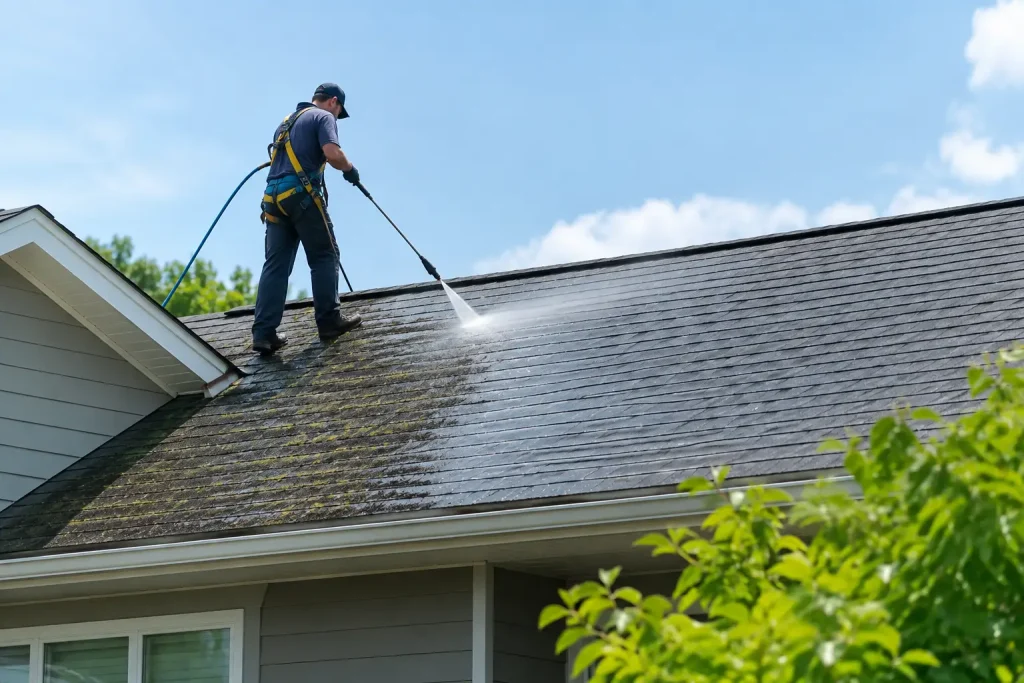
Dark roof streaks can make an otherwise well-kept home or commercial property look neglected. More importantly, that discoloration is often a sign of algae, lichen, moss, airborne grime, or moisture-holding debris settling into the roof surface. A professional roof wash addresses the buildup without using harsh pressure that can loosen granules, crack tile, or force water where it does not belong.
For property owners in coastal Southern California, roofs face a steady combination of marine moisture, dust, windblown debris, and sun exposure. Cleaning is not just about curb appeal. It is a practical maintenance step that helps you spot developing issues early and extend the useful life of materials you have already invested in.
Why Roof Buildup Should Not Be Ignored
Roof stains rarely stay only cosmetic. Algae and moss can retain moisture against shingles, tile, and other roofing materials. Leaves, needles, and dirt can collect in valleys and along edges, slowing drainage and creating damp areas where growth spreads more easily.
On a residential roof, this can make the home look older than it is and affect its overall presentation. For HOAs, apartment communities, retail centers, and office properties, uneven roof staining can make a whole site feel less maintained – even when the landscaping and walkways are in good condition.
The right cleaning schedule depends on the roof material, tree coverage, slope, shade, local weather, and the type of growth present. A bright, open tile roof may need attention less often than a shaded roof near mature trees. The goal is not to clean on a rigid schedule. It is to remove buildup before it becomes a larger maintenance problem.
Roof Wash Methods Matter More Than Water Pressure
A roof is not a driveway. While high-pressure cleaning can be appropriate for certain hardscape surfaces, it is usually the wrong approach for shingles, tile, and many delicate roof systems. Too much pressure can strip protective granules from asphalt shingles, dislodge tile, damage flashing, and shorten the life of the roof you are trying to protect.
Professional roof cleaning typically relies on a low-pressure soft-wash approach. This method applies surface-appropriate cleaning solutions at controlled pressure, allowing the treatment to break down organic growth and grime without aggressive blasting. The roof is then carefully rinsed or allowed to clean according to the material and treatment plan.
That distinction is worth asking about when requesting an estimate. A contractor should assess the roof before recommending a method. Material type, visible wear, pitch, drainage, solar equipment, surrounding landscaping, and access all affect the safest way to proceed.
What a Careful Roof Cleaning Visit Includes
A proper service begins before any cleaning starts. The technician should inspect the roof’s visible condition, identify heavily stained areas, and look for debris around valleys, gutters, skylights, vents, and solar panels. If there are obvious broken tiles, loose materials, or signs that roofing repairs are needed, cleaning should not be used to cover up the problem.
During the work, careful crews protect nearby plants, exterior walls, windows, and hardscape surfaces. They also avoid walking where it is unnecessary and use the right access equipment for the property. Manual detail work may be needed around edges, roof penetrations, and places where debris has collected.
Afterward, a final walkthrough helps confirm that the visible staining has been addressed and that the property is left orderly. This attention to detail matters because roof cleaning affects more than the roof itself. Runoff, landscaping, gutters, siding, and surrounding pathways all need consideration.
Responsible Runoff Handling Protects More Than Your Roof
A roof wash creates runoff that should be handled with care. Water carrying dirt, organic residue, or cleaning solution should not simply be allowed to flow into storm drains and nearby waterways. This is especially relevant in coastal communities, where responsible exterior cleaning protects local streets, drains, and the environment we all share.
Channel Islands Pressure Washing uses environmentally responsible water-recovery practices designed to capture runoff where site conditions allow and reduce unnecessary water use. It is a practical difference between a quick spray-and-go job and a professional service that considers the full property.
Runoff control can vary by roof design and access. A single-family home with accessible downspouts has different collection needs than a large condominium building or a retail property with multiple roof sections. A site assessment helps determine the right containment and recovery plan before work is scheduled.
Signs It Is Time to Schedule a Roof Wash
You do not need to wait until the entire roof looks black or green. Early service is often easier on the roof and less disruptive to the property. Consider a professional assessment when you notice recurring dark streaks, patchy green growth, moss around tile edges, debris collecting in roof valleys, or staining that remains after rain.
It can also be smart to schedule cleaning before putting a home on the market, after a long wet season, or as part of routine HOA and commercial-property maintenance. A clean roof supports a stronger first impression alongside clean windows, gutters, walkways, and exterior walls.
If your roof has solar panels, plan the service as a coordinated exterior maintenance visit. Panels, mounting hardware, and nearby roof areas require care, and cleaning one surface may reveal buildup on another. A thoughtful assessment keeps the work organized rather than treating every exterior surface as if it has the same needs.
Roof Washing for Homes, HOAs, and Commercial Properties
Homeowners often want a roof that looks clean again without risking damage to shingles, tile, stucco, or landscaping. They also want clear communication about what will be cleaned, how long it will take, and what to expect when the crew arrives.
For HOAs and property managers, the focus is broader. Common-area roofs, carports, breezeways, gutters, sidewalks, and building exteriors need to meet community standards while work is scheduled around residents and tenants. Commercial operators may also need cleaning coordinated around business hours, customer traffic, and site-specific runoff requirements.
In each case, the best approach is based on the property rather than a one-size-fits-all package. Transparent estimates, punctual scheduling, and a clear scope of work help prevent surprises.
Maintain It, Don’t Replace It
Cleaning cannot repair an aging roof or reverse damage caused by years of deferred maintenance. If shingles are curling, tile is broken, flashing is failing, or leaks are present, a qualified roofing professional should evaluate those concerns first. But when the roof is structurally sound and surface buildup is the main issue, careful washing can preserve its appearance and help avoid premature replacement.
That is the value of a maintenance-first mindset: maintain it, don’t replace it. Start with an on-site assessment, choose a roof-safe cleaning method, and make runoff responsibility part of the job. Your roof protects everything beneath it, and it deserves more care than a high-pressure rinse.
Pingback: Exterior Care Planning for Properties That Last – Channel Islands Pressure Washing, LLC
Pingback: Can Soft Washing Kill Algae Without Damaging Roofs? – Channel Islands Pressure Washing, LLC