
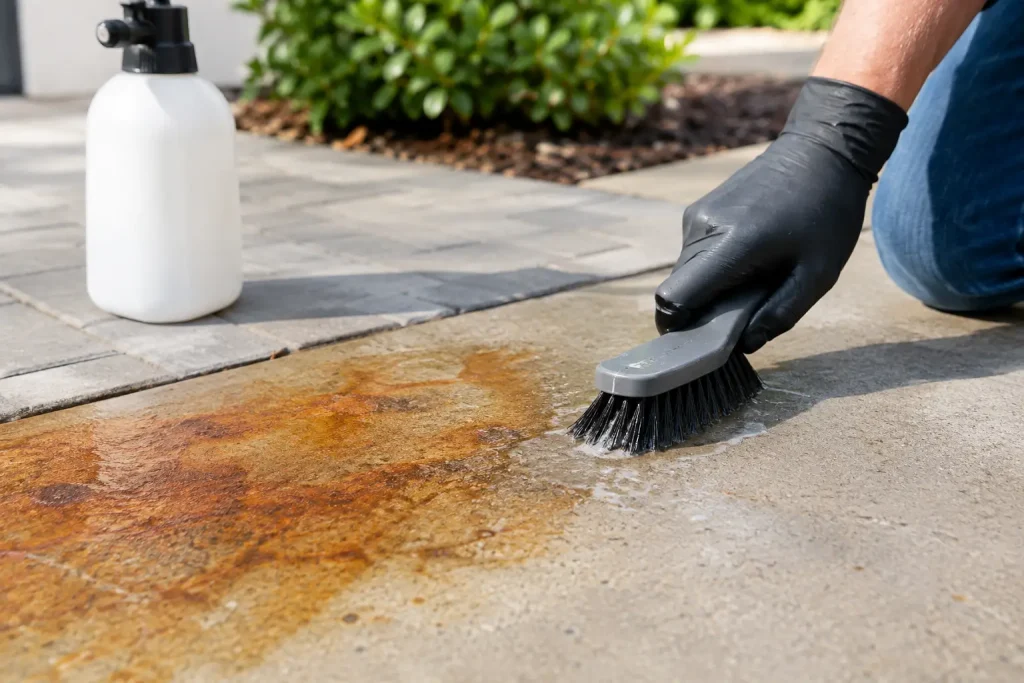
A rust-colored stain can make an otherwise well-maintained driveway, patio, walkway, or storefront look neglected overnight. Effective rust removal is not simply a matter of spraying a cleaner and rinsing it away. On concrete, pavers, stucco, and exterior building materials, the wrong product or pressure can leave permanent discoloration, surface etching, or contaminated runoff.
For homeowners, HOAs, and commercial property managers, the goal is straightforward: remove the visible stain, protect the material beneath it, and prevent the issue from returning. That takes the right diagnosis before cleaning begins.
Why Rust Stains Appear on Exterior Surfaces
Most exterior rust stains come from metal reacting with moisture and oxygen. Along the Southern California coast, salt air, morning moisture, irrigation, and seasonal rain can speed up that process. A small metal item left on a patio can leave a stubborn orange ring. A corroded gate, railing, planter, sprinkler component, or outdoor furniture leg can create streaks that spread across concrete or pavers.
On commercial properties, rust staining may come from metal fixtures, aging drainage components, loading-area equipment, dumpster enclosures, irrigation overspray, or structural elements. On residential properties, common sources include patio furniture, barbecue equipment, metal pots, hose reels, roof drainage, and fertilizer residue.
The source matters because a surface that is cleaned without addressing the cause will usually stain again. If irrigation is spraying a rusting fixture, for example, cleaning the walkway is only one part of the solution. Adjusting the irrigation, repairing the fixture, or adding a protective barrier helps preserve the result.
Rust Removal Is Not the Same as Pressure Washing
Pressure washing is excellent for lifting surface dirt, tire marks, algae, grime, and many types of buildup. Rust is different. It is a mineral-based stain that often bonds into porous materials, particularly unsealed concrete and natural stone. More pressure is not automatically better.
Using excessive pressure on a rust stain can roughen concrete, strip coatings, damage sand joints between pavers, or create a noticeably cleaner spot surrounded by untreated material. On painted surfaces, stucco, delicate masonry, and building exteriors, aggressive washing can do more harm than the stain itself.
Professional rust removal typically combines a surface-appropriate treatment with controlled rinsing and finishing work. The treatment is selected based on the stain source and the material being cleaned. Technicians test a small area first, monitor the reaction, and avoid allowing products to dry where they may create uneven results.
This is especially important for paver cleaning and restoration. Pavers vary widely in color, texture, age, and sealant condition. A product that performs well on plain gray concrete may alter the appearance of colored pavers or react poorly with a failing sealer. Careful treatment helps maintain a consistent finish across the entire area rather than creating a patchwork appearance.
What Can Be Safely Treated?
Many outdoor rust stains can be significantly reduced or removed, but expectations should be based on the surface condition. Fresh stains on sealed concrete or dense pavers often respond very well. Older stains that have sat through repeated wet-dry cycles may require more than one treatment. Highly porous concrete can retain a faint shadow even after professional cleaning, particularly if the rust source was left in place for months or years.
Rust removal can be appropriate for concrete driveways, sidewalks, pool decks, patios, pavers, retaining walls, stucco, painted exterior surfaces, metal-adjacent drainage areas, and some natural stone applications. Each material requires a different approach.
A careful site assessment should also identify surfaces where treatment needs extra caution. Polished stone, decorative coatings, painted concrete, older brick, fragile grout, and recently sealed pavers may require low-pressure methods, reduced dwell time, or a different cleaning plan altogether. A reputable cleaner will explain those trade-offs before starting rather than promising a one-size-fits-all result.
Common Areas That Benefit From Treatment
Driveways and walkways are frequent trouble spots because sprinkler overspray and metal furniture create stains where they are most visible. Rust removal can also improve pool-area hardscapes, courtyard pavers, entryways, dumpster pads, loading zones, and commercial sidewalks.
For HOAs and retail centers, treating these details can make a meaningful difference in how the property is perceived. Clean common areas support curb appeal, help maintain community standards, and reduce the impression that the property is being deferred or poorly managed. A rust-stained path near a main entrance may seem minor, but it is often one of the first things residents, customers, and prospective tenants notice.
Why Runoff Management Matters During Rust Removal
Exterior cleaning should protect more than the visible surface. Rust-treatment products, loosened dirt, oils, and mineral residue should not be allowed to flow unchecked into storm drains. This is a major concern on commercial sites, shared HOA properties, and any location near landscaped areas or waterways.
A responsible cleaning plan considers where rinse water will travel before work begins. Depending on the location, that may mean containing and recovering wastewater, using controlled application methods, blocking drains, or adjusting the process to minimize unnecessary water use. It also means protecting nearby plants, painted surfaces, glass, and exterior finishes from overspray.
Channel Islands Pressure Washing uses closed-loop water recovery practices for applicable cleaning projects, capturing runoff rather than treating storm drains as a disposal point. It is a practical approach that supports cleaner properties without shifting the mess downstream.
When DIY Rust Removal Creates Bigger Problems
Store-bought rust removers can be useful for a small, isolated mark on a suitable surface, but they are not risk-free. Homeowners often run into trouble when a strong acidic product is used on the wrong material, left on too long, or rinsed unevenly. The result can be bleaching, etching, streaking, damaged sealant, or a visibly lighter patch that is harder to correct than the original stain.
Avoid mixing cleaning chemicals. Products that seem harmless on their own can create dangerous fumes or reactions when combined. Never apply a rust remover without reading its surface and safety instructions, and do not use pressure to force chemicals into cracks, joints, landscaping, or nearby drains.
Professional service is particularly worthwhile when stains cover a large area, appear on decorative pavers or stucco, affect a commercial entrance, or sit near drains and landscaping. The cost of replacing damaged pavers, refinishing concrete, or correcting etched surfaces can easily exceed the cost of cleaning the area correctly from the start.
A Better Approach for Concrete and Paver Rust Removal
The best results begin with a close look at the stain and surrounding surface. A technician should identify whether the discoloration is actually rust, fertilizer staining, irrigation mineral deposits, battery acid, or another issue that needs a different treatment. Similar-looking stains do not always respond to the same chemistry.
After testing an inconspicuous section, the cleaning team can treat the affected area using the appropriate product and controlled dwell time. The surface is then rinsed carefully, with pressure selected for the material rather than used at maximum force. Manual detail work may be needed around edges, joints, drain covers, landscaping, and textured areas where staining lingers.
For a driveway or patio that also has dirt, algae, oil spots, or tire marks, rust treatment may be coordinated with full concrete cleaning or paver restoration. This creates a more even overall appearance and avoids the obvious “clean spot” effect that can happen when only one stain is addressed.
Keep Rust From Returning
Maintenance is usually less expensive and less disruptive than repeated restoration. Once the stain has been removed, check the surrounding area for rusting furniture feet, corroded fixtures, damaged gutters, exposed metal, and irrigation overspray. Replacing plastic or rubber furniture caps, moving metal planters, and correcting sprinkler coverage can make a real difference.
Sealing may help protect certain concrete and paver surfaces from future staining, but it is not right for every material or condition. A sealer can improve stain resistance, yet improper application or applying it over trapped moisture can create its own problems. The surface should be cleaned, fully evaluated, and prepared before that decision is made.
For managed properties, adding rust-prone areas to a recurring exterior maintenance schedule helps prevent small marks from becoming long-term stains. This fits a simple principle: maintain it, don’t replace it. A clean, protected hardscape lasts longer, presents better, and avoids unnecessary replacement costs.
If rust stains are pulling attention away from an otherwise well-kept property, do not wait for them to set deeper into the surface. A thoughtful assessment can determine what caused the stain, what can be restored, and how to protect the area long after the orange discoloration is gone.