
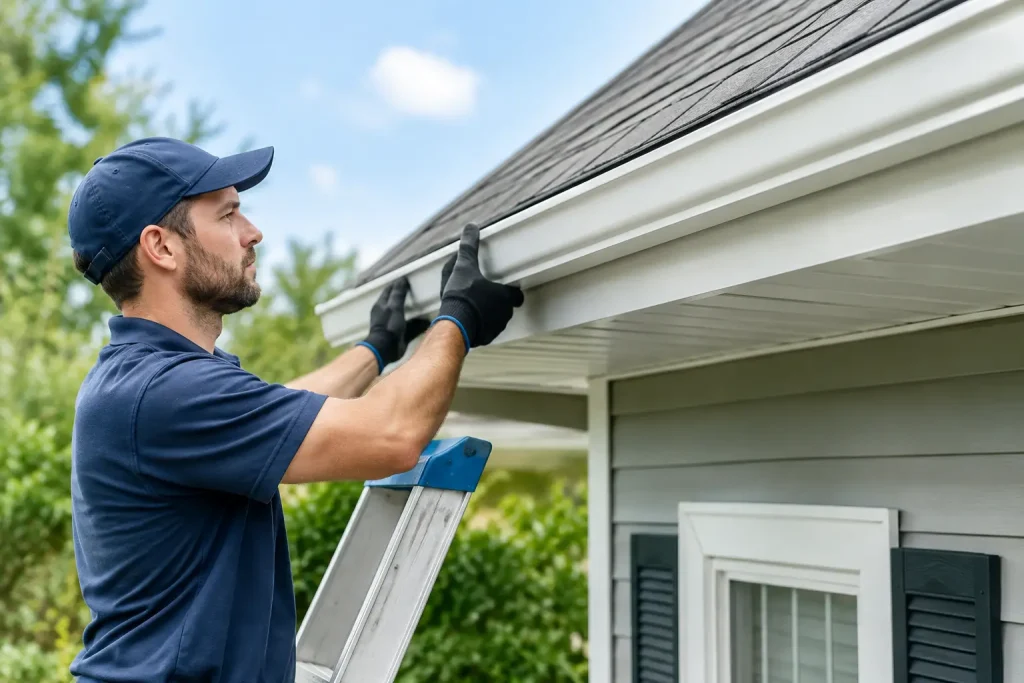
A stained driveway, overflowing gutter, or darkened roof rarely starts as a major property problem. Left alone, though, each can lead to surface damage, water intrusion, slip hazards, tenant complaints, and costly replacement. The best property maintenance ideas focus on catching visible problems early and cleaning surfaces with methods that protect the material underneath.
For homeowners, HOAs, retail centers, and commercial property managers, exterior maintenance is more than a cosmetic task. Clean, well-maintained surfaces make a property feel cared for, help preserve its value, and reduce the chance that minor buildup becomes a larger repair project. The goal is simple: maintain it, don’t replace it.
Property Maintenance Ideas for Exterior Surfaces
1. Clear gutters before the rainy season
Gutters direct rainwater away from the roofline, siding, foundation, and walkways. When leaves, roof grit, and debris block that path, water can overflow behind the gutter or pool around the building. That can stain stucco, rot fascia boards, erode landscaping, and create moisture issues near the foundation.
Gutter cleaning is especially valuable before seasonal rain and after heavy wind. For multi-unit communities and commercial buildings, it also helps to inspect downspouts and drainage outlets. A clean gutter is only useful if the water has somewhere clear to go.
2. Treat roof growth with soft washing, not high pressure
Dark roof streaks and organic growth can make a property look neglected long before the roof reaches the end of its service life. They can also trap moisture against roofing materials. The right cleaning method depends on the roof type, age, slope, and condition.
High pressure is not the answer for many roofs. It can dislodge granules, crack fragile tile, force water beneath materials, or shorten the life of shingles. A professional roof soft wash uses low pressure and surface-appropriate treatment to remove buildup without the unnecessary force. If roof cleaning has been delayed for years, an inspection before service is the sensible first step.
3. Keep concrete free of oil, algae, and tire marks
Driveways, sidewalks, parking stalls, loading areas, and pool decks take constant abuse. Oil drips, tire marks, food spills, algae, and tracked-in dirt do more than affect curb appeal. On damp surfaces, algae and grime can become a slip-and-fall concern.
Concrete cleaning should be scheduled before stains become deeply embedded. Fresh oil treatment is generally more successful than waiting until repeated traffic drives the stain deeper. For commercial properties, regular cleaning around storefront entrances, trash areas, and parking lots helps maintain a professional appearance for customers and tenants.
4. Restore pavers before replacing them
Paver patios, walkways, and common-area paths can shift, fade, collect weeds, and develop dark stains between joints. Many property owners assume worn pavers need replacement, but cleaning and restoration may give the area a much better second life.
A careful paver maintenance plan can include cleaning, stain treatment, joint inspection, and replenishing joint material where appropriate. The trade-off is that severely cracked or sunken sections may need repair first. Cleaning a surface that has drainage or structural problems will not solve the underlying issue, but it can reveal exactly where repairs are needed.
5. Wash building exteriors before stains set in
Stucco, siding, masonry, painted trim, and exterior walls collect dust, cobwebs, pollution, irrigation overspray, mildew, and runoff stains. Along the Southern California coast, marine air and moisture can make this buildup more noticeable, especially on shaded sides of a building.
Building washing improves appearance, but it also helps protect finishes from prolonged contamination. Delicate materials call for low-pressure soft washing rather than aggressive pressure. A qualified crew should match the approach to the surface instead of treating every wall like concrete.
6. Inspect irrigation overspray and drainage patterns
Sometimes the source of exterior staining is not the surface at all. Misaligned sprinklers can leave mineral deposits on walls, windows, fences, and walkways. Overspray also encourages mildew and algae in areas that should stay dry.
Walk the property while irrigation is running at least once each season. Look for water hitting the building, pooling near entrances, or flowing across walkways. Correcting the irrigation pattern can reduce repeat staining and make cleaning results last longer.
Maintenance Ideas That Improve Safety and Appearance
7. Put high-traffic areas on a regular cleaning schedule
The entrance to a building, clubhouse, storefront, or home creates an immediate impression. It also collects the most dirt. Instead of waiting until a walkway looks visibly dirty, set a cleaning schedule based on traffic, shade, landscaping, and nearby parking activity.
A busy shopping center may need more frequent attention than a single-family home, while an HOA pool deck may need cleaning around its heaviest-use months. The right frequency depends on conditions. Regular service often costs less and causes fewer disruptions than a major cleanup after years of neglect.
8. Clean outdoor furniture and play equipment
Patio furniture, benches, playground equipment, and community tables are easy to overlook because they are separate from the building itself. Yet these are the surfaces residents, visitors, and children touch most often. Dust, bird droppings, mildew, and sticky residue can make them unpleasant to use.
Cleaning should be gentle enough to protect coatings, plastics, wood, and painted surfaces. This is another area where more pressure is not always better. Manual detailing may be needed for crevices, hardware, and sensitive finishes.
9. Remove graffiti promptly and carefully
Graffiti can make a property look unmanaged, particularly near storefronts, perimeter walls, parking structures, and utility areas. Fast removal discourages repeat tagging and helps preserve a clean, secure appearance.
The removal method matters. Porous brick, painted stucco, metal, and concrete each respond differently to cleaning agents and pressure. Testing a small area first can prevent ghosting, paint loss, or a visibly uneven finish.
10. Check windows, ledges, and entry details
Exterior cleaning looks incomplete when glass is streaked or window ledges are coated in dust and debris. Clean windows improve natural light indoors and make a property feel more polished from the curb. Ledges, door frames, awnings, and exterior light fixtures deserve attention during routine inspections because they often collect cobwebs and runoff stains.
For upper-level windows or difficult access areas, professional equipment and safe work practices are worth the investment. A rushed ladder job can turn a simple maintenance task into a safety issue.
11. Plan for environmentally responsible runoff handling
Pressure washing can move contaminants such as oil, dirt, cleaning solutions, and debris into storm drains if the work is not properly managed. That is a concern for property owners as well as the surrounding community.
For areas with parking-lot grime, oil stains, or heavy buildup, ask how runoff will be handled before scheduling service. Channel Islands Pressure Washing uses a closed-loop water recovery process designed to capture runoff rather than allowing contaminated water to reach waterways. It is a practical choice for properties that need deep cleaning without treating environmental responsibility as an afterthought.
12. Document recurring problem areas
Property managers and HOA boards benefit from keeping simple maintenance notes. Record where gutters clog, which walls receive overspray, where oil stains reappear, and which walkways develop algae first. Photos taken before and after service can help identify patterns over time.
This documentation makes budgeting easier and helps separate recurring maintenance from one-time repairs. It also gives service providers useful information before they prepare an estimate, especially on larger commercial or multi-building properties.
When to Schedule Professional Exterior Cleaning
A property does not need to look severely neglected before it deserves attention. Schedule an assessment when you see roof streaks, stained stucco, slippery walkways, oily concrete, overflowing gutters, or pavers that have lost their original color. These are early signals that routine maintenance has fallen behind.
A professional estimate should account for the material, level of buildup, access, drainage conditions, and any sensitive landscaping or fixtures nearby. For HOAs and commercial properties, it should also account for scheduling around residents, customers, deliveries, and business hours. Clear communication before the work starts prevents surprises later.
The most effective maintenance plan is the one that fits the property you actually manage. Address the surfaces that see the most weather, traffic, and runoff first, then build a schedule that keeps small issues from becoming replacement projects.