
Hard water stains can make a clean driveway, patio, storefront, or pool deck look neglected even when the surface itself is in good condition. If you are searching for how to remove hard water stains, the right answer depends on what the stain is sitting on. A method that works well on glass may etch concrete, and a strong cleaner that lifts mineral scale from pavers can damage nearby plants or enter a storm drain if it is not controlled.
The good news is that most mineral staining can be improved without replacing the surface. The key is identifying the material, choosing a surface-safe treatment, and addressing the water source that caused the buildup in the first place.
What Hard Water Stains Actually Are
Hard water contains dissolved minerals, primarily calcium and magnesium. When sprinklers, hose water, pool splash, or a leaking fixture dries on a surface, those minerals remain behind. Over time, the residue builds into white, chalky spots, cloudy streaks, crusty deposits, or orange-tan discoloration when iron is present in the water.
On Southern California properties, sprinkler overspray is often the main culprit. It repeatedly hits the same section of stucco, glass, concrete, metal fencing, or pavers. Sun dries the water quickly, leaving another thin layer of minerals each time. What begins as a faint haze can become a stubborn scale that regular washing will not remove.
Hard water staining is not always only cosmetic. Thick mineral deposits can trap dirt, make glass less clear, dull sealed pavers, and create uneven-looking concrete. On commercial walkways and HOA common areas, that buildup can affect the appearance of the entire property.
How to Remove Hard Water Stains Without Damaging Surfaces
Start with the mildest effective option. Scrubbing harder or using a more aggressive chemical is not automatically better. Many exterior materials are porous, coated, painted, or sensitive to acidic products. Test any treatment in a small, inconspicuous area before applying it across the surface.
Concrete and driveways
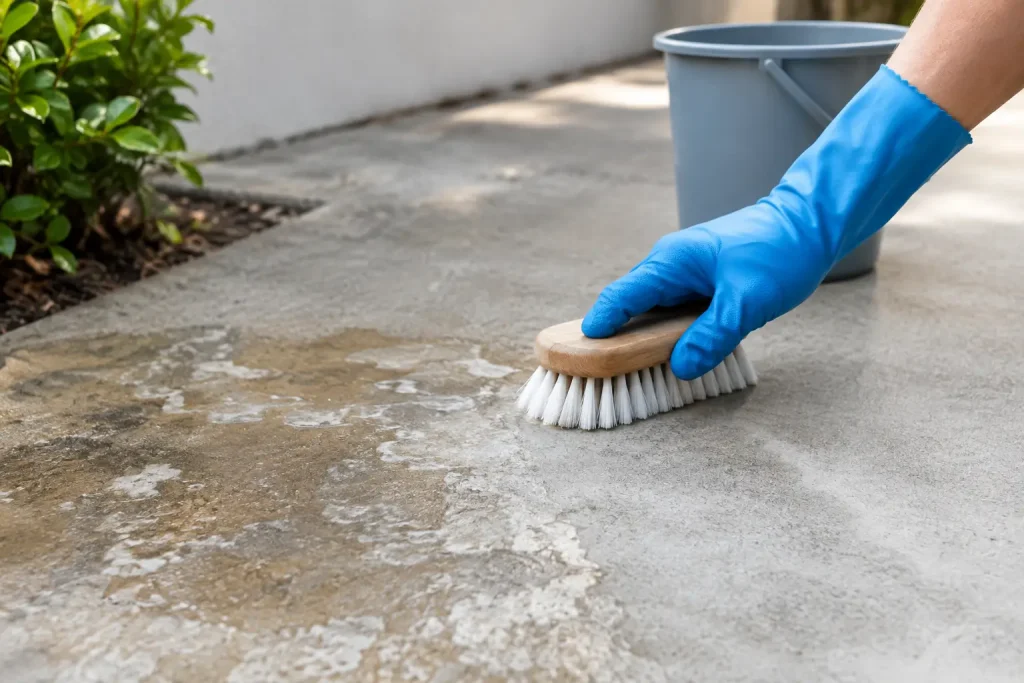
Concrete can collect hard water stains near sprinkler heads, irrigation lines, building walls, and pool equipment. Light mineral residue may respond to a dedicated, concrete-safe mineral remover and controlled agitation with a stiff nylon brush. The surface should be pre-wet where required by the product directions, and the cleaner should not be allowed to dry.
Avoid assuming that pressure alone will remove white scale. High pressure can clean surrounding dirt while leaving the mineral deposit behind, creating a patchy result. It can also leave wand marks if used inconsistently. Concrete that is old, cracked, decorative, or sealed needs extra care because aggressive acids or excessive pressure may alter its color or finish.
For widespread staining, a professional concrete-cleaning process usually combines the appropriate treatment with even surface cleaning and controlled rinsing. This helps avoid the zebra-striping and blotchy appearance that can happen when spot cleaning is done without blending the surrounding area.
Pavers and patios
Pavers are especially prone to water spots because their textured surface holds minerals and dirt. Before treating them, identify whether they are sealed. A cleaner that is safe for unsealed concrete may haze, weaken, or discolor a paver sealer.
For minor deposits, use a paver-appropriate mineral cleaner and a nonmetallic brush. Work in manageable sections, keeping the area wet enough that the product does not dry on the surface. Rinse carefully and avoid pushing chemical residue into landscaping or street gutters.
If pavers have heavy white staining, joint sand loss, algae, or faded areas along with mineral buildup, cleaning should be part of a larger restoration plan. Proper paver cleaning can prepare the surface for re-sanding and resealing when needed. That approach restores a more uniform appearance and can make future maintenance easier.
Glass, windows, and pool fencing
Hard water stains on windows often appear as cloudy dots that stay visible after a normal wash. Mild deposits can sometimes be removed with a glass-safe mineral remover and a soft applicator. Never use abrasive pads, razor blades, or harsh acids without knowing the type of glass and coating involved. Tempered glass, tinted glass, and specialty coatings can be permanently scratched or etched.
If stains have been left for months or years, they may have etched into the glass rather than simply sitting on top of it. Cleaning can still improve the appearance, but complete removal is not always possible. Honest assessment matters here: forcing an aggressive treatment may create more damage than the stain itself.
Stucco, siding, and painted surfaces
Mineral streaks on stucco are common below sprinklers, rooflines, and leaky gutters. These surfaces call for a gentle approach. High pressure can scar stucco, force water behind siding, or strip paint. Strong acid can discolor finishes and damage nearby vegetation.
A low-pressure soft-wash process, paired with a compatible specialty cleaner where appropriate, is often safer than pressure washing alone. The goal is to loosen the mineral deposit and surrounding organic grime without driving water into the building envelope. Manual detail work may still be necessary around trim, fixtures, and delicate painted areas.
What Not to Do With Mineral Stains
Do not mix cleaning products. In particular, never combine bleach with acids, ammonia, or unknown cleaners. Dangerous fumes can result. Wear appropriate gloves and eye protection, follow the product label, and keep children and pets away from the work area.
It is also wise to skip household shortcuts that are too abrasive for exterior surfaces. Vinegar may help with light deposits on some materials, but it is acidic and not a universal answer. It can affect natural stone, damage certain sealers, and leave uneven results on large concrete areas. Wire brushes, aggressive sanding, and untested acid washes can create permanent scratches or color changes.
Most importantly, do not rinse cleaning chemicals down the driveway and into the gutter. Storm drains commonly flow to local waterways. Runoff can carry detergents, mineral removers, oils, sediment, and other contaminants with it. Protecting the property should not come at the expense of the surrounding environment.
Stop the Stains From Returning
Cleaning the stain is only half the job. If sprinklers continue hitting the wall or walkway every morning, the mineral deposits will return quickly. Adjust sprinkler heads so they water landscaping rather than hard surfaces. Repair leaks at hose bibs, pool equipment, gutters, and irrigation lines. If the issue is near a pool, minimize repeated splash and rinse residue before it dries.
Sealing may help certain concrete and paver surfaces resist future buildup, but it is not a cure-all. The surface must be properly cleaned and fully dry before sealing, and the right sealer depends on the material and desired finish. A poor sealer application can trap existing discoloration or create a slippery surface, so this is an area where preparation matters.
For commercial properties and HOAs, routine exterior maintenance is often more cost-effective than waiting for buildup to become severe. Regular service keeps walkways, building exteriors, parking areas, and common spaces presentable while reducing the need for more aggressive restoration later.
When Professional Cleaning Is the Better Choice
Call a professional when stains cover a large area, affect delicate surfaces, sit near landscaping or drainage, or have resisted basic surface-safe cleaning. It is also a smart choice for multi-unit properties, retail centers, and buildings where appearance, tenant experience, and runoff compliance all matter.
A qualified exterior-cleaning team should assess the surface before selecting a method. Concrete, pavers, stucco, roofing, windows, and painted finishes do not all receive the same treatment. For jobs that generate contaminated wastewater, water recovery can capture runoff instead of allowing it to travel into storm drains.
Channel Islands Pressure Washing uses surface-specific cleaning methods and closed-loop water recovery for appropriate projects, combining professional equipment with careful finishing work. That means looking beyond a quick rinse to address the stain, protect the material, and leave the property ready for a final walkthrough.
A white stain does not always mean a worn-out surface. With the right treatment and a fix for the water source, you can often restore the appearance of concrete, pavers, glass, and exterior walls. Maintain it, don’t replace it.