
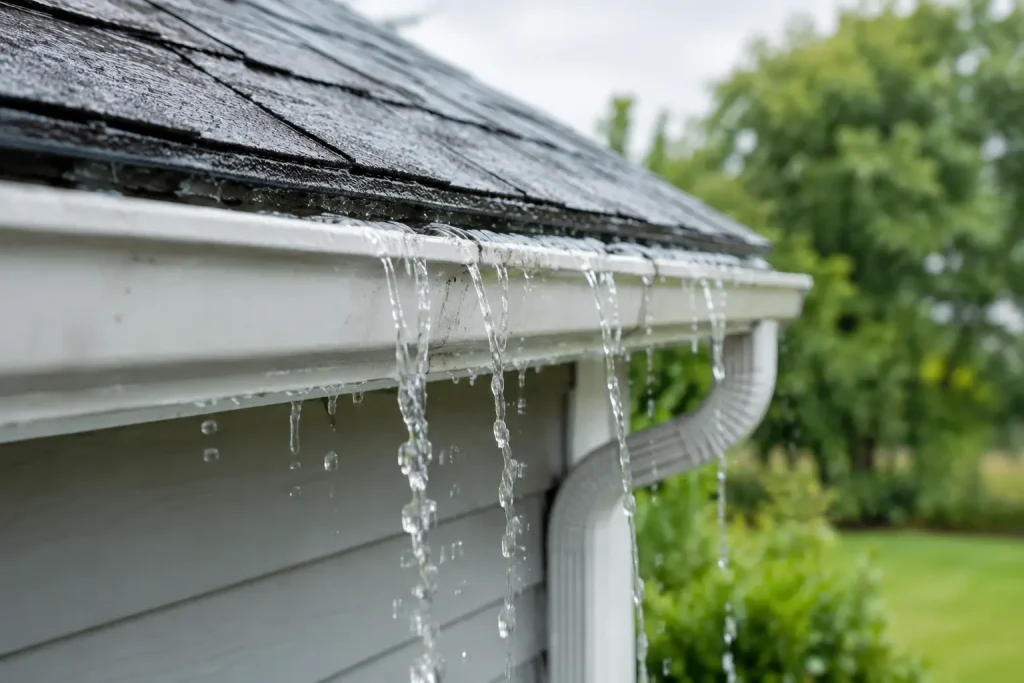
A gutter can look fine from the ground and still send water over the edge during the next hard rain. That is why do gutters overflow is more than a simple cleaning question. Overflowing water can stain siding, soak fascia boards, erode landscaping, and collect beside the foundation where it does not belong.
For homes, HOAs, and commercial properties throughout coastal Southern California, gutter problems often build gradually. Windblown leaves, roof grit, seed pods, and salt-air moisture can turn a manageable maintenance item into a leak, stain, or drainage concern. Finding the cause early is usually far less expensive than repairing the damage water leaves behind.
Why Do Gutters Overflow During Rain?
Most overflows happen because water cannot move through the gutter system as quickly as it reaches the roof edge. The blockage may be obvious, such as a gutter full of leaves, or hidden inside a downspout or underground drain. In some cases, the gutter is clean but installed, sized, or sloped in a way that prevents proper drainage.
A brief overflow in a once-in-a-season downpour is different from water spilling over in an ordinary rain. If the problem repeats, treat it as a drainage issue rather than waiting for the next storm to test it again.
Debris blocks the gutter channel
Leaves are the usual suspect, but they are not the only material that causes trouble. Roof granules from aging shingles, decomposed organic matter, pine needles, small branches, bird nests, and windblown dirt settle in gutters over time. Once wet, that buildup becomes heavy and dense. Water flows over it instead of toward the downspout.
Homes near mature trees need more frequent attention, especially after windy weather. Even a property without large trees can collect debris from neighboring yards, roof valleys, and seasonal seed drop.
The downspout is clogged or restricted
A gutter can be completely clear and still overflow if the downspout is packed with debris. Water reaches the outlet, backs up, and rises until it spills over the front or rear edge. Clogs commonly form at the top elbow, the lower bend, or where a downspout feeds an underground drainage line.
Look for water cascading from one section of gutter while nearby sections appear full. That pattern often points to a blocked downspout rather than a gutter-wide debris problem. Clearing the visible opening is not always enough. The entire downspout and outlet need to be checked so water has a clear path to discharge away from the building.
Gutters are pitched the wrong way
Gutters need a subtle slope toward the downspout. It is not usually visible from the ground, but it makes a major difference. When a gutter settles, pulls loose, or was installed with inadequate pitch, water pools in the middle or at the far end instead of draining.
Standing water adds weight and accelerates wear on hangers, seams, fascia, and the gutter itself. If you regularly see water sitting in a section long after rain has stopped, the system likely needs adjustment, not just cleaning.
The gutter is too small for the roof area
Large roof planes can shed a surprising amount of water during a heavy storm. If the gutter is undersized, too shallow, or served by too few downspouts, water may outrun its capacity even when everything is clean. Roof valleys are especially demanding because they concentrate runoff from two roof surfaces into one spot.
This issue depends on the roof design, rainfall intensity, gutter profile, and downspout placement. A larger gutter or an additional downspout may be the practical answer, particularly where overflow happens at the same location during every strong rain.
Water is shooting past the gutter
Not every apparent overflow starts inside the gutter. Rain can run quickly down a steep roof, pass over the outer edge, and miss the channel entirely. This may happen when the gutter sits too low, the roof edge is damaged, or a drip edge is missing or improperly positioned.
The distinction matters. Cleaning a gutter will not solve water that never enters it. During light rain, safely observing where the water travels can help identify whether it is backing up, overshooting, or leaking through a damaged section.
Signs of Gutter Overflow Before It Rains
You do not have to wait for a storm to spot a potential problem. Dark streaks on the outside of the gutter, peeling paint on the fascia, sagging sections, or plant growth inside the channel all suggest that maintenance is overdue. Rust around seams and fasteners can also signal recurring standing water.
At ground level, watch for washed-out mulch, bare soil trenches, water marks on stucco, or algae growth beneath the roofline. On commercial buildings and multifamily properties, recurring puddles near entrances, walkways, and exterior walls deserve prompt attention. Standing water can affect appearance and create slip hazards in common areas.
Inside the building, ceiling stains near exterior walls, musty odors in upper rooms, or moisture around windows may be related to roof or wall issues. Gutters are not always the cause, but uncontrolled runoff should be ruled out before the problem worsens.
What Overflowing Gutters Can Damage
Overflow is easy to dismiss because the water is outside. The trouble is that water follows the path of least resistance, often behind the gutter or down the side of the building. Over time, this can rot fascia boards, loosen gutter hardware, stain siding, and contribute to mold or mildew on exterior surfaces.
Water collecting near the foundation can soften soil and direct moisture toward crawl spaces, basements, or lower-level walls. It may also undermine pavers, wash out landscape beds, and leave dirty splash marks on concrete. For HOAs and commercial sites, repeated runoff can make otherwise well-maintained buildings look neglected while increasing repair and cleaning needs.
There is also a safety consideration. A gutter weighed down by wet debris can pull away from the roofline. Trying to clear it from an unstable ladder or reaching across a roof edge creates unnecessary risk. When gutters are high, heavily clogged, or visibly loose, professional service is the safer choice.
How to Stop Gutters From Overflowing
The right fix starts with identifying the cause. If debris is the issue, a thorough gutter clearing should remove material from the channels, outlets, and downspouts, not simply scoop the top layer. The roofline and discharge area should then be checked for signs that water has been traveling behind the gutter or pooling at the base of the building.
If the gutters are clean but water remains, inspect the pitch, hanger condition, seams, and outlet locations. Sagging sections may need to be resecured or replaced. A contractor who handles gutter repair or installation can determine whether the system needs adjustment, larger capacity, or additional downspouts.
Gutter guards can reduce leaf buildup, but they are not a universal fix. Fine debris, roof grit, and organic material can still collect on top of or beneath certain guards. They work best when matched to the roof, surrounding trees, and existing gutter design, with periodic inspections still planned.
For property owners who want a simple prevention routine, schedule gutter clearing before the rainy season and again after periods of heavy leaf drop or wind. Roof soft washing and exterior cleaning can also be an opportunity to assess drainage conditions, since roof debris and gutter buildup often go together.
When Professional Gutter Clearing Makes Sense
A professional inspection is worthwhile when overflow keeps returning, a downspout appears blocked, gutters are sagging, or water is reaching siding, walkways, and foundations. It is particularly useful for multi-story homes, condominium buildings, retail centers, and properties with difficult roof access.
Channel Islands Pressure Washing approaches exterior maintenance with the same practical goal behind every service: maintain it, don’t replace it. Proper gutter clearing helps protect the roofline and surrounding surfaces before water damage creates a larger restoration project. For sites where exterior washing is also needed, careful runoff management matters just as much as the visible results.
Do not wait for a dramatic leak to give gutters attention. A clear drainage path before the next rain can protect the parts of your property that water reaches first, and the parts it can quietly damage later.