
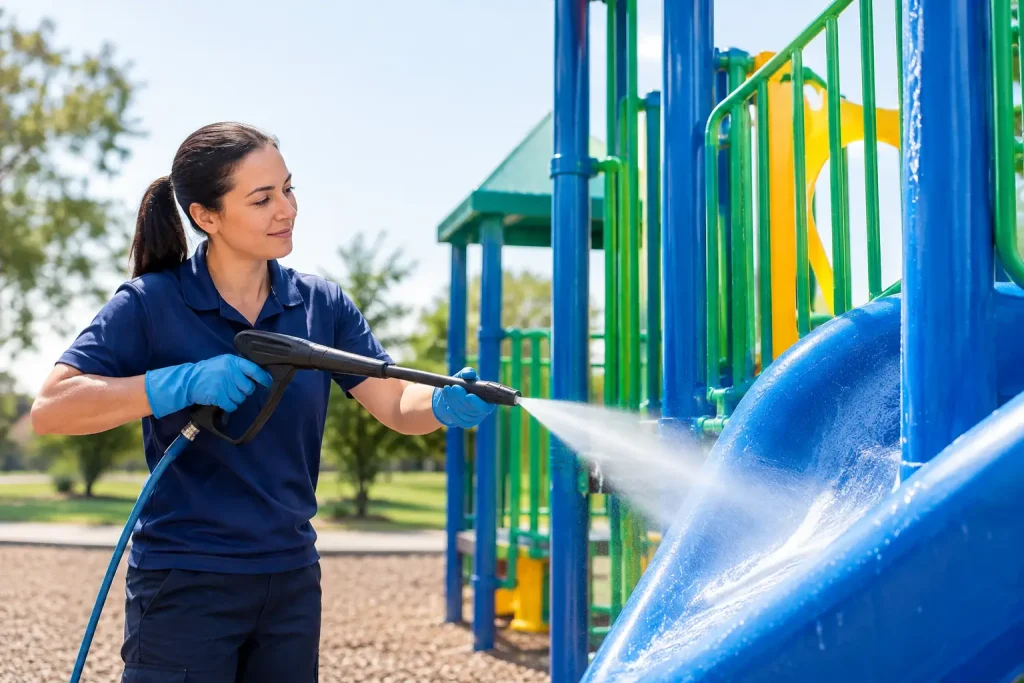
A slide can look harmless from across the yard while its handrails hold sticky residue, mildew, bird droppings, and the grime left by hundreds of small hands. Playground equipment cleaning is not simply about making a play area look better for parents, residents, or visitors. It is routine property care that helps create a cleaner, safer place for children to use.
For homeowners, HOAs, schools, churches, parks, and commercial properties, outdoor play equipment faces constant exposure. Southern California sun bakes on dirt. Coastal moisture encourages algae and mildew. Sprinklers can leave mineral deposits, while nearby trees add sap, leaves, pollen, and droppings. Left alone, that buildup affects appearance, traction, and the life of the equipment itself.
Why Playground Equipment Gets Dirty So Quickly
Play structures are designed for activity, not for easy cleaning. They have textured platforms, enclosed tunnels, seams around fasteners, grip surfaces, plastic panels, ladders, and shaded areas where moisture lingers. A quick rinse may remove loose dust, but it will not address the material caught in those details.
Mildew and algae are especially common on shaded plastic, composite, and coated metal surfaces. They can make steps, ramps, and climbing features slick. On painted metal, persistent moisture and organic buildup may contribute to corrosion or peeling over time. On plastic, grime can become embedded and make a structure look faded long before it is actually worn out.
High use changes the cleaning needs, too. A private backyard swing set may need seasonal attention, while an HOA playground or apartment community play area may need a more consistent maintenance schedule. It depends on tree cover, sprinkler overspray, foot traffic, weather exposure, and how quickly the property needs to meet its visual standards after a busy season.
Playground Equipment Cleaning Requires the Right Method
More pressure is not always a better clean. A commercial pressure washer can damage plastic panels, strip paint, force water into joints, disturb safety surfacing, or leave a rough finish on certain materials when used incorrectly. Play equipment often combines several surfaces in one small area, so the method must change from component to component.
Professional playground equipment cleaning begins with a close assessment. The cleaning team should identify the equipment materials, note areas with algae or staining, check for delicate decals or coatings, and consider where runoff will travel. Low-pressure washing and carefully selected cleaning solutions are often better choices for slides, plastic climbing components, painted surfaces, and other sensitive areas.
Detailed hand work matters here. Rails, corners, platform edges, handles, and transition points may need brushing and rinsing rather than a broad pressure-washing pass. The goal is to remove visible buildup without compromising the equipment, surrounding landscaping, or playground surfacing.
Cleaning is also different from repairing. A wash can reveal cracked plastic, loose hardware, rust, damaged coatings, or worn safety surfacing that dirt had been hiding. Those conditions need repair or replacement by the appropriate provider. A careful cleaning gives property managers and homeowners a clearer view of what needs attention.
Protecting Children Also Means Protecting Runoff
Dirty water does not disappear once it leaves a playground. If cleaning runoff carries dirt, algae, soap residue, bird droppings, or other contaminants into a storm drain, it can reach local waterways. That is a concern for any property, but especially for shared communities and commercial sites with established drainage requirements.
A responsible cleaning plan considers water control before work begins. Channel Islands Pressure Washing uses a closed-loop water recovery system when appropriate to capture runoff and help keep contaminated water out of storm drains. This approach also avoids unnecessary water use while supporting a cleaner property.
Runoff planning is particularly valuable for play areas near landscaped common spaces, parking lots, pool decks, and walkways. The crew can protect nearby surfaces, direct water appropriately, and leave the area orderly rather than shifting the mess somewhere else. Clean equipment should not come at the expense of the surrounding environment.
What a Professional Service Should Address
A complete service is more than spraying down the slide. The visible surfaces need to be cleaned, but the surrounding conditions matter just as much. A good appointment accounts for the play structure, nearby hardscape, safety surfacing, drainage paths, and the landscaping that frames the area.
For a typical playground, the work may include cleaning slides, climbing walls, railings, swings, ladders, benches, tables, play panels, and visible supports. Depending on the site, it may also include cleaning adjacent concrete walkways, pavers, curbs, and shaded seating areas where mildew can create a poor first impression or a slip risk.
Property managers often benefit from coordinating this work with broader exterior maintenance. If the playground sits beside stained sidewalks, dirty common-area furniture, or algae-covered retaining walls, cleaning the full space at once produces a more consistent result. It also helps residents see that the property is being maintained with care.
When to Schedule Playground Equipment Cleaning
There is no single calendar that fits every property. A sunny, open backyard may only need a thorough cleaning once or twice a year. A shaded HOA playground beneath mature trees may need more frequent service, particularly after winter rains, a windy season, or periods of heavy use.
Watch for slippery green or black growth, dark streaks, sticky residue, unpleasant odors, bird droppings, visible grime on hand-contact surfaces, or a dull appearance that no longer responds to routine wiping. These are practical signs that deeper cleaning is due.
For community associations and commercial properties, regular maintenance is usually less disruptive and more cost-effective than waiting until the area looks neglected. Buildup is easier to remove before it becomes deeply set, and consistent care can help extend the usable appearance of coatings, plastic, and metal components. Maintain it, don’t replace it!
A Simple Way to Plan the Work
Start with a site assessment. A professional can review the playground materials, access points, water source, drainage, nearby landscaping, and the condition of surrounding surfaces. This helps produce a clear, no-obligation estimate rather than a vague price that changes after the crew arrives.
Next, schedule service around the property’s needs. For an HOA, apartment community, school, or retail-adjacent play area, that may mean selecting a lower-traffic time and communicating temporary access restrictions in advance. Homeowners may simply want the work completed before a party, a school break, or outdoor entertaining season.
After cleaning, walk the area with the service provider when possible. Confirm that the main stains and buildup were addressed, ask about any surface concerns that became visible, and discuss a realistic maintenance interval. That final review is a useful step because every playground ages and collects debris differently.
A clean play area sends a quiet but meaningful message: children are welcome here, and the property is cared for. With surface-appropriate methods, thoughtful runoff control, and regular upkeep, playground equipment can stay cleaner, more inviting, and ready for the next busy afternoon.