
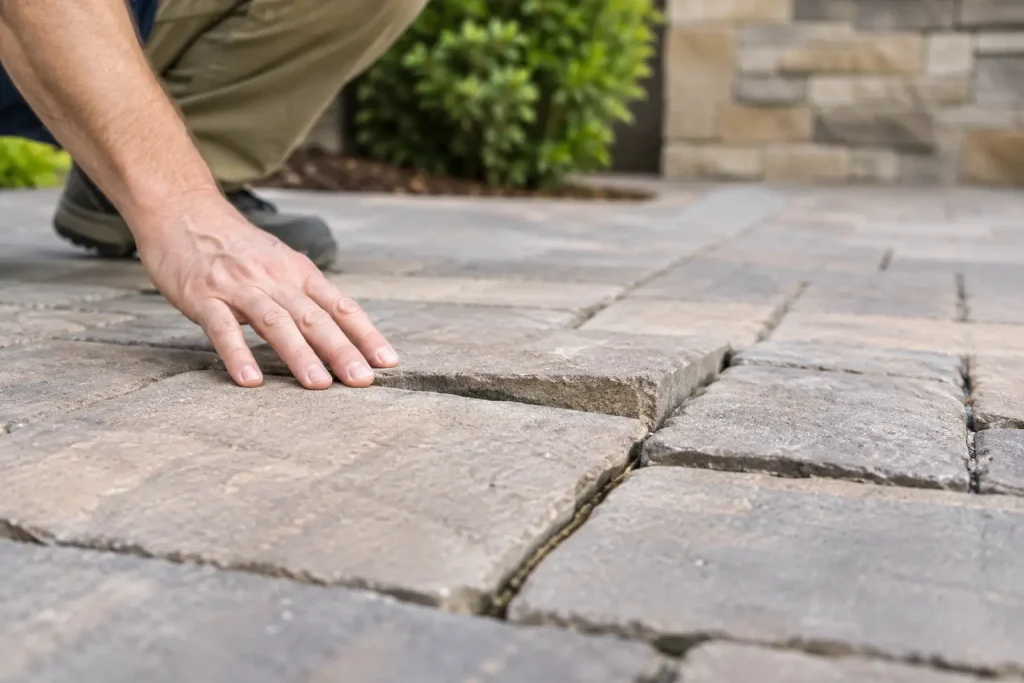
A patio can look clean from across the yard and still have a problem underfoot. If you are noticing movement, low spots, or water collecting where it should not, watch for these five signs pavers need leveling before minor settling turns into cracked pavers, a trip hazard, or a more expensive repair.
Pavers are designed to flex slightly as the ground moves, which is one reason they are a practical choice for patios, walkways, pool decks, driveways, and commercial common areas. But the base beneath them must remain stable. When sand washes out, soil settles, roots shift the surface, or drainage sends water below the pavers, individual units can lose support.
Cleaning can dramatically improve the appearance of a paver surface, but it cannot correct a failing base. The good news is that most leveling work can preserve the pavers you already own. Maintain it, don’t replace it!
Five Signs Pavers Need Leveling
1. Pavers rock, shift, or feel loose underfoot
A paver that moves when stepped on is one of the clearest signs that the bedding layer or base has lost support. It may wobble at one corner, sink slightly under weight, or make a hollow sound when walked across. On a residential patio, this may be an annoyance at first. Near a front entry, pool, stair landing, or commercial walkway, it can quickly become a safety concern.
Loose pavers do not always mean the whole surface needs to be rebuilt. Sometimes the issue is limited to a small section where joint sand has washed away or where the base was not properly compacted. A professional assessment should identify how far the movement extends before anyone begins lifting pavers.
Avoid simply adding sand into a gap around a moving paver. Sand can help lock properly supported pavers together, but it will not stabilize a void underneath. The paver needs to be removed, the base corrected, and the surface reset to the proper height.
2. The surface has noticeable dips or raised edges
Paver surfaces should have a consistent plane and a planned slope that directs water away from buildings. A shallow low spot can be easy to miss until chairs wobble on a patio table or rainwater begins pooling in the same area. Raised edges, often called lippage, occur when one paver sits higher than the one beside it.
Small height differences may be cosmetic, especially on an older patio. The trade-off changes when the height difference catches shoes, wheels, strollers, carts, or cleaning equipment. For HOAs, retail centers, and managed properties, uneven walkways can create avoidable liability as well as a poor first impression.
Pay close attention to changes near thresholds, gates, steps, and driveway transitions. Those areas receive concentrated traffic and can reveal settlement early. If the pavers are pushing toward a door, covering a drainage opening, or leaving an awkward step up or down, schedule an evaluation promptly.
3. Water pools after rain or irrigation
Standing water is not just an appearance issue. Persistent pooling can seep through joints, weaken the base below, encourage algae growth, and make a walking surface slick. In Southern California, irrigation overspray can be just as damaging as rain because it repeatedly saturates the same section of a patio or walkway.
Pavers should generally slope away from a home or building and toward an appropriate drainage path. If water now runs toward the structure, gathers against a retaining edge, or remains in a low spot long after surrounding areas have dried, the grade may have changed.
This is where it depends on the cause. A clogged drain, broken sprinkler head, or poorly placed downspout may be the main issue rather than the pavers themselves. Correcting the water source is essential before leveling. Otherwise, a newly repaired section can settle again because the underlying moisture problem remains.
4. Joint sand keeps disappearing or gaps are opening
The sand between pavers does more than fill a visible line. It helps distribute loads and keeps the units interlocked. When joints become deep, wide, or repeatedly empty after rain and cleaning, water may be carrying sand away through the surface or beneath the edge restraint.
Look for exposed paver sides, widening joints, ants pushing sand onto the surface, or weeds appearing in the same areas again and again. Weeds do not automatically mean the pavers need leveling, but recurring weeds combined with movement or sinking are worth investigating. They can point to open joints, trapped organic material, or a drainage issue below the surface.
After leveling, joints should be refilled with the material suited to the installation. Depending on the paver system and conditions, that may include quality jointing sand or polymeric sand. Proper application matters. Too little joint material leaves pavers vulnerable to movement, while poor preparation can prevent polymeric sand from setting correctly.
5. Borders are separating, or pavers are spreading outward
Paver edges rely on restraints to hold the field of pavers in place. When an edge restraint fails, sections can gradually spread outward, creating gaps, crooked lines, and loose border pieces. On driveways, the pressure from vehicles makes this problem more urgent. On patios, root growth or runoff can cause similar separation.
A border that has shifted can allow the entire paved area to lose its tight interlock over time. You may notice that a once-straight soldier course has bowed outward, the pavers near a lawn edge are sinking, or a transition strip has started to pull away from concrete.
Do not assume the visible border is the only repair needed. The restraint may need replacement, but the base condition and drainage need attention too. A lasting repair addresses what caused the movement, not only the gap that is easiest to see.
Why Pavers Settle in the First Place
Most leveling problems start below the surface. Inadequate compaction during installation can allow a base to settle gradually under foot traffic, furniture, vehicles, or seasonal soil movement. Water is another common cause. Runoff from roofs, downspouts, sprinklers, and nearby grading can wash away bedding sand or create soft soil beneath the installation.
Tree roots can lift pavers, while decaying roots may leave voids that allow them to sink. Heavy planters, outdoor kitchens, delivery vehicles, and repeated use near a driveway edge can put more load on an area than the original base was designed to handle. Coastal conditions can add their own challenges, including wind-blown sand, salt exposure, and irrigation needs around landscaping.
The pattern of damage offers useful clues. A broad, gentle low area may suggest base settlement. A localized depression near a downspout often points to water infiltration. A raised line close to a mature tree may indicate root pressure. A careful inspection prevents a one-size-fits-all repair that only masks the problem.
What Proper Paver Leveling Looks Like
Professional paver leveling is not the same as placing more sand over a low spot. The affected pavers are typically removed and set aside so the bedding material and base can be inspected. The crew can then remove compromised material, correct drainage concerns where applicable, rebuild and compact the base, and add a properly screeded bedding layer before reinstalling the pavers.
Once the pavers are reset, the surface should be checked for alignment, slope, and stable transitions to adjacent concrete, turf, drains, and structures. The joints are filled, and edge restraints are repaired when necessary. The goal is a stable, even surface that still drains as intended, not a perfectly flat surface that sends water toward the house.
The scope can vary widely. A few sunken pavers near a hose bib may be a targeted repair. A driveway with widespread settlement, spreading edges, and poor drainage may require a larger restoration plan. Transparent recommendations should explain what needs to be addressed now, what can be monitored, and why.
Clean After the Repair, Not Before
Many property owners first notice leveling concerns when they schedule paver cleaning. Dirt, algae, oil residue, and old sand can hide uneven edges and depressions. Cleaning is valuable for restoring color and curb appeal, but aggressive washing on already loose pavers can remove more joint sand and expose an existing problem.
For that reason, leveling should come first when pavers are visibly unstable. After repairs, professional cleaning can remove embedded grime, prepare the surface for refreshed joint sand or sealing when appropriate, and make the completed restoration look consistent. Surface-specific methods matter, especially around delicate landscaping, stucco, pool equipment, and drainage areas.
At Channel Islands Pressure Washing, responsible water recovery is part of protecting the property beyond the visible finish. Capturing contaminated runoff during appropriate cleaning work helps keep dirt, detergents, and residues out of storm drains and nearby waterways.
If a few pavers have started to move, do not wait for the next heavy rain, gathering, or tenant complaint to test the surface. A timely assessment can preserve the existing installation, reduce trip risks, and help your patio, walkway, or driveway remain a dependable part of the property for years to come.