
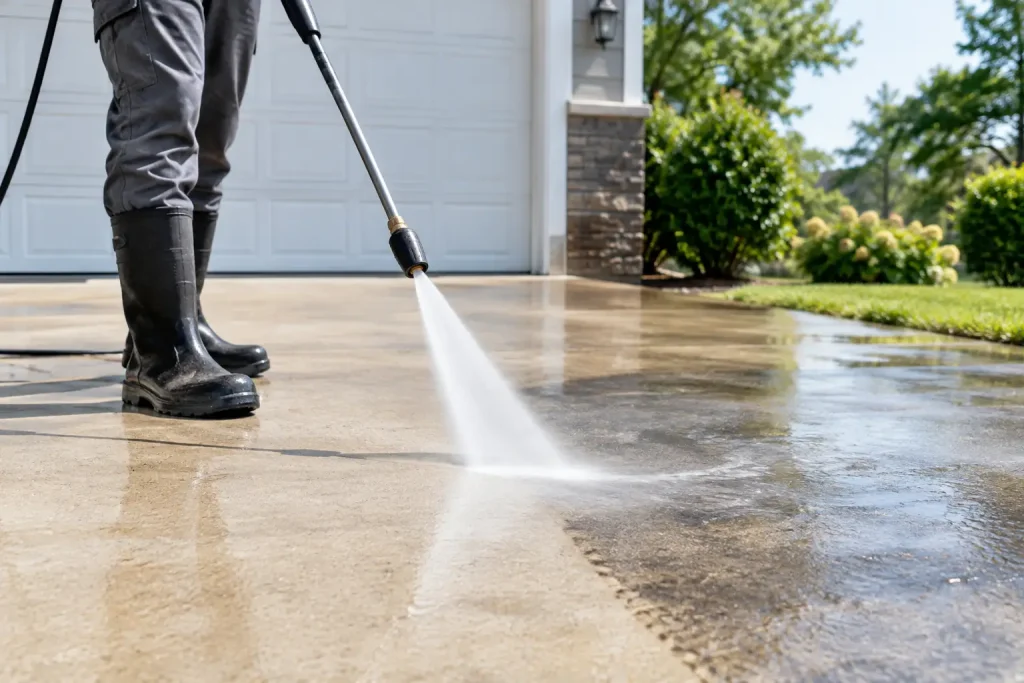
A driveway can make an otherwise well-kept property look neglected fast. Tire marks collect near the garage, oil spots darken the concrete, and coastal moisture leaves behind grime that ordinary rinsing will not touch. Professional driveway pressure washing restores the clean, cared-for appearance people notice when they arrive, while using methods that protect the surface and keep contaminated runoff out of storm drains.
For homeowners, the result is stronger curb appeal and a more welcoming entrance. For HOAs, retail centers, and commercial properties, a clean driveway or parking area supports property standards, tenant satisfaction, and a safer experience for visitors. The right approach is not simply more pressure. It is matching the cleaning method, treatment, and water handling to the material and the mess.
Why Driveways Need More Than a Quick Rinse
Concrete, pavers, and coated drive surfaces are constantly exposed to vehicle traffic, irrigation overspray, leaves, soil, and petroleum residue. Over time, these contaminants settle into pores and textured areas. A garden hose may move loose dirt, but it rarely removes the embedded grime that gives a driveway a permanently gray, blotchy appearance.
Oil is especially stubborn. Fresh oil is easier to treat, but older spots can soak deep into porous concrete and leave a shadow even after cleaning. Tire marks may require targeted treatment, while rust, paint, fertilizer stains, and organic buildup each call for a different solution. Treating every stain with high pressure alone can spread contamination, etch concrete, or leave obvious striping behind.
That is why a professional cleaning begins with looking at the surface, not just setting up equipment. The age and condition of the driveway, the type of staining, nearby landscaping, drainage paths, and surface material all affect the safest and most effective plan.
Driveway Pressure Washing Is About Surface Protection
Pressure is useful, but it is only one part of a quality cleaning process. Too much pressure held too close to concrete can scar the surface, expose aggregate, and create uneven lines that are more noticeable than the original dirt. On pavers, aggressive cleaning can disturb joint sand or damage delicate edges. On decorative concrete, the wrong method can dull or lift a finish.
A careful crew adjusts equipment and technique to the driveway rather than using one setting for every job. Pretreatment may be used to loosen oil, algae, tire residue, or heavy soil before surface cleaning begins. Professional surface-cleaning equipment helps produce a more even result across large areas, and detailed hand work addresses corners, edges, curbs, and spots a machine cannot reach.
Some stains will improve dramatically without disappearing completely. Deep, long-standing oil contamination can leave residual discoloration because the stain has penetrated below the surface. Honest service means setting that expectation before work begins, then using the best available treatment to improve the appearance without causing unnecessary damage. Maintain it, don’t replace it is often the smarter, more cost-effective choice.
Concrete Cleaning Versus Paver Cleaning
Concrete is durable, but it remains porous and can be permanently damaged by careless pressure washing. It may also have hairline cracks, old repairs, sealers, or coatings that need to be considered before cleaning. A professional assessment helps identify whether a driveway needs general cleaning, oil-stain treatment, or additional protection after the work is complete.
Pavers require even more attention to detail. Dirt, weeds, and organic growth often collect between joints, while sand can wash away if cleaning is too aggressive. After paver cleaning, some surfaces may benefit from re-sanding or restoration work to help stabilize joints and improve the finished appearance. The right recommendation depends on the paver condition, drainage, foot and vehicle traffic, and whether the area has been sealed before.
Clean Runoff Matters in Southern California
A driveway does not exist in isolation. Water used during cleaning can carry oil, detergent residue, sediment, and other pollutants toward curb gutters and storm drains. Those drains often lead directly to local waterways rather than a treatment facility. Letting dirty wash water flow away is not a responsible solution.
Channel Islands Pressure Washing uses a closed-loop water recovery approach when conditions call for it, capturing contaminated runoff instead of allowing it to enter storm drains. This helps protect the surrounding environment while reducing unnecessary water use. It is a practical difference for homeowners who care about their neighborhood and for property managers responsible for environmental compliance.
Water recovery is particularly valuable for parking areas, commercial drive lanes, HOA common spaces, and heavily stained concrete where runoff can contain more than ordinary dirt. It also provides peace of mind when cleaning near landscaping, curbs, drains, and public-facing areas. A cleaner property should not come at the expense of the environment around it.
What a Professional Driveway Cleaning Visit Looks Like
The process should be straightforward and respectful of your time. First, the team reviews the driveway and identifies the surface type, stain severity, access points, drainage concerns, and any areas requiring special care. That site assessment supports a clear, no-obligation estimate rather than a vague price that changes after the job starts.
Next, the work is scheduled around the property’s needs. For a residence, that may mean planning around vehicles, gates, pets, or daily routines. For an HOA or commercial site, it may involve coordinating access, minimizing disruption, and working around customers, tenants, or maintenance schedules.
On service day, the crew prepares the area, treats problem stains as needed, and cleans the surface using equipment suited to the job. The finishing work matters. Edges, buildup near garage doors, curb lines, and transitions to walkways should receive attention so the driveway looks consistently clean rather than partially improved. A final walkthrough gives the customer an opportunity to inspect the results and ask questions before the job is considered complete.
When Should You Schedule Driveway Pressure Washing?
Most driveways benefit from professional cleaning every year or two, but the right schedule depends on use and exposure. A shaded driveway with irrigation overspray or organic growth may need attention sooner. Homes with frequent vehicle traffic, oil leaks, pets, construction dust, or mature trees may also need more regular maintenance.
For commercial properties and HOAs, cleaning is often best planned as part of a recurring exterior-maintenance program. Keeping up with grime before it becomes deeply embedded usually makes each service more efficient and helps the property maintain a consistent appearance. Regular cleaning can also make it easier to spot developing issues such as oil leaks, drainage problems, cracked concrete, or deteriorating sealant.
There is a practical timing consideration as well. Avoid scheduling just before major landscaping work, exterior painting, or construction activity that will quickly soil the surface again. If oil has recently leaked from a vehicle, arrange treatment promptly. Fast action gives the cleaning process a better chance of lifting the stain before it sets deep into the concrete.
Choosing a Driveway Cleaning Company
The lowest quote is not always the lowest overall cost. A rushed job can leave stripes, damaged concrete, washed-out paver joints, or runoff concerns that create more work later. Look for a company that explains its method, provides a transparent estimate, uses surface-appropriate equipment, and takes responsibility for cleanup and customer satisfaction.
Ask how the company handles oil stains and contaminated water, especially if your property has nearby drains. Ask whether the crew will protect sensitive landscaping and whether the price includes edges, walkways, or stain treatment. Clear answers before the appointment are a good sign that the work will be handled with care.
A clean driveway is one of the simplest ways to make a property feel maintained before anyone steps through the front door. When the work is done thoughtfully, it protects more than curb appeal: it helps preserve concrete, supports a safer exterior, and keeps dirty runoff where it belongs – out of local waterways.