
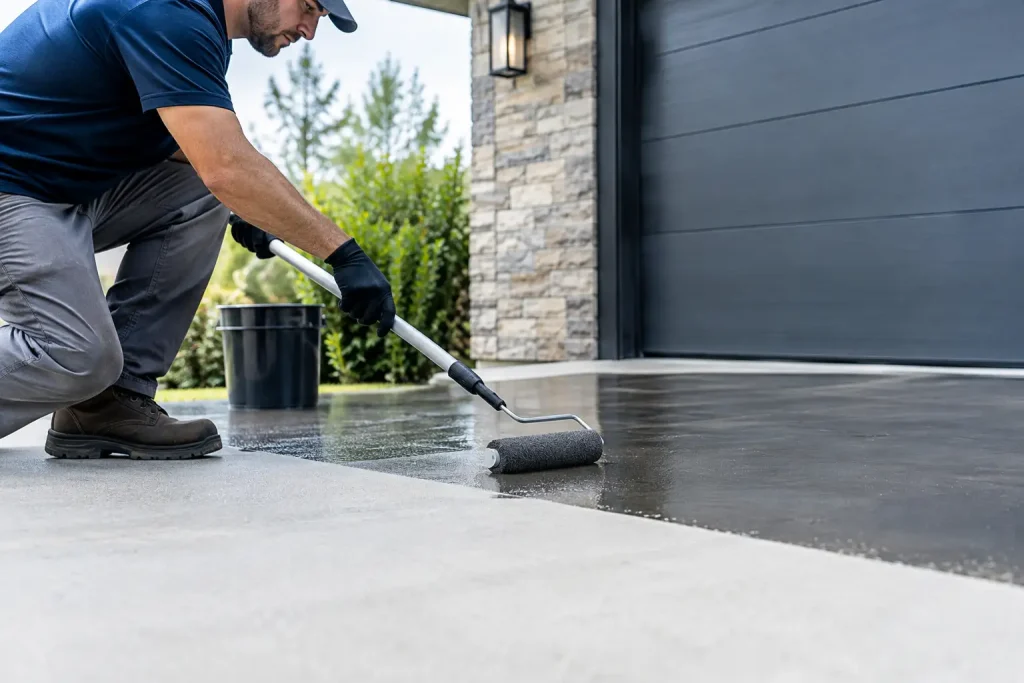
A concrete sealer can make a driveway, patio, or walkway easier to maintain, but it cannot cover up poor preparation. The best concrete sealing project examples all start the same way: identify the stains, remove the contamination, let the surface dry properly, and select a sealer that fits how the area is used. Skipping those steps can trap oil, moisture, tire marks, or discoloration beneath a fresh coat.
For homeowners, HOAs, and commercial property managers, sealing is often a practical way to protect a clean surface from the next round of wear. It can reduce water absorption, make routine cleanup easier, and help a well-maintained property keep its finished appearance longer. The result depends on the concrete’s condition, the type of sealer, weather exposure, traffic, and the quality of cleaning performed before application.
Concrete Sealing Project Examples for Real Properties
Oil-stained residential driveway
A driveway with old vehicle leaks is one of the most common situations where cleaning and sealing need to work together. Oil does not simply sit on top of concrete. It can work into the pores, attract dust, and leave a dark shadow even after a basic rinse. If sealer is applied over untreated oil, the stain may remain visible and the sealer may not bond evenly.
A proper project begins with spot treatment suited to petroleum staining, followed by controlled pressure washing to lift embedded grime. The surface should then be evaluated honestly. Some deep, aged stains improve substantially but may not disappear completely without repeated treatment. Once the driveway is clean and dry, a penetrating sealer is often a sensible choice because it helps resist future absorption without creating a heavy surface film.
This approach is especially useful for homes where appearance matters but traction and low-maintenance performance matter more than a glossy finish. A quality sealer will not make a neglected driveway look brand new, but it can protect the improvement achieved through cleaning and make the next oil spill easier to address quickly.
Pool deck or patio with mildew buildup
Coastal Southern California patios and pool decks often develop mildew, algae, mineral residue, and grime in shaded or damp areas. The problem is more than cosmetic. Growth on a walking surface can become slippery, while dirt held in textured concrete makes the whole area look dull.
The cleaning method must fit the surface. Decorative finishes, older concrete, and areas near landscaping may need a more careful approach than an open driveway. Cleaning professionals should manage runoff responsibly, especially where wash water may carry contaminants toward storm drains. At Channel Islands Pressure Washing, recovered-water practices help keep dirty runoff from moving into local waterways while the surface is being restored.
After cleaning, the concrete needs enough dry time before sealing. That is not a detail to rush. Sealing damp concrete can lead to whitening, haziness, adhesion issues, or uneven results. For a pool deck, the sealer selection should also account for slip resistance. A high-gloss finish may look appealing in a sample, yet it may not be the right answer for a frequently wet walking area.
HOA sidewalks and common-area walkways
HOA walkways take a steady beating from foot traffic, landscaping debris, sprinkler overspray, pet residue, bicycles, and rolling trash bins. A single stained walkway may seem minor, but across a condominium or apartment community, these surfaces strongly influence whether the property feels cared for.
A sealing project for common areas is usually best handled in sections. This keeps accessible paths available for residents and gives the property manager better control over scheduling. Before sealing, the crew should remove surface dirt, gum, tire transfer, organic buildup, and stains that would otherwise be locked into the finish. Cracks, spalling, and trip hazards should also be documented because sealer is not a structural repair product.
For these projects, a natural-looking penetrating sealer is often more practical than a decorative coating. It protects without making every sidewalk look shiny, and it can simplify ongoing maintenance. The right maintenance plan may include periodic cleaning, targeted stain treatment, and resealing based on traffic and exposure rather than an arbitrary calendar date.
Retail storefront concrete and entry pads
Commercial entry pads collect the evidence of daily business: drink spills, tire marks, grease, tracked-in dirt, gum, and scuffs from carts. These issues can make an otherwise well-run shopping center or office building look neglected. They can also create a poor first impression before customers reach the door.
In this setting, cleaning is the first priority. Commercial pressure washing should be scheduled around customers, tenants, deliveries, and business hours whenever possible. Water recovery is also particularly valuable in parking lots and retail areas, where wash water can carry oils, sediment, and cleaning residue into drainage systems if it is not properly contained.
Once the concrete is clean, sealing can help protect high-visibility entry areas from recurring stains. The trade-off is maintenance planning. A film-forming sealer may deepen the color and add visual polish, but it can show wear in traffic lanes and may require more careful future recoating. A penetrating option usually delivers a subtler appearance with less risk of visible peeling. The right choice depends on the property standard, foot traffic, and the owner’s willingness to maintain the finish.
Decorative concrete around a front entrance
Stamped, colored, or exposed-aggregate concrete can add real curb appeal, but it deserves more care than plain gray slab concrete. Aggressive pressure or the wrong cleaning chemistry can affect the finish, while a mismatched sealer can leave the surface too glossy, too dark, or patchy.
A successful decorative-concrete project starts with testing a small, inconspicuous section when possible. The goal is to understand how the surface responds to cleaning and whether prior sealer remains in place. If an older topical sealer is failing, simply adding more product can exaggerate the problem. Peeling, whitening, or uneven sheen may need to be corrected before a new coat is considered.
This is where surface-specific judgment matters. Maintain it, don’t replace it, but do not use sealer as a shortcut around failing coatings or damaged concrete. Thoughtful cleaning and realistic recommendations can preserve a decorative surface for far less than replacement.
What Proper Preparation Prevents
Concrete looks solid, but it is porous. Preparation is what prevents many of the problems property owners associate with sealing. Removing dirt and contaminants helps the sealer penetrate or bond as intended. Allowing adequate dry time limits moisture-related failures. Choosing the right product helps avoid a finish that is too slippery, too glossy, or too difficult to maintain.
Preparation also creates a chance to spot conditions that sealing will not solve. Active cracks may need repair. Scaling and spalling may point to age, freeze-thaw damage, poor installation, or water intrusion. White mineral deposits can signal moisture moving through the slab. A professional recommendation should make those limits clear instead of promising that one service will solve every concrete problem.
A Practical Plan Before You Seal
Start with a site assessment. Look at the concrete’s age, finish, staining, drainage, exposure to sun and sprinklers, and how the area is used. A driveway, pool deck, restaurant entrance, and HOA sidewalk should not automatically receive the same product or process.
Next, schedule cleaning with enough time for treatment and drying. Deep oil stains, heavy organic growth, and large commercial areas may require more than one pass. If rain, irrigation, or coastal humidity slows drying, it is better to adjust the sealing schedule than force the next step.
Finally, plan for maintenance after the project. Sealing works best when it is paired with routine cleaning and prompt attention to spills. A sealed surface still gets dirty, and it can still be damaged by harsh chemicals, dragged metal, or ignored leaks. The advantage is that a protected, well-cleaned surface is usually far easier and less expensive to maintain than one left exposed for years.
If your concrete has stains, dullness, or recurring buildup, begin with an honest assessment rather than a quick coat of sealer. The right cleaning and sealing plan can protect the surface you already own, improve curb appeal, and help you avoid replacement before it is truly necessary.