
A white, chalky ring around a sprinkler line can make an otherwise clean driveway, storefront, or patio look neglected. Cleaning hard water deposits is not simply a matter of applying more pressure. The minerals left behind by irrigation overspray, leaking fixtures, and runoff can bond to glass, stone, concrete, pavers, stucco, and metal. The wrong cleaning method can etch a surface, strip a coating, or push contaminated runoff into a storm drain.
For homes, HOAs, and commercial properties throughout coastal Southern California, the goal is straightforward: remove the visible buildup while protecting the material underneath. Maintain it, don’t replace it.
What Causes Hard Water Stains?
Hard water contains dissolved minerals, most often calcium and magnesium. When water evaporates, those minerals stay behind. Repeated exposure creates the familiar white haze, crusty spots, streaks, and drip lines that show up on windows, pool decks, pavers, concrete walkways, building walls, and outdoor fixtures.
Irrigation is often the main source. A sprinkler head aimed slightly too high can leave a hard-water arc across a wall or window every day. Dripping hose bibs, overflowing planters, fountain splash, and HVAC condensate lines can create a smaller but more concentrated stain. Near the coast, mineral buildup may also combine with dust, salt residue, algae, and traffic grime, making it harder to remove with one basic cleaning product.
The longer deposits remain in place, the more difficult they become. On glass and polished stone, minerals can eventually etch into the surface rather than sitting on top of it. That is why fast, surface-appropriate treatment usually costs less than waiting until the damage appears permanent.
Cleaning Hard Water Requires a Surface-Specific Plan
There is no single safe approach to cleaning hard water stains. A product or pressure setting that works well on unfinished concrete may damage window glass, painted stucco, sealed pavers, natural stone, or anodized metal.
A professional assessment starts by identifying both the stain and the surface. Is the white residue mineral scale, paint overspray, efflorescence from masonry, pool chemical residue, or a combination of several materials? Is the surface sealed? Is there pre-existing etching, cracking, oxidation, or loose joint sand? Those details determine the safest process.
For many mineral deposits, a controlled cleaning agent is more effective than brute-force pressure. The treatment needs enough dwell time to loosen the deposit without drying on the surface or affecting nearby plants, coatings, and metal hardware. Afterward, the area can be rinsed or washed using the pressure and flow appropriate for that material.
This is especially important for delicate surfaces. Roof tile, stucco, painted siding, solar panels, and certain stone finishes should not be treated like a concrete parking area. Low-pressure soft washing and careful manual work can deliver a cleaner result without forcing water behind siding, dislodging granules, or leaving wand marks.
Why High Pressure Alone Can Make Stains Worse
Pressure washing is valuable for many exterior-cleaning jobs, but it does not dissolve mineral scale. In some cases, high pressure can remove the surrounding dirt and leave the hard-water stain even more noticeable. It can also roughen softer concrete, scar pavers, damage mortar, and drive water into weak points around doors, windows, and exterior finishes.
Glass deserves particular caution. Hard-water spots may look like a surface film, but older deposits can chemically alter the glass. Aggressive scraping, abrasive pads, or strong acids can turn a repairable problem into permanent haze or scratches. A careful technician tests a small area first and sets realistic expectations where etching has already occurred.
The same principle applies to paver cleaning and restoration. Mineral deposits may collect around irrigation edges, planters, and pool areas, while dirt and organic growth settle into the joints. Cleaning can restore the color and improve curb appeal, but overly aggressive washing can remove joint material or compromise a failing sealer. The correct approach balances visible improvement with long-term surface protection.
Where Hard Water Buildup Creates the Biggest Problems
Hard-water staining can affect almost any exterior area, but certain locations deserve early attention.
- Windows and glass railings: Mineral spots reduce clarity and can become etched if left untreated.
- Concrete driveways and walkways: White deposits, tire marks, oil stains, and irrigation residue can combine to make an entry look poorly maintained.
- Pavers and patios: Stains collect along sprinkler paths and at the edges of planters, often hiding the original color of the surface.
- Stucco and building exteriors: Drip lines and spray patterns can stand out sharply, especially on darker paint colors.
- Storefronts and common areas: Mineral residue around landscaping, outdoor seating, and entry walks affects customer impressions and property standards.
For property managers and HOA boards, these are not only appearance issues. Buildup may point to a leaking irrigation line, a poorly aimed sprinkler, drainage trouble, or deferred exterior maintenance. Cleaning the stain without correcting the source means the problem will return.
Protecting Runoff Is Part of Doing the Job Right
Exterior cleaning creates wastewater. That water may contain dissolved minerals, cleaning solutions, oil residue, sediment, gum, algae, and other contaminants lifted from the surface. Allowing it to flow into a storm drain is not a responsible cleanup plan.
For commercial pressure washing, building washing, and large concrete-cleaning projects, water recovery can be a major advantage. A closed-loop recovery process captures wastewater for proper handling instead of allowing runoff to reach waterways. It also helps keep work areas more controlled around landscaping, parking lots, and pedestrian paths.
At Channel Islands Pressure Washing, water recovery is paired with surface-specific methods so property owners do not have to choose between a clean property and responsible environmental practices. The right process is especially valuable around retail centers, HOA common areas, parking spaces, and properties near sensitive drainage routes.
When a DIY Approach Makes Sense, and When It Does Not
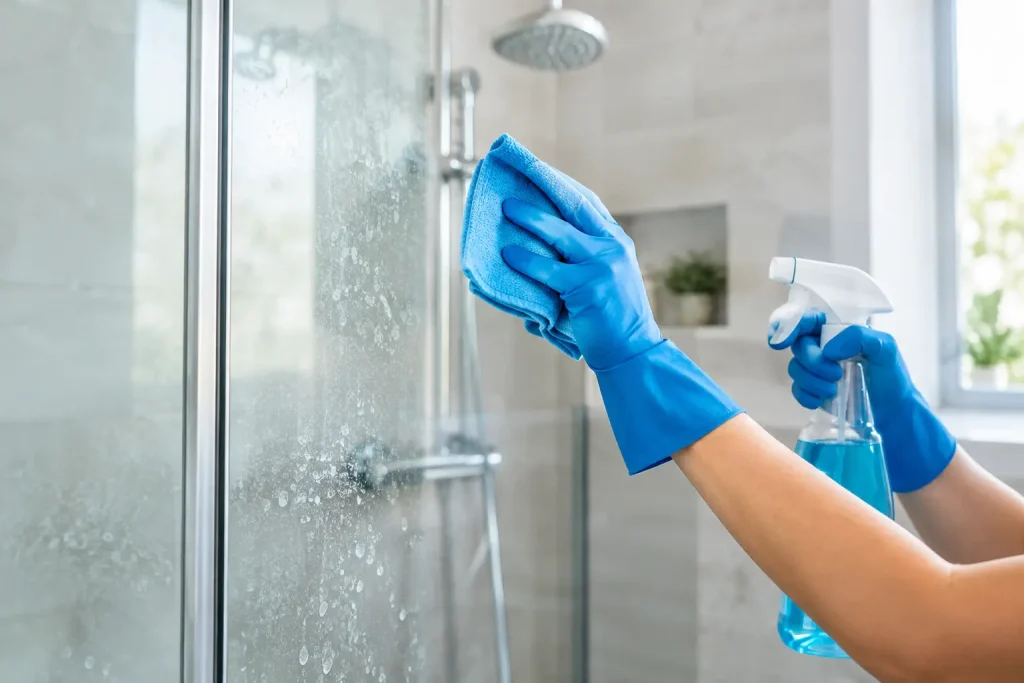
A fresh, light mineral spot on a durable surface may be manageable with a gentle, surface-approved cleaner, soft cloth, and thorough rinse. Always test an inconspicuous area first, follow the product label, and avoid mixing cleaning products. Never assume that a stronger acid or abrasive tool will produce a better result.
Professional service is the safer choice when stains cover a large area, have been present for months or years, appear on glass or natural stone, or sit near landscaping and storm drains. It is also worthwhile when the stain is mixed with oil, rust, mold, algae, tire marks, or other contaminants. These jobs benefit from professional equipment, controlled chemistry, and the experience to recognize when a stain has become etching or surface damage.
Preventing Hard Water Stains From Coming Back
The best prevention is to stop the water source. Adjust sprinkler heads so they water landscaping rather than walls, windows, pavers, or sidewalks. Repair drips promptly, inspect planter drainage, and check that downspouts and condensate lines direct water away from visible surfaces.
Regular exterior maintenance also makes a difference. A scheduled cleaning plan keeps deposits from becoming heavily bonded and allows small irrigation problems to be noticed early. For HOAs and commercial properties, recurring service can help maintain consistent curb appeal across common areas without waiting for stains to become a larger restoration project.
If your windows, concrete, pavers, or building exterior are already marked by mineral buildup, do not let a harsh shortcut create a more expensive problem. A careful evaluation, clear estimate, and method matched to the surface can restore the appearance of your property while helping protect what you already own.
Pingback: Stucco Stain Restoration Without Surface Damage – Channel Islands Pressure Washing, LLC