
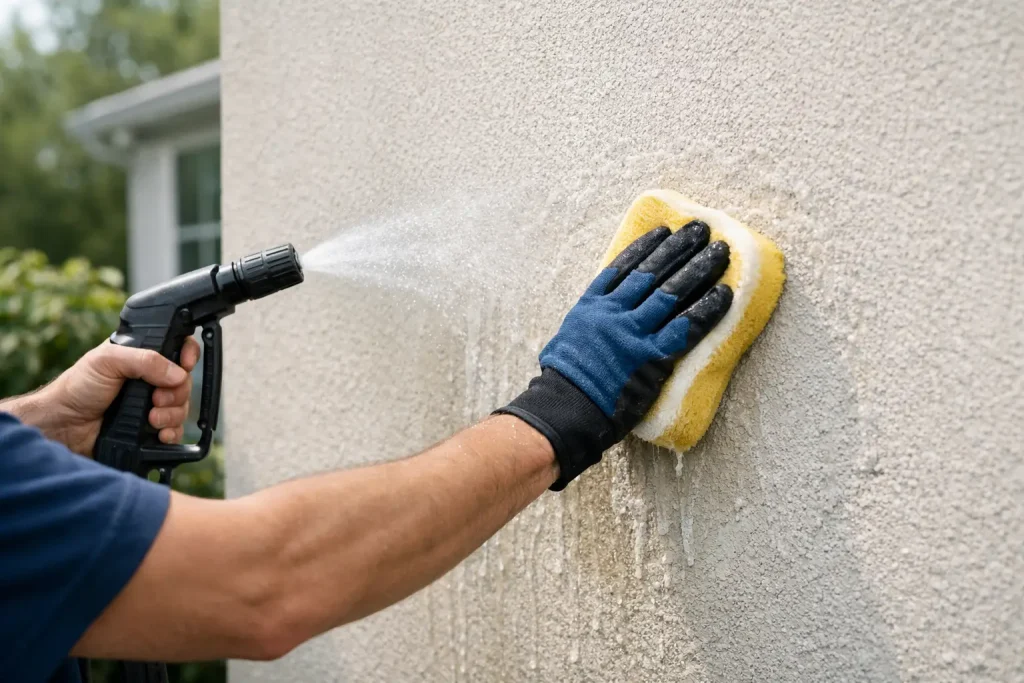
Stucco can look permanently discolored long before it is actually worn out. Dust, coastal moisture, sprinkler overspray, algae, rust, and mud splatter settle into its textured finish and make a home or commercial property look neglected. Knowing how to wash stucco gently helps remove that buildup without blasting away the surface, driving water behind the wall, or creating runoff problems.
The goal is not to make stucco look freshly painted through brute force. It is to lift biological growth and surface grime while protecting the finish underneath. That is why the right cleaning method uses low pressure, appropriate cleaning solutions, controlled rinse water, and careful attention around windows, landscaping, and drainage areas. Maintain it, don’t replace it!
Why Stucco Needs a Gentle Cleaning Method
Stucco is durable, but its rough, porous texture is not the same as concrete. It can hold dirt deep in its surface, especially on shaded sides of a building, below rooflines, near sprinklers, and around patios. Southern California properties also deal with windblown dust, salt-laden air, irrigation minerals, and occasional mildew that can leave dark or green staining.
A high-pressure washer can seem like a quick answer, but it can create expensive problems. Too much force may scar the finish, open hairline cracks, strip paint, dislodge weak patches, or send water into gaps around windows and doors. On older stucco, aggressive pressure can reveal repairs or cause areas of failing finish to break loose.
Gentle cleaning takes more patience, but it gives better long-term results. A cleaner designed for the stain does the real work. Low-pressure water then rinses the surface rather than attacking it.
How to Wash Stucco Gently: Start With an Inspection
Before applying water or cleaner, inspect the wall in good daylight. Look for cracks, soft or crumbling areas, missing caulk, peeling paint, loose trim, and exposed lath or mesh. Cleaning will not repair these conditions, and spraying them can make water intrusion worse.
Pay close attention to stains near the base of the wall. Dark streaks might be algae, but white crusty marks are often mineral deposits from sprinklers. Orange or brown stains may come from rusting fixtures, metal furniture, or irrigation water. Dog-urine splatter, grease near an outdoor kitchen, and mud from landscape beds each need a different approach. Treating every stain with the same strong chemical or the same pressure setting is how surfaces get damaged.
It also helps to identify where rinse water will travel. Never allow dirty wash water, detergents, paint residue, or oil-contaminated runoff to flow into a storm drain. A responsible cleaning plan includes runoff control from the beginning, not after the water is already moving across a driveway or sidewalk.
Use Low Pressure and Let the Cleaner Work
For most sound, painted, or traditional stucco surfaces, low-pressure soft washing is the safest approach. The exact pressure depends on the condition of the wall, the coating, the type of staining, and the distance from the nozzle. The key is that the stream should rinse, not cut.
Start by protecting nearby plants. Pre-wet landscaping with fresh water, cover delicate plants only when necessary, and avoid trapping heat beneath covers on a warm day. Close windows and doors, move outdoor furniture, and protect light fixtures, electrical outlets, and unsealed materials. If the wall is hot from direct sun, wait until it cools. Cleaning solution can dry too quickly on hot stucco and leave uneven results.
Apply a surface-appropriate cleaner from the bottom upward in manageable sections. Working upward helps prevent streaking. Allow the solution to dwell long enough to loosen grime, mildew, or algae, but do not let it dry on the wall. Dwell time is not a fixed number because weather, shade, porosity, and the severity of staining all matter.
Then rinse from the top downward using a wide fan pattern and a safe working distance. Keep the spray moving. Avoid aiming into cracks, vents, weep screeds, window frames, or the underside of trim. A gentle rinse may need to be repeated on heavily textured areas, but increasing pressure should not be the first response.
When Scrubbing Helps
Some stubborn spots benefit from light manual work. Use a soft-bristle brush and minimal pressure after the cleaner has had time to work. This is useful for mud splatter, surface dust in deep texture, and localized grime around entryways.
Avoid wire brushes, abrasive pads, and hard scraping tools. They can leave permanent marks and damage painted coatings. If a stain does not respond to a soft brush and proper cleaner, it may be mineral staining, rust, paint failure, or an issue below the surface. More scrubbing is rarely the answer.
Treat Common Stucco Stains Carefully
Mildew and algae usually respond well to a properly diluted exterior cleaning solution followed by a controlled rinse. If staining returns quickly, look for the moisture source. Overwatered landscaping, leaking gutters, faulty sprinklers, and persistent shade can all keep the wall damp enough for growth to return.
Mineral stains from sprinkler overspray need a different treatment. Strong cleaners used for organic growth may not remove mineral scale, and acidic products can damage some finishes if used carelessly. Adjusting sprinkler heads after cleaning is often just as valuable as cleaning itself.
Rust stains should be addressed with a product intended for rust removal and tested first in an inconspicuous area. Oil, grease, or barbecue smoke can require a degreasing treatment. For painted stucco, always confirm that a cleaner is compatible with the paint system. When in doubt, test a small area before committing to a large wall.
Protect Landscaping, Hardscape, and Waterways
A clean wall should not come at the expense of the landscape or local waterways. Rinse nearby plants before, during, and after cleaning, and do not let concentrated cleaning solution sit in planting beds. Keep an eye on patios, decorative stone, painted metal, and wood surfaces that may be affected by runoff.
For larger homes, HOAs, retail centers, and commercial properties, runoff management becomes especially important. Water can carry dirt, cleaning residue, gum, oil, and other contaminants across sidewalks and into drains. Professional water-recovery equipment captures wash water for proper handling instead of letting it enter the stormwater system.
This is one reason a property-wide exterior cleaning plan is often safer than spot washing. When stucco walls, walkways, roof edges, gutters, and parking areas are cleaned as separate projects without coordination, water and debris can move from one surface to another. A thoughtful plan keeps the site cleaner and reduces unnecessary repeat work.
When to Call a Professional Stucco Cleaner
Do-it-yourself cleaning can work for a small, sound wall with light dirt buildup. It becomes riskier when the building is tall, the staining is widespread, the finish is older, or there are visible cracks and water-sensitive areas. Properties near landscaping, drains, traffic areas, or shared HOA spaces also require more careful containment and scheduling.
A professional can assess the stain, test the surface, select an appropriate solution, and use low-pressure equipment with consistent control. Channel Islands Pressure Washing also uses closed-loop water recovery when conditions call for it, helping keep contaminated runoff out of waterways while reducing unnecessary water use.
The process should be straightforward:
- A site assessment identifies the stucco condition, stain type, access needs, and runoff concerns.
- A clear, no-obligation estimate outlines the recommended cleaning method and scope of work.
- The work is scheduled around the property, completed carefully, and reviewed with the customer before the team leaves.
Keep Stucco Cleaner Between Washes
Most stucco does not need frequent aggressive cleaning. A light maintenance schedule is better for the finish than waiting until heavy staining takes hold. Trim plants away from walls, redirect sprinklers, clear gutters, repair leaks, and rinse off fresh mud or bird droppings before they set into the texture.
If one side of the building consistently develops mildew, focus on the cause rather than simply washing it more often. Better drainage, improved airflow, and corrected irrigation can extend the time between cleanings and protect the wall from ongoing moisture exposure.
A gently cleaned stucco exterior can make a property feel cared for without risking the texture, paint, landscaping, or surrounding environment. The best result is not just a brighter wall. It is a cleaning method that helps the finish last longer and keeps the next maintenance visit simpler.
Pingback: Soft Wash Siding Without Damaging Your Home – Channel Islands Pressure Washing, LLC
Pingback: Commercial Exterior Inspection Guide for Managers – Channel Islands Pressure Washing, LLC