
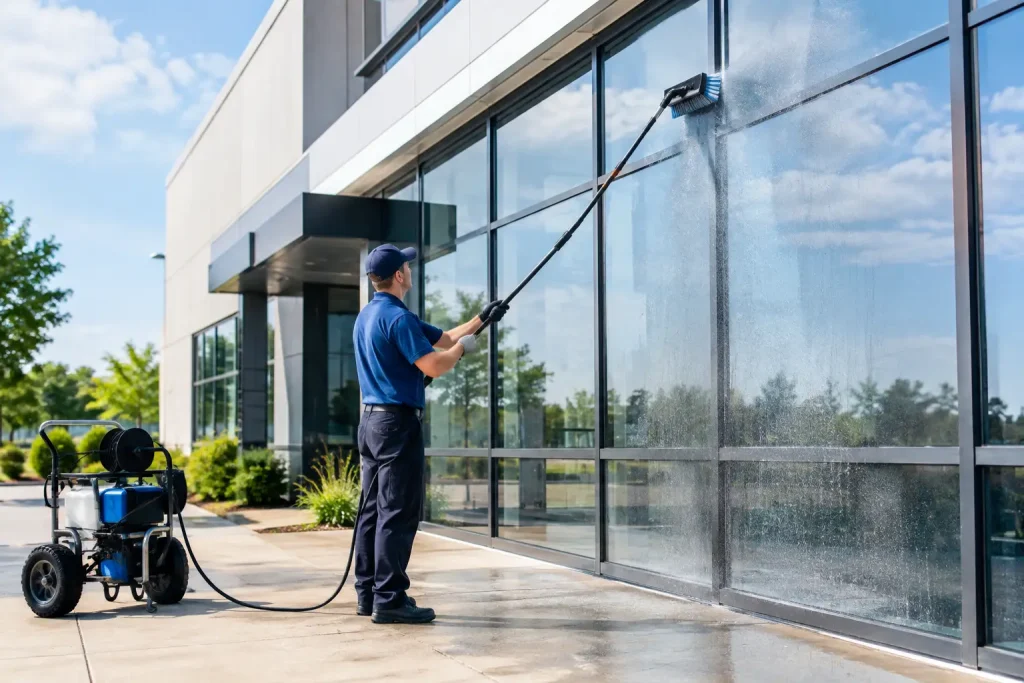
A dark gum-stained walkway, oil-marked parking stall, or algae-streaked entry can change how customers and tenants view a property before they reach the door. The best commercial exterior cleaning methods do more than make a site look freshly maintained. They help prevent slip hazards, protect expensive materials, support lease and HOA standards, and keep dirty wash water from becoming someone else’s environmental problem.
For shopping centers, office properties, multifamily communities, and storefronts, the right approach depends on the surface, the stain, site access, drainage, and operating schedule. High pressure is useful in the right place, but it is not the answer for every exterior. Good commercial cleaning starts with choosing the method that restores the property without damaging it.
Best Commercial Exterior Cleaning Methods by Surface
Hot-water pressure washing for grease and heavy concrete stains
Concrete sidewalks, dumpster pads, loading areas, parking garages, and drive lanes take constant abuse. Food grease, vehicle drips, tire marks, gum, and tracked-in grime settle into porous concrete quickly. For these areas, commercial pressure washing with hot water is often the most effective option.
Heat helps break down oil and grease that cold water alone may only spread across the surface. The technician can pair it with a surface-appropriate degreaser, allow proper dwell time, and use professional equipment to lift contaminants from the concrete. This is especially useful around restaurant entries, trash enclosures, service corridors, and high-traffic retail walkways.
Pressure must still be controlled. Excessive force can leave visible cleaning stripes, erode weak concrete, or push contaminated water toward storm drains. The goal is an even clean, not the highest possible PSI.
Cold-water pressure washing for durable hard surfaces
Cold-water pressure washing is a practical choice for general dirt, mud, dust, mildew residue, and surface grime on durable materials. It works well on many concrete areas, block walls, curbs, parking structures, patios, and exterior common spaces.
A professional adjusts pressure, nozzle type, and cleaning distance to match the material. Flatwork is often cleaned with a rotary surface cleaner for consistent results over large areas, while edges, corners, and detail work need a careful wand finish. That manual finishing work matters. A broad machine pass can make a large sidewalk look better, but it will not always remove buildup along walls, curbs, benches, and door thresholds.
For properties in Ventura County and nearby coastal communities, regular concrete cleaning also helps address the salt air, windblown dirt, and moisture that collect on exposed hardscapes.
Soft washing for roofs, siding, and painted exteriors
Roofs, stucco, siding, painted trim, awnings, and other delicate exterior materials should not be treated like a parking lot. Soft washing uses low pressure and a surface-appropriate cleaning solution to treat organic growth such as algae, mildew, lichen, and mold without blasting the surface.
This is the preferred method for roof soft washing and many building-washing projects. On a roof, high pressure can dislodge granules, disturb tiles, force water beneath materials, or shorten the life of the surface. On stucco, it can leave marks or drive water into cracks. Soft washing treats the growth at its source, then allows a controlled rinse where appropriate.
There is a trade-off: soft washing requires trained chemical handling, careful plant protection, and strict runoff control. It is not simply a weaker version of pressure washing. Done correctly, it is the safer, more effective choice for surfaces that need cleaning but cannot tolerate force.
Paver cleaning and restoration for common areas
Pavers can make an entry courtyard, pool deck, retail patio, or HOA walkway look polished – until weeds, sand loss, algae, and stains take over. Paver cleaning requires more care than spraying the surface clean. Improper pressure can scar individual pavers, remove too much joint sand, or leave an uneven finish.
The process usually begins with controlled cleaning to remove grime and growth. If joints have lost material, fresh joint sand may be installed after the pavers are dry. Depending on the paver type and property goals, sealing may also be considered to enrich color and make future cleaning easier. Not every paver surface needs sealer, and sealing before the pavers are fully dry can cause problems. A site assessment helps determine whether cleaning alone, joint-sand replacement, or restoration is the right investment.
Targeted treatment for oil, rust, graffiti, and gum
Some stains need more than general washing. Oil stains often require a degreaser and agitation before hot-water cleaning. Rust may need a dedicated treatment that is compatible with the surrounding concrete or masonry. Graffiti removal depends on the paint type and surface, since aggressive removal can damage brick, stucco, painted walls, or protective coatings.
Gum removal is another common commercial need. On sidewalks and entry plazas, it can be time-consuming, but skipping it leaves the area looking neglected even after the rest of the concrete has been cleaned. Targeted treatments take longer than a basic wash, yet they are often what create the before-and-after result property managers expect.
Water Recovery Is Part of Proper Commercial Cleaning
Commercial exterior cleaning produces runoff, and that runoff may contain oil, grease, sediment, cleaning products, paint residue, and other contaminants. Letting it flow into a storm drain is not responsible site maintenance. In many locations, it can also create compliance concerns.
Closed-loop water recovery captures wash water during the cleaning process so it can be properly handled rather than entering waterways. This approach is particularly valuable for parking lots, dumpster pads, restaurant areas, fueling zones, and properties with drains near the work area. It also helps reduce unnecessary water use by managing the cleaning process more carefully.
Property managers should ask how runoff will be controlled before approving a pressure-washing project. The answer should be specific. A professional team should identify drain locations, protect sensitive landscaping, choose products appropriate for the job, and use recovery equipment when conditions require it.
Plan Cleaning Around Safety and Daily Operations
The cleanest property is not worth a disruption that frustrates tenants or creates a hazard. Commercial work should be scheduled around customer traffic, deliveries, employee access, quiet-hour rules, and the time needed for surfaces to dry.
Night or early-morning service can be ideal for retail centers and busy walkways, but it depends on lighting, security, noise restrictions, and water-recovery access. For multifamily and HOA properties, clear resident communication is just as important. People need advance notice if parking spaces, walkways, patios, or entrances will be temporarily unavailable.
Safety measures should include visible work-zone controls, slip-risk awareness, careful hose placement, and a final inspection before the area reopens. A cleaned walkway that remains wet or has cleaning residue is not finished work.
How to Choose a Commercial Exterior Cleaning Provider
A low quote can be tempting, especially for a large property, but price alone does not reveal the cleaning method, labor quality, insurance coverage, or runoff plan. Ask whether the company will inspect the property first, identify the surface types and stains, explain where soft washing is needed, and provide a clear scope of work.
It also helps to ask what is included after the main cleaning pass. Will edges, stair risers, storefront thresholds, planters, and visible detail areas receive attention? Will the crew walk the property with you when the work is complete? These details separate a quick wash from accountable maintenance.
At Channel Islands Pressure Washing, the process begins with a site assessment and no-obligation estimate. After scheduling around the property’s needs, the team uses surface-specific cleaning methods, water recovery where needed, and a final walkthrough to make sure the result meets expectations.
Build a Maintenance Schedule That Fits the Property
There is no universal cleaning interval. A restaurant-adjacent walkway may need monthly or quarterly attention, while an office building with low foot traffic may only need seasonal service. Roofs, gutters, building facades, pavers, and concrete all age differently.
Start by watching the areas that affect safety and first impressions most: main entries, accessible paths, storefront sidewalks, trash areas, parking stalls, common patios, and exterior walls. Addressing buildup early is usually less expensive than waiting until staining becomes deeply set or a surface starts to deteriorate.
Maintain it, don’t replace it. A thoughtful cleaning plan protects the surfaces you already own, keeps the property ready for the people who use it every day, and gives you a clear record of care when tenants, residents, or ownership ask what has been done.