
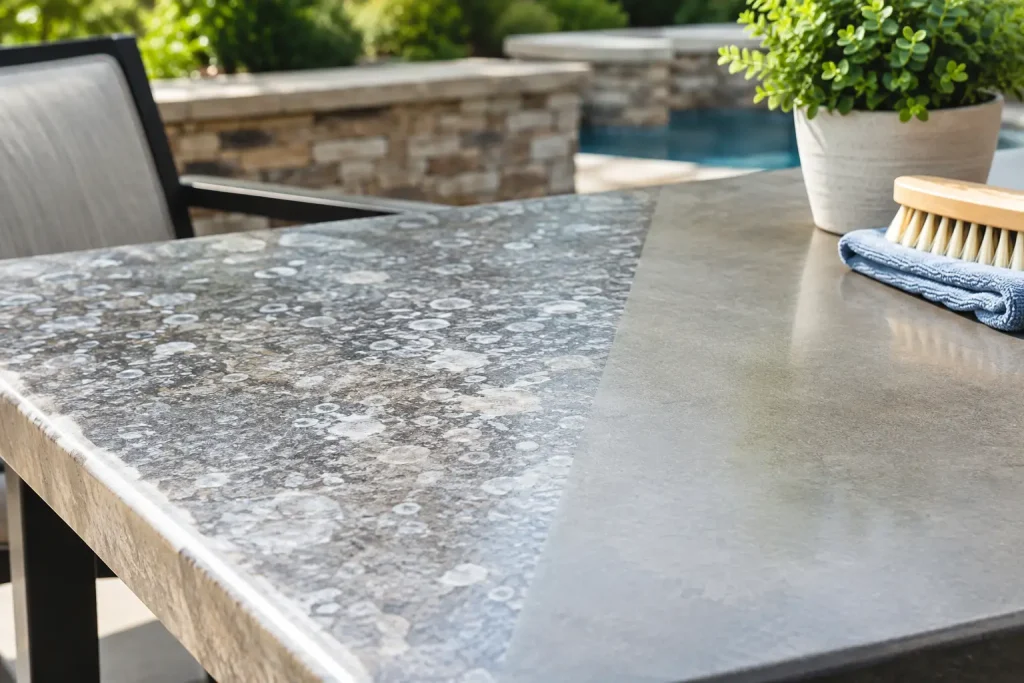
A sprinkler overspray pattern can leave a clean-looking driveway or patio with stubborn white rings, cloudy spots, and crusty deposits that ordinary washing will not remove. This hard water stain guide explains what those marks are, why they need surface-specific care, and how to remove them without trading a cosmetic problem for permanent damage.
What Hard Water Stains Actually Are
Hard water contains dissolved minerals, primarily calcium and magnesium. When water repeatedly lands on a surface and evaporates, those minerals stay behind. Over time, the residue builds from a faint haze into a chalky white crust that can discolor concrete, pavers, glass, tile, metal fixtures, stucco, and painted surfaces.
In coastal Southern California, exterior stains often have more than one cause. A sprinkler may leave mineral deposits on a walkway, while dirt, algae, salt air, runoff, and vehicle residue settle into the same area. That is why a stain may look simple but respond poorly to a one-size-fits-all cleaner or a quick pass with a pressure washer.
Hard water deposits are not always the same as efflorescence. Efflorescence is a white, powdery mineral residue that moves from within porous masonry, concrete, brick, or pavers as moisture travels through the material. Hard water staining comes from water applied to the surface. The two can look alike, but the source matters because the long-term fix may involve drainage, irrigation adjustments, sealing, or moisture control rather than cleaning alone.
Why Pressure Alone Is Not the Answer
High pressure can remove loose surface residue, but mineral scale is bonded to the surface. Trying to blast it away can etch concrete, scar pavers, strip coatings, force water behind siding, or leave uneven clean spots that are more noticeable than the original stain.
The right method depends on the material and the severity of buildup. Concrete can often tolerate more controlled mechanical cleaning than painted stucco or decorative stone. Glass needs special care because abrasive pads and overly strong acidic products can scratch or haze it. Pavers require attention at the joints, where aggressive washing may dislodge sand and create an unstable surface.
For roof surfaces, pressure washing is especially risky. Roof tiles, shingles, underlayment, gutters, landscaping, and drainage paths all need consideration. A low-pressure soft-wash approach may be appropriate for biological growth, but mineral staining should be assessed separately before any treatment begins.
A Surface-by-Surface Hard Water Stain Guide
Concrete driveways and walkways
Hard water stains on concrete commonly appear near sprinkler heads, hose spigots, downspouts, and parking areas. Light deposits may respond to a properly diluted mineral-removal treatment followed by controlled rinsing. Heavy buildup can require multiple applications and professional surface cleaning to avoid patchy results.
Concrete is durable, but it is still porous. Acidic products that are too strong or left on too long can expose aggregate, alter color, and create a rough texture that attracts dirt faster. If a driveway also has oil stains, tire marks, or rust, each contaminant should be treated with the correct product instead of applying one harsh chemical to everything.
Pavers, natural stone, and patios
Pavers collect hard water residue in their textured faces and joint lines. The goal is not simply to make the top look brighter. Proper paver cleaning also protects the joint sand, avoids disturbing edge restraints, and prepares the surface for restoration or sealing if needed.
Natural stone deserves even more caution. Travertine, limestone, marble, and other calcareous stones can react badly to acidic cleaners. A product that works on a concrete sidewalk can permanently dull a stone patio. Before treatment, identify the material, test a discreet area, and confirm whether the stain is mineral residue, efflorescence, or a failed sealer.
Stucco, siding, and building exteriors
Sprinkler overspray can leave white marks on stucco and painted siding, especially along ground-level walls and around landscape beds. These surfaces should be cleaned gently. Scrubbing aggressively can burnish paint, remove texture, or push dirty water into vulnerable seams.
A soft-wash method and careful manual finishing are often better choices for building exteriors. The cleaning plan should also address the cause. Redirecting sprinkler heads even slightly can prevent the same stain from returning immediately after a professional cleaning.
Windows, glass doors, and metal fixtures
Water spots on glass can become etched into the surface if minerals sit long enough in direct sun. At that point, routine window cleaning may improve the appearance without fully restoring clarity. Professional assessment is worthwhile when stains are widespread, old, or located on expensive glass panels.
Metal fixtures can develop white scale along with oxidation or rust staining. The wrong cleaner may discolor anodized aluminum, damage powder-coated surfaces, or affect nearby landscaping. Controlled application, thorough rinsing, and runoff management matter as much as the cleaning product itself.
When a DIY Approach Makes Sense
For fresh, light stains on a durable surface, a cautious DIY effort can be reasonable. Start by turning off or redirecting the water source. Rinse away loose dirt first so you can see the stain clearly, then use a cleaner specifically labeled for the material. Follow the dilution and dwell-time instructions exactly, work in a small shaded test area, and rinse thoroughly.
Do not mix cleaning chemicals. Bleach, acids, ammonia, and other products can create dangerous reactions or release harmful fumes when combined. Avoid wire brushes, highly abrasive pads, and undiluted acidic products on unknown surfaces. A stronger cleaner is not automatically a better cleaner.
DIY work becomes less practical when the stained area is large, the deposits are thick, multiple surfaces are involved, or the runoff can enter storm drains. It is also wise to call a professional for stained roofs, second-story walls, delicate stone, commercial walkways, and areas where slip hazards or public access are concerns.
Preventing Hard Water Stains From Returning
Cleaning is only half the job. If sprinklers continue to spray the same wall, pavers, or storefront glass every morning, mineral stains will return. Check irrigation heads for alignment, broken nozzles, overspray, and poor coverage. Watering before sunrise can reduce rapid evaporation, although it will not solve a direct overspray problem.
Address drainage issues around downspouts, planters, and hose connections. Repair slow leaks promptly. On appropriate surfaces, a quality sealer can reduce absorption and make future cleaning easier, but sealing should follow proper cleaning and drying. Sealing over mineral deposits can trap the appearance beneath the coating.
For HOAs, retail centers, and property managers, a maintenance schedule is usually more cost-effective than waiting for heavy buildup. Regular cleaning keeps common areas presentable, helps identify irrigation problems early, and reduces the need for aggressive restoration later. Maintain it, don’t replace it.
Why Runoff Handling Matters
Mineral removers, degreasers, dirt, oil residue, and wastewater do not belong in storm drains. This is particularly relevant for commercial pressure washing, parking areas, paver restoration, and heavily stained concrete where cleaning creates substantial runoff.
A responsible contractor plans for water containment and recovery before work begins, not after dirty water starts moving toward a curb. Channel Islands Pressure Washing uses closed-loop water recovery practices to capture wastewater and help keep contaminated runoff out of local waterways. That approach protects the property, supports responsible exterior maintenance, and gives managers and homeowners a cleaner result without treating environmental care as an afterthought.
Choosing Professional Help for Stubborn Stains
Ask how the contractor will identify the surface and stain before recommending a method. A reliable estimate should account for material type, stain severity, access, water use, landscaping, drainage, and any restoration steps such as joint-sand replacement or sealing preparation.
The best outcome is not always the brightest possible surface on cleaning day. It is a result that looks consistently clean, preserves the material, and addresses the conditions that caused the staining. If white deposits are taking over your driveway, patio, stucco, or common areas, a careful site assessment can turn a recurring eyesore into a manageable maintenance item.
Pingback: Why Does Stucco Discolor? Causes and Fixes – Channel Islands Pressure Washing, LLC