
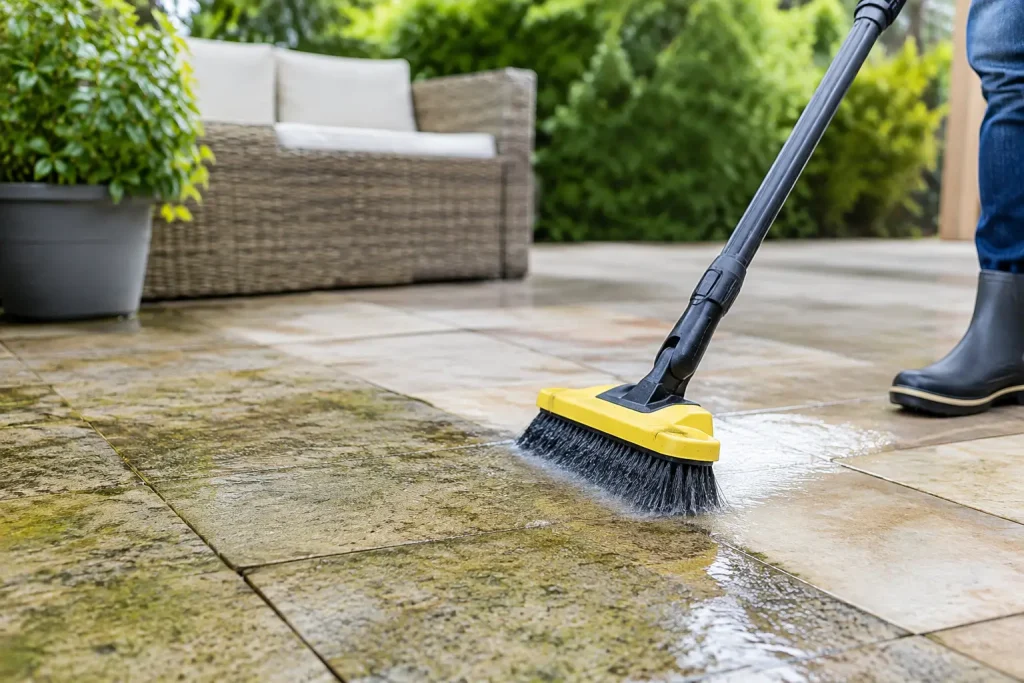
A patio can look neglected long before it is actually worn out. That dark green, black, or gray film along the shaded edge of concrete, between pavers, or beneath patio furniture is often mildew mixed with algae, dirt, and moisture. Knowing how to remove patio mildew correctly matters because a quick, overly aggressive cleaning can etch concrete, strip paver joint sand, stain natural stone, or send contaminated wash water into a storm drain.
The goal is not simply to make the surface look lighter for a week. A good patio-cleaning approach removes the growth at the source, protects the material underneath, and addresses the damp conditions that allow it to return. Maintain it, don’t replace it!
Why Patio Mildew Keeps Coming Back
Mildew needs moisture, shade, and organic material to grow. Coastal Southern California properties can be especially prone to it because morning marine layers, damp winters, irrigated landscaping, and shaded side yards keep hardscapes from fully drying. Tree debris, pollen, potting soil, and leaves also create a thin food source on patios.
What homeowners call mildew is often algae or a combination of algae, mold, and surface grime. The distinction matters less than the cleaning method. All can make concrete, pavers, tile, and walkways slippery, particularly when wet. On a residential patio, that is a safety concern. At an HOA, apartment community, restaurant, or retail property, it can become a liability issue as well as a curb-appeal problem.
Cleaning only the visible dark spots may improve the appearance temporarily, but spores and organic residue can remain in pores, joints, and shaded edges. That is why mildew frequently reappears after a basic rinse.
How to Remove Patio Mildew Safely
Start by moving furniture, planters, rugs, and other items off the patio. Sweep away leaves, loose dirt, and cobwebs first. This simple preparation prevents wet debris from spreading across the surface and lets a cleaner contact the mildew more evenly.
Before applying any product, identify the surface. Concrete is durable but can be scarred by excessive pressure. Pavers require extra care because blasting at the wrong angle can remove joint sand. Travertine, flagstone, and other natural stone can be damaged or discolored by acidic cleaners and harsh chemicals. Painted surfaces, decorative coatings, and sealed patios also need a gentler approach.
For a small, ordinary mildew area on durable concrete or pavers, use a patio-safe mildew cleaner labeled for the specific material. An oxygen-based cleaner is often a practical choice for general organic buildup, especially where you want to avoid chlorine odor and reduce the risk of plant damage. Follow the product label exactly, including dwell time and dilution instructions. More chemical is not automatically better.
Apply the cleaner to a cool, dry surface when direct sun is not baking it dry. Keep nearby plants lightly pre-wet with clean water, and cover especially sensitive landscaping if appropriate. Allow the solution to work, then agitate stubborn patches with a stiff nylon brush. Avoid wire brushes, which can leave metal marks on concrete and stone.
Rinse thoroughly with controlled water flow. A garden hose with a spray nozzle is enough for many small areas. If you use a pressure washer, keep the pressure conservative and use a fan tip rather than a narrow, cutting stream. Maintain a consistent distance from the surface and test an inconspicuous area first.
The trade-off is straightforward: higher pressure can remove grime quickly, but it can also create permanent stripes in concrete, dislodge paver sand, roughen surfaces, and force water into joints or cracks. The safest cleaning method is the lowest-pressure method that delivers a complete result.
Avoid These Common Patio-Cleaning Mistakes
Do not pour straight bleach on a patio or mix cleaning chemicals. Bleach can discolor materials, harm surrounding plants, and create hazardous fumes when combined with other products. It may brighten surface staining without fully addressing embedded organic growth, especially in porous concrete and paver joints.
Do not aim high-pressure water directly at mortar, expansion joints, loose pavers, cracked concrete, or the edges of stone. These areas are already vulnerable. It is also wise to avoid washing runoff toward a curb, gutter, or storm drain. Patio wash water may carry cleaning agents, dirt, oils, and biological material that do not belong in local waterways.
Finally, do not skip the rinse. Cleaner residue can leave a patio slippery, chalky, or streaky. A properly rinsed surface should look even once it dries, not blotchy or powdery.
Match the Cleaning Method to Your Patio Material
Concrete patios are usually the most forgiving, but they still benefit from a surface-specific cleaner and moderate pressure. Older concrete, decorative concrete, stamped concrete, and colored finishes deserve more caution because aggressive washing can expose aggregate or fade the finish.
Paver patios need cleaning that accounts for the sand between units. Removing mildew is only part of the work. If joint sand is washed out, the pavers can shift and weeds may return. After a deeper paver cleaning, joints may need to be refilled and the surface may benefit from appropriate sealing once it is clean and completely dry.
Natural stone is where homeowners should slow down. Travertine, limestone, sandstone, and flagstone vary widely in density and chemical sensitivity. A cleaner that works well on concrete may dull or stain stone. Use only a product approved for the exact type of stone, and test a discreet area before treating the full patio.
Tile patios and coated surfaces can be easier to clean, but grout lines, chipped finishes, and slick glazed tile call for low-pressure work. The objective is to remove the biological film without making the patio dangerously slippery or compromising the coating.
Stop Mildew Before It Builds Up Again
A clean patio stays clean longer when moisture is managed. Trim back shrubs that block airflow, clear leaves before they become wet compost, and move planters or furniture occasionally so the surface beneath can dry. Check sprinkler heads too. Overspray that hits the same patio edge every morning can create a dependable mildew strip.
For most homes, a light sweep every week or two and a seasonal inspection are enough to catch new growth early. Shaded patios, homes near the coast, and areas beneath dense trees may need more frequent care. Commercial common areas and HOA walkways often benefit from a planned maintenance schedule because waiting until growth is dark and slippery makes the cleaning more involved.
Sealing can help some concrete, paver, and stone surfaces resist moisture and staining, but it is not a substitute for cleaning or drainage correction. A sealer should be compatible with the material and applied only after the patio is fully clean and dry. On certain surfaces, the wrong sealer can trap moisture, change the appearance, or create a glossy finish that does not suit the area.
When Professional Patio Cleaning Is the Better Choice
Professional help makes sense when mildew covers a large area, has returned repeatedly, or is mixed with oil stains, rust, irrigation marks, or heavy dirt. It is also the safer option for delicate stone, aging pavers, heavily stained concrete, and patios near landscaping or storm-draining areas.
A professional crew can select the right combination of treatment, low-pressure soft washing, controlled pressure washing, and detailed manual work for the surface. For larger properties, responsible runoff handling is especially important. Channel Islands Pressure Washing uses surface-specific cleaning methods and water-recovery practices designed to keep contaminated runoff out of waterways while restoring outdoor areas carefully.
For homeowners, property managers, and HOAs, the process should be simple: assess the patio and surrounding drainage, receive a clear estimate, then schedule cleaning around the property’s needs. A final walkthrough helps confirm that the surface is clean, joints and edges have been treated with care, and no problem areas were overlooked.
A mildew-free patio is more than a better view from the back door. It is a safer, more usable outdoor space, and regular attention can protect the hardscape you already paid for.