
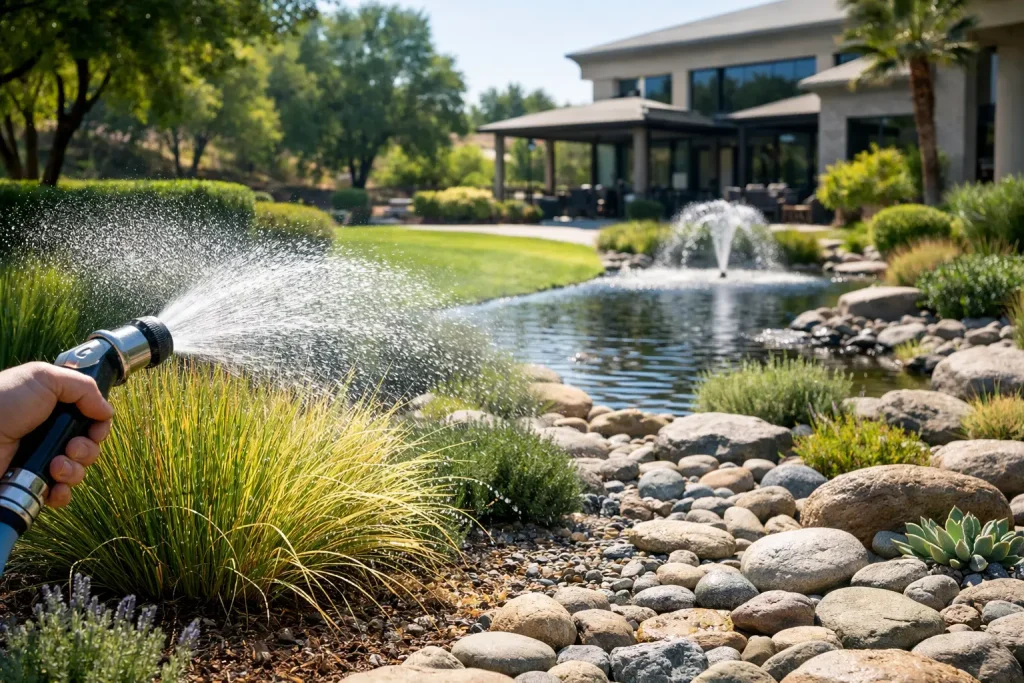
A stained driveway, algae-covered walkway, or grimy stucco wall should not force a choice between a clean property and responsible water use. Water conservation is part of proper exterior maintenance, especially in Southern California, where every gallon matters and runoff can carry dirt, oil, detergents, and debris toward storm drains.
The right cleaning plan does more than make a home, storefront, or common area look better. It uses the appropriate method for the surface, avoids unnecessary repeat work, and keeps contaminated wastewater from becoming someone else’s environmental problem. For homeowners, HOAs, and commercial property managers, that approach protects curb appeal, surface life, and the waterways that serve our communities.
Why Water Conservation Matters During Exterior Cleaning
Exterior surfaces collect more than visible dust. Driveways pick up vehicle fluids and tire marks. Walkways accumulate gum, food spills, and foot traffic grime. Roofs and siding can develop algae, mildew, and airborne buildup. Parking areas may hold oil stains, sediment, and litter that can move quickly when water enters the picture.
When cleaning water is allowed to run freely into a storm drain, it may carry those contaminants with it. Storm drains are not the same as sanitary sewer systems. In many areas, water entering the drain flows directly to local waterways without treatment. That makes runoff control a practical part of responsible property care, not an optional extra.
Water conservation also matters because waste often starts before a hose is turned on. Using excessive pressure on delicate materials can cause damage that needs costly repair. Re-cleaning an area because the first method was rushed uses more water, more labor, and more resources. A careful plan reduces all three.
For property owners, the result is simple: a cleaner exterior that does not create avoidable damage or leave contaminated water behind.
Water Conservation Is More Than Using Less Water
Using less water is valuable, but it is only one part of responsible cleaning. The better question is whether the water being used is controlled, effective, and handled correctly after it leaves the surface.
A professional crew should assess the site before work begins. The material matters. So does the type of staining, slope of the property, nearby drains, landscaping, pedestrian traffic, and the condition of the surface. A heavily stained concrete driveway needs a different approach than painted stucco, composite decking, solar panels, or an aging tile roof.
Surface-specific cleaning helps prevent waste. Soft washing, for example, uses low pressure and an appropriate cleaning solution to treat organic growth on delicate roofs, siding, and painted surfaces. Blasting those areas with high pressure may use more water while creating cracks, lifted paint, damaged shingles, or water intrusion. In those cases, more force is not better cleaning.
For hard surfaces such as concrete walkways and parking areas, professional equipment can focus cleaning power where it is needed rather than flooding the entire area with an uncontrolled stream. Pre-treatment of oil spots, tire marks, or stubborn organic buildup can also reduce the need for repeated passes.
Runoff Recovery Protects More Than the Curb
The most responsible exterior-cleaning practices account for wastewater after the wash is complete. Closed-loop water recovery systems capture runoff rather than allowing it to travel into storm drains. The recovered water and contaminants can then be handled appropriately instead of being left to flow across a lot, down a street, or into nearby waterways.
This is especially important for commercial properties, shared communities, restaurants, retail centers, and parking areas where runoff may contain oil, grease, gum residue, cleaning products, or high volumes of sediment. It also matters at homes with driveways near street gutters or landscaping that drains toward the curb.
Water recovery requires planning and equipment, but it provides a meaningful benefit. It helps property owners maintain a clean, professional appearance while reducing the environmental impact of the work. For HOAs and facility managers, it can also support cleaner common areas without overlooking the responsibility that comes with maintaining them.
Practical Water Conservation at Home and on Commercial Sites
Property owners can make smarter maintenance decisions well before scheduling a cleaning service. The first step is not to wait until every surface is heavily stained. Routine care usually takes less water and less aggressive treatment than a major restoration project.
Keep gutters and downspouts clear so rainwater moves where it should instead of spilling over walls, patios, and walkways. Address small oil leaks from vehicles before they turn into deeply set driveway stains. Sweep leaves, dirt, and litter from hard surfaces when possible, rather than washing everything toward the street. These simple habits reduce the amount of contamination that has to be cleaned later.
Landscaping also deserves attention. Irrigation that sprays onto stucco, fences, windows, or walkways can create mineral staining, algae growth, and wasted water at the same time. Adjusting sprinkler heads and repairing leaks can prevent recurring exterior cleaning problems. If a patio or pathway stays damp because of poor drainage, correcting the drainage issue may be more valuable than cleaning the same algae every few months.
For commercial sites, regular inspection is particularly useful around loading areas, dumpster enclosures, drive-through lanes, parking stalls, and entryways. These high-traffic locations can become safety concerns when grease, algae, or buildup makes surfaces slippery. Targeted maintenance prevents grime from spreading across a larger area and helps preserve a welcoming customer experience.
Choosing a Cleaner Who Treats Water Responsibly
Not every pressure washing service uses the same methods or provides the same level of runoff control. Before scheduling work, ask how the contractor plans to clean your specific surfaces and where the wastewater will go. A clear answer should include the cleaning method, the protection of nearby landscaping and drains, and the approach to collecting contaminated runoff when needed.
It is also reasonable to ask whether low-pressure soft washing is available for roofs, siding, delicate paint, solar panels, and other sensitive materials. A contractor who treats every job like a concrete parking lot may create unnecessary risk for your property.
Look for a detailed site assessment and a transparent estimate rather than a one-size-fits-all price given without seeing the condition of the surfaces. The scope should identify the areas being cleaned, the staining or buildup being addressed, and any factors that could affect the work. That upfront care often prevents surprises later.
At Channel Islands Pressure Washing, responsible cleaning means pairing commercial-grade capability with surface-specific methods and closed-loop water recovery. Whether the job involves oil-marked concrete, a neglected patio, mud-stained stucco, or a busy commercial walkway, the goal is to restore the surface while keeping unnecessary runoff out of local waterways.
Maintain It, Don’t Replace It
Exterior cleaning is often viewed as a cosmetic service, but the right maintenance schedule can help delay expensive replacement. Algae and moisture can contribute to deterioration on roofs, decks, fences, and walkways. Oil and grime can penetrate porous concrete. Neglected gutters can send water where it does not belong. Removing buildup early helps surfaces stay functional and presentable for longer.
That does not mean every surface should be washed on the same schedule. A shaded north-facing wall may need more frequent attention than a sunny driveway. A shopping center entry may require regular cleaning because of daily foot traffic, while a lightly used patio may only need seasonal service. The best schedule depends on exposure, surface material, property use, drainage, and the kind of buildup present.
A professional assessment can help set priorities. Some areas may need immediate treatment for safety or appearance, while others only need periodic maintenance. This prevents over-cleaning and gives property owners a practical plan for protecting their investment.
Clean properties should not come at the expense of local water quality. When you choose careful methods, address small problems before they grow, and work with a provider that manages runoff responsibly, you can keep your property looking cared for while honoring a simple standard: maintain it, don’t replace it.
Pingback: Awning Cleaning That Protects Your Property – Channel Islands Pressure Washing, LLC
Pingback: How to Wash Stucco Gently Without Causing Damage – Channel Islands Pressure Washing, LLC