
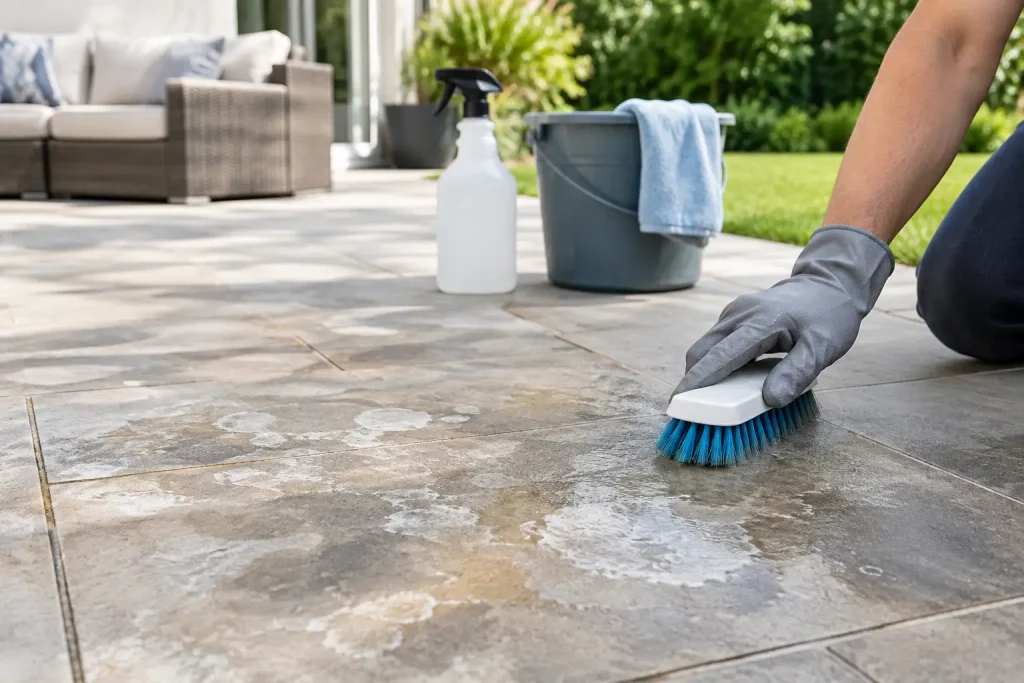
Hard water stains can make a well-maintained property look neglected even when the surface itself is in good condition. The best options for hard water stains depend on where the mineral deposits have formed, how long they have been there, and whether the material can safely handle an acidic cleaner, pressure, or detailed hand work. On Southern California properties, sprinkler overspray and recurring irrigation leaks commonly leave white, chalky buildup on glass, concrete, pavers, stucco, metal fixtures, and outdoor furniture.
The right approach is not always the strongest cleaner or the highest pressure setting. Removing mineral deposits without etching glass, discoloring stone, stripping paver joint sand, or driving water behind siding takes surface-specific care. Maintain it, don’t replace it.
Why Hard Water Stains Are So Difficult to Remove
Hard water contains dissolved minerals, especially calcium and magnesium. When irrigation water dries, those minerals remain behind. A fresh deposit may look like a cloudy film, but repeated wetting and drying creates a crusty scale that bonds more firmly to the surface.
This is why rinsing alone rarely works. The water evaporates, then leaves another layer of minerals. On dark pavers or glass railings, the residue can be highly visible. On concrete and stucco, it often blends into the surface until it becomes heavy enough to create uneven color and a permanently dirty appearance.
The source matters as much as the stain. If a sprinkler head continues to hit a wall, storefront window, walkway, or fence, even excellent cleaning results will not last. Correcting overspray, redirecting runoff, and repairing irrigation leaks are practical parts of protecting the investment in cleaning.
Best Options for Hard Water Stains by Surface
1. Mild mineral removers for light buildup
For light deposits on durable, nonporous surfaces, a purpose-made mineral remover can be an effective first step. These products are typically acidic enough to dissolve calcium scale but should always be used according to the label and tested in an inconspicuous spot first.
This option works best when the stain is recent and the surface is not sensitive to acid. It may be suitable for certain sealed tile, glass, metal, and concrete areas. It is less predictable on natural stone, unsealed pavers, colored concrete, painted surfaces, and older materials with existing wear.
Household vinegar is often suggested for mineral deposits, and it can help with minor staining on some surfaces. However, it is not a universal solution. Vinegar can damage or dull natural stone, affect some coatings, and leave a strong odor. It also tends to underperform on thick, long-standing scale. A homeowner who keeps reapplying it to a stubborn stain may end up with inconsistent results and a surface that still looks blotchy.
2. Glass-safe polishing and hand cleaning
Hard water staining on windows, shower-style glass panels, and glass railings deserves a careful approach. Glass can develop mineral haze that looks removable but may actually be etched into the surface after long exposure. Abrasive pads, razor blades, and overly aggressive chemicals can create scratches or make the haze more noticeable in direct sunlight.
For removable deposits, professional hand cleaning with a glass-safe mineral treatment and the right non-scratching tools can restore clarity. If the minerals have etched the glass, cleaning may improve the appearance without fully reversing the damage. That is an important trade-off to understand before anyone promises a perfectly new-looking result.
Window stains are also a reminder to inspect nearby sprinklers. A clean window that is sprayed every morning can quickly develop the same cloudy spots again.
3. Controlled cleaning for concrete and walkways
Concrete driveways, sidewalks, pool decks, and commercial walkways often collect hard water stains near irrigation zones, hose bibs, planters, and drainage areas. These stains may appear alongside dirt, algae, tire marks, rust, and efflorescence, which is another type of mineral deposit that comes from within the concrete or masonry.
A professional concrete-cleaning process may combine targeted treatment with controlled pressure washing. The treatment loosens mineral buildup, while the equipment removes surface grime evenly across the surrounding area. Cleaning only the visible white stain can leave a noticeably lighter patch, so the broader surface often needs to be cleaned for a consistent finish.
High pressure alone is not the best answer. It can leave wand marks, expose aggregate, or create stripes when used without the right technique. On commercial properties and HOA common areas, uneven results can be just as distracting as the original stain.
4. Paver cleaning with protection for sand and color
Pavers are especially vulnerable to hard water staining because they have joints, texture, and color variation. Mineral deposits can settle into the face of the paver and around the edges, while irrigation overspray also encourages algae and grime. The goal is to remove the buildup without blasting out too much joint sand or leaving bright, uneven areas.
Paver cleaning and restoration should begin with an assessment of the paver type, condition, drainage, existing sealant, and stain source. Some pavers can tolerate a carefully selected mineral treatment; others need a gentler process. After cleaning, re-sanding and sealing may be appropriate when the joints are depleted or the surface needs longer-term protection. Those steps are not necessary for every patio or driveway, but they can make sense for heavily used areas or pavers with recurring irrigation exposure.
5. Low-pressure treatment for stucco, siding, and painted surfaces
White mineral streaks on stucco can be mistaken for paint failure. In some cases, they are caused by sprinklers repeatedly spraying the wall. In others, they come from water moving through masonry or from leaking planters and fixtures. Either way, aggressive pressure washing is risky on painted stucco, siding, and delicate trim.
Soft washing or low-pressure cleaning, combined with an appropriate surface treatment, is usually the safer path. The process should be adjusted to the material and tested before a large area is treated. If the stain has altered the paint or caused underlying moisture damage, cleaning alone may not fully correct it. Addressing the water source first prevents the same streaks from returning after the wall is cleaned.
When DIY Cleaning Makes Sense and When It Does Not
A small, recent hard water stain on a durable surface may be manageable with a compatible cleaner, patience, and a test spot. Wear gloves and eye protection, keep cleaners away from plants, and never mix products. Acidic cleaners can react dangerously with bleach or other chemicals.
DIY work becomes less advisable when stains cover a large area, affect expensive glass, appear on natural stone, involve older painted surfaces, or sit near landscaping and storm drains. Commercial walkways, shopping-center entries, HOA common areas, and multi-unit properties also require more planning because runoff must be handled responsibly. Cleaning chemicals and contaminated wash water should not be allowed to flow into gutters or waterways.
That is where a professional service offers more than cleaning power. Channel Islands Pressure Washing uses surface-appropriate methods and closed-loop water recovery practices to capture runoff during applicable cleaning work. This helps protect surrounding landscaping, drainage systems, and local waterways while delivering a cleaner finish.
Stop the Stains From Coming Back
The most effective maintenance plan starts with irrigation. Adjust sprinkler heads so they water landscaping rather than windows, walls, pavers, and walkways. Check for broken nozzles, leaks, and overspray near building entrances. If sprinklers must operate near a hardscape surface, reducing unnecessary spray time can limit mineral accumulation.
Regular exterior cleaning also keeps deposits from becoming permanent-looking scale. A quarterly or seasonal inspection is often enough for residential patios and driveways, while retail centers, HOAs, and high-traffic commercial properties may need recurring service based on irrigation patterns and foot traffic.
If a white stain keeps returning in the exact same location, treat it as a water-management issue, not just a cleaning issue. A quick site assessment can identify whether the problem is hard water, efflorescence, rust, leaking irrigation, or another source that needs a different solution.
Before replacing stained pavers, repainting a wall, or assuming a window is beyond saving, have the surface evaluated. The right cleaning method can often restore a cleaner, more uniform appearance while helping your property stay protected between maintenance visits.