
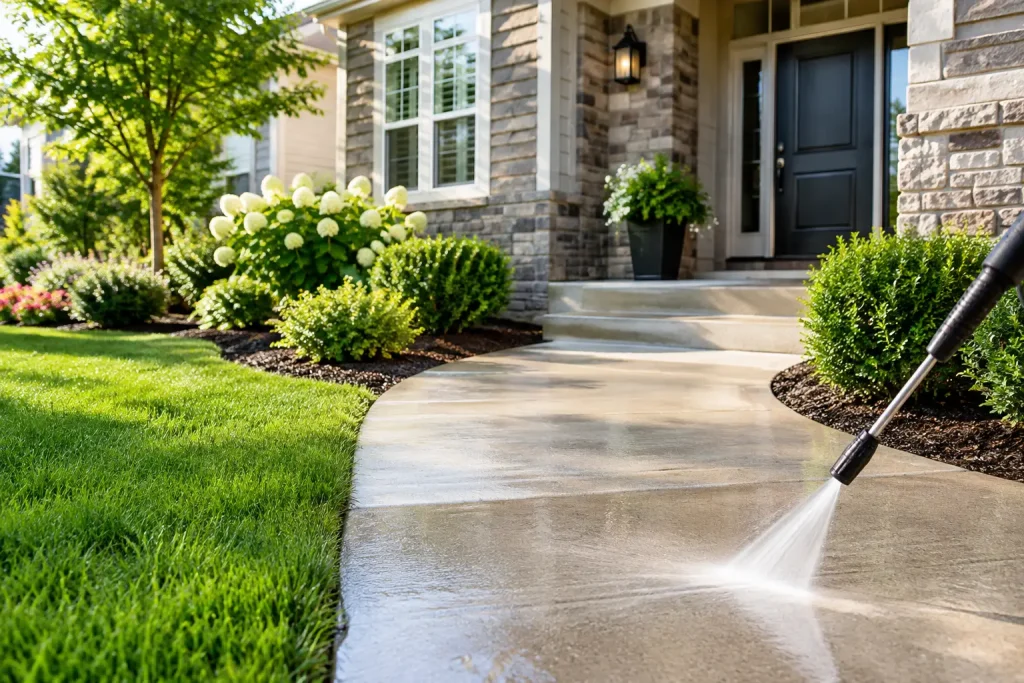
A driveway marked by oil spots, dark roof streaks, stained stucco, and overflowing gutters can make a well-kept property look neglected before anyone reaches the front door. Curb appeal is not just about landscaping or a new coat of paint. It is the overall impression created by every visible exterior surface, including the ones that collect dirt slowly enough to go unnoticed.
For homeowners, that impression affects pride of ownership, neighborhood standards, and potential resale value. For HOAs, retail centers, and commercial properties, it also shapes tenant confidence, customer traffic, and the perception of how well the property is managed. The good news is that many exterior issues are maintenance problems, not replacement problems. Maintain it, don’t replace it.
What Curb Appeal Really Means for Your Property
Curb appeal begins at the edge of the property and continues all the way to the entry. Sidewalks, curbs, parking areas, driveways, pavers, gates, fences, exterior walls, windows, gutters, roofs, and outdoor common areas all contribute to the picture.
In Southern California’s coastal and inland communities, surfaces face a demanding mix of dust, irrigation overspray, vehicle residue, windblown debris, algae, mildew, salt air, bird droppings, and sun exposure. Concrete can hold tire marks and oil stains. Pavers can fade beneath grime or develop slippery organic buildup. Stucco may show dark streaks near planters, trash areas, and walkways. A roof can look older than it is simply because algae and debris have taken hold.
Cleaning is not a cosmetic afterthought in these cases. It can help preserve the material underneath, make walking areas safer, and prevent buildup from becoming harder and more expensive to remove. Still, the right cleaning method depends on the surface. High pressure is useful for some durable concrete applications, but it can damage roof materials, loosen paver joint sand, scar softer stone, or force water where it does not belong when used carelessly.
Start With the Surfaces People Notice First
The best curb appeal plan does not require cleaning every exterior surface at once. Start with the areas that are most visible, most heavily used, or creating a clear maintenance concern.
Driveways, Walkways, and Concrete
Concrete often tells the clearest story about how a property is maintained. Oil drips, tire tracks, rust marks, leaf stains, gum, and embedded dirt can make a driveway or storefront walkway look permanently worn. Professional concrete cleaning combines the appropriate pressure, cleaning solutions, and targeted stain treatment to lift buildup without simply spreading contaminated runoff into the street.
Oil stains deserve special attention. Fresh stains are easier to treat, but even older marks can often be improved substantially with the right process. Results depend on how deeply the oil has penetrated, the age of the concrete, and previous attempts to clean it. Honest expectations matter here: a heavily saturated stain may lighten dramatically without disappearing completely.
Pavers, Patios, and Pool Decks
Pavers add character, but uneven color, weeds, dark edges, and accumulated grime can quickly take away that finished appearance. Paver cleaning should be controlled and surface-specific. Excessive pressure can disturb joint sand or leave visible lines, while poor drainage can encourage the same staining to return quickly.
A careful paver cleaning and restoration service can refresh the color of the installation, clear buildup from joints, and prepare the surface for appropriate follow-up care. If pavers are sinking, cracking, or showing widespread joint failure, cleaning alone will not solve the underlying installation issue. It can, however, reveal the true condition of the surface and make needed repairs easier to identify.
Roofs, Gutters, and Building Exteriors
A clean roof and clear gutter line can change the look of an entire home or building. Dark roof streaks are commonly caused by organic growth and accumulated debris, not necessarily failing roofing material. Roof soft washing uses low pressure and suitable cleaning methods to treat the growth without the aggressive force that can damage shingles, tiles, or coatings.
Gutter cleaning supports both appearance and drainage. Overflowing gutters leave dirty streaks on fascia and siding, contribute to puddling near foundations, and can create a neglected look from the street. Building washing can address dust, cobwebs, algae, and discoloration on stucco, siding, trim, and exterior walls, using a gentler approach where delicate surfaces require it.
Why Responsible Runoff Handling Matters
Exterior cleaning has a side that is easy to miss: where does the water go? A driveway may contain oil residue, cleaning solution, sediment, pet waste, paint particles, or other contaminants. When that water flows untreated into a storm drain, it can make its way into local waterways.
That is why professional cleaning should account for runoff from the start, especially at commercial properties, HOA communities, parking areas, and locations near storm drains. A closed-loop water recovery system captures wastewater for proper handling instead of allowing contaminated runoff to travel down the curb. It also helps reduce unnecessary water use by keeping the cleaning process controlled and purposeful.
This approach is practical as well as responsible. Property managers and facility decision-makers need vendors who understand that a cleaner sidewalk should not create a compliance concern. For homeowners, it provides confidence that the work is being performed with care for the neighborhood and environment.
A Curb Appeal Plan That Fits the Property
Not every property needs the same scope of work or maintenance schedule. A shaded home with mature landscaping may need more frequent roof, gutter, and patio attention than a sunny property with minimal tree cover. A busy retail center may require recurring walkway and entry cleaning because foot traffic, spills, and gum return quickly. An HOA may benefit from rotating maintenance across common areas so costs and disruptions are easier to manage.
A useful plan starts with a site assessment. Look for stained entryways, drain locations, sensitive landscaping, damaged areas, high-traffic zones, and surfaces that need soft washing rather than pressure washing. This is also the time to identify safety concerns such as slippery algae near stairs, blocked gutters, or tire-marked parking areas.
Then prioritize work by visibility, safety, and potential for preventable damage. A front entry, driveway, and walkway may deliver the biggest residential improvement. For a commercial property, storefront sidewalks, dumpster areas, parking entrances, and building facades may have the strongest effect on customers and tenants.
Finally, set a realistic maintenance cadence. Waiting until every surface looks heavily neglected usually means more labor, more stubborn staining, and fewer options for gentle cleaning. Seasonal or recurring service can keep buildup manageable and help surfaces stay presentable year-round.
What Professional Exterior Cleaning Should Include
The equipment matters, but careful workmanship matters just as much. A quality service should assess the material before choosing a method, protect nearby landscaping and fixtures, treat stains where needed, manage runoff, and inspect the finished work rather than rushing to the next job.
At Channel Islands Pressure Washing, that means matching commercial-grade cleaning capability with soft-wash methods for delicate surfaces, detailed manual finishing, and a final customer walkthrough. The goal is not to blast every problem with maximum pressure. It is to restore the surface safely and leave the property looking cared for.
The booking process should also be straightforward. First, schedule a site assessment and request a no-obligation estimate. Next, review the recommended scope, transparent pricing, and timing that works for your property. Then, have the work completed with the appropriate cleaning method and a final review of the results.
Keep the Improvement Going
After a professional cleaning, small habits can help protect the results. Address vehicle leaks early, sweep leaves from drainage paths, trim vegetation away from walls and rooflines, and avoid allowing sprinklers to hit stucco, windows, or paved surfaces every day. These steps will not replace periodic service, but they can slow the return of stains and organic growth.
The most effective curb appeal is not created by one dramatic project. It comes from paying attention before buildup becomes damage, choosing cleaning methods that fit the material, and treating the exterior as a valuable part of the property worth maintaining.