
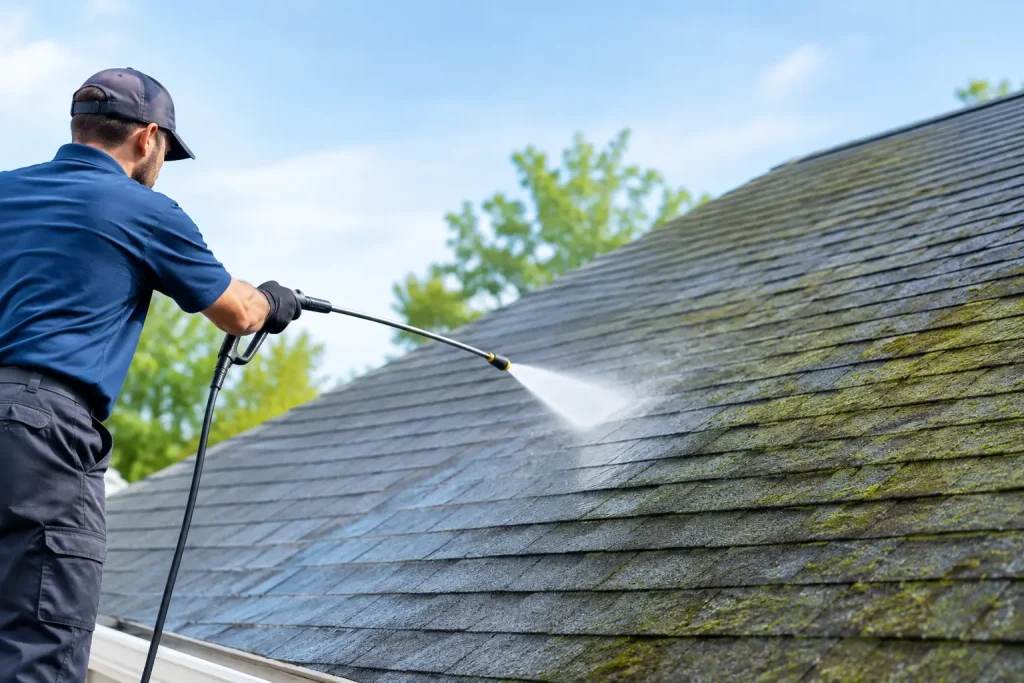
A black or green film on a roof, stucco wall, patio, or walkway is more than a curb-appeal issue. Algae holds moisture against the surface, creates slippery walking areas, and can make an otherwise well-maintained property look neglected. So, can soft washing kill algae? Yes, when it is performed with the right cleaning solution, low-pressure application, adequate dwell time, and careful runoff control.
Soft washing is designed to treat biological growth at its source rather than simply blasting away the visible stain. That makes it a practical choice for delicate roofs, painted surfaces, siding, stucco, pavers, and other materials that can be damaged by excessive pressure.
How Soft Washing Kills Algae
Algae is a living organism. It thrives where moisture, shade, dust, and organic debris collect, which is why it is common on north-facing walls, shaded roof sections, pool decks, walkways, and damp concrete. A soft-wash treatment uses a surface-appropriate cleaning solution to break down and kill the growth, followed by a controlled rinse or natural weathering process depending on the surface and treatment plan.
The key difference is pressure. Soft washing uses low pressure, often comparable to the flow from a garden hose, to apply the treatment. The cleaning power comes from the solution and the technician’s process, not from forceful water impact.
When algae is treated correctly, it loses its hold on the surface. On some materials, especially roofs, the remaining discoloration may continue to lighten as dead organic material releases over time. On hardscape and concrete, a professional may pair soft washing with carefully selected pressure washing to rinse away loosened residue without harming joints, coatings, or surrounding landscaping.
Can Soft Washing Kill Algae on Every Surface?
Soft washing can be highly effective on many exterior surfaces, but the exact method should match the material, condition, and type of growth. A roof with dark streaking needs a different approach than a heavily stained concrete walkway or a paver patio with algae growing between joints.
Roofs and shingles
Roof soft washing is often the preferred option for algae-stained asphalt shingles, tile roofs, and other roofing materials that should not be subjected to aggressive pressure. High-pressure washing can dislodge granules, disturb tiles, force water beneath roofing components, or shorten the useful life of the roof.
A low-pressure algae treatment can remove the organism while preserving the roof surface. The technician should inspect the roof first for broken tiles, loose flashing, fragile areas, drainage concerns, and nearby landscaping that needs protection. Roof cleaning is not a one-size-fits-all service, and the wrong approach can turn a maintenance need into a repair expense.
Stucco, siding, and building exteriors
Algae can leave green streaks along shaded stucco, vinyl siding, painted trim, and exterior walls. Soft washing is well suited to these surfaces because it cleans without driving water into cracks, vents, laps, or weak points in the finish.
For commercial buildings and HOA common areas, this matters even more. Building exteriors need to look clean for residents, tenants, visitors, and customers, but the cleaning process also needs to respect landscaping, signage, windows, entrances, and pedestrian traffic. Careful application and manual finishing work make a visible difference around ledges, corners, and detailed architectural features.
Concrete, pavers, and walkways
Concrete and pavers can handle more pressure than a roof, but algae treatment still matters. If a crew only pressure washes the surface, the walkway may look better for a short time while living algae remains in pores, joints, and shaded edges. Treating the growth first helps deliver a deeper clean and can slow its return.
Pavers need additional care. Excessive pressure can displace joint sand, scar the surface, or leave uneven cleaning patterns. A property with stained or algae-covered pavers may benefit from a restoration-minded process that addresses the biological growth, rinses responsibly, and evaluates whether joint stabilization or sealing is appropriate afterward.
Why Pressure Alone Is Not Always Enough
Pressure washing can remove surface dirt, grime, and loose algae quickly. It is an excellent tool when used on the right material at the right setting. But pressure alone does not necessarily kill the algae that has settled into pores, crevices, or textured finishes.
Think of it as removing a visible weed without addressing its roots. The area may look clean at first, then green growth returns quickly when moisture and shade persist. Soft washing is more effective for biological staining because it targets what is causing the discoloration, not only what is sitting on top of the surface.
That does not mean soft washing replaces pressure washing in every situation. Oil-stained concrete, tire-marked parking areas, heavily soiled storefront walkways, and deep-set grime may require commercial pressure washing as part of the job. The best result often comes from combining methods thoughtfully rather than treating every surface with the same machine setting.
The Runoff Question Matters
Algae removal involves more than making a surface look clean. Cleaning solutions, loosened organic material, dirt, and contaminated water should not be allowed to flow untreated into storm drains or nearby waterways.
This is especially relevant in coastal Southern California, where properties are connected to sensitive drainage systems and outdoor cleaning can affect the larger community. Responsible crews plan for runoff before work begins. They identify drains, protect landscaping, control the work area, and recover water where appropriate.
Channel Islands Pressure Washing uses a closed-loop water recovery approach for applicable jobs, capturing runoff rather than allowing contaminated wash water to enter waterways. This process also helps reduce unnecessary water use. It is a practical part of maintaining a property responsibly, not an optional add-on after the cleaning is complete.
What Affects How Long Algae Stays Away?
Soft washing kills existing algae, but no exterior cleaning method can permanently prevent new growth if the conditions that support it remain in place. In coastal and shaded areas, moisture in the air, morning dew, nearby trees, irrigation overspray, and poor drainage can all encourage algae to return.
A clean surface may stay clear for a long time in a sunny, dry location. A shaded walkway beneath mature landscaping may need more frequent maintenance. Roof sections below overhanging branches and stucco walls exposed to regular sprinkler overspray are also common repeat-problem areas.
The most useful prevention steps are simple: keep gutters flowing, trim vegetation back from surfaces, correct irrigation that sprays walls or walkways, and remove leaf debris before it holds moisture in place. Routine maintenance costs less than waiting for widespread staining, slippery buildup, or a cleaning job that has become more difficult than it needed to be.
When to Call a Professional
A homeowner can rinse light dirt from a patio, but professional help is the safer choice when algae is widespread, the surface is elevated, the material is delicate, or drainage is a concern. Roofs, multi-story buildings, HOA common areas, commercial sidewalks, and large paver areas all need a plan that accounts for surface protection, public safety, and wastewater handling.
A qualified exterior-cleaning team should begin with a site assessment, explain the recommended method, provide a clear estimate, and schedule the work around the property’s needs. After cleaning, a final walkthrough gives the owner or manager a chance to review the results and discuss maintenance timing.
Algae does not need to become a reason to replace roofing, pavers, or exterior finishes. With a surface-specific cleaning plan and responsible runoff management, you can maintain it, don’t replace it.
Pingback: Coastal Home Exterior Care Guide for Lasting Value – Channel Islands Pressure Washing, LLC
Pingback: What Causes Roof Black Streaks on Your Home? – Channel Islands Pressure Washing, LLC