
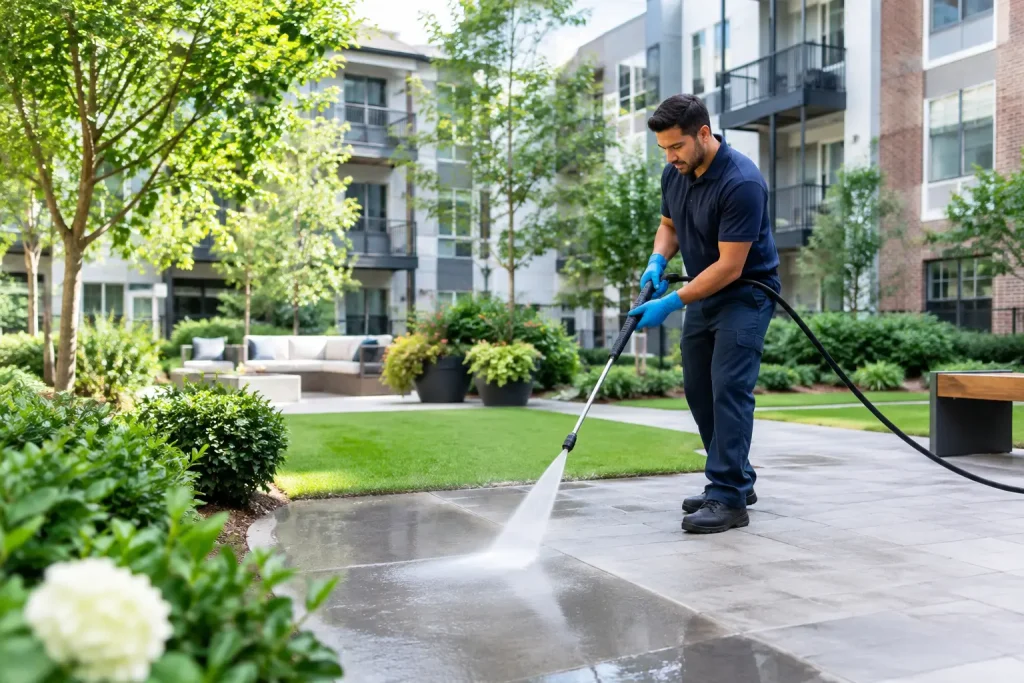
A courtyard can look neglected long before a property manager receives a formal complaint. Darkened pavers, planter-edge stains, sticky drink spills, and black buildup around shaded walkways quietly change how residents and prospective tenants see the community. This apartment courtyard cleaning case study follows a representative multifamily cleaning project and shows why the right method matters as much as the visible result.
The goal was not to make the courtyard look temporarily brighter. It was to restore the common area without damaging pavers, nearby landscaping, painted surfaces, or drainage systems. That meant planning for foot traffic, surface condition, runoff control, and the details that are easy to miss when a cleaning crew is focused only on speed.
The Problem: A Courtyard Residents Stopped Using
The property was a midsize apartment community with a central courtyard used for outdoor dining, dog walks, package pickup, and resident gatherings. The space included interlocking pavers, concrete walkways, low stucco walls, benches, planters, and covered breezeways. Irrigation overspray and shade had encouraged algae growth along the building edges, while food spills, leaf tannins, and tracked-in dirt had dulled the main paver field.
The property manager’s concern was bigger than appearance. Several walkways had become slippery when wet. The courtyard also sat near storm drains, so allowing wash water to carry grime, cleaning products, and sediment off the property was not an acceptable option. Replacing the stained pavers would have been expensive and disruptive, especially when the material itself was still structurally sound.
That is where a maintenance-first approach makes sense: maintain it, don’t replace it.
Apartment Courtyard Cleaning Case Study: The Site Assessment
Before scheduling the work, the cleaning team walked the courtyard with the property manager. This step identified which stains were surface-level and which might need specialized treatment. It also helped determine where water could travel, where residents would need alternate access, and how to protect the landscaping.
The inspection found three distinct cleaning needs. The pavers needed controlled pressure washing to remove embedded soil without disturbing joint sand. The shaded concrete required treatment for organic growth before rinsing. The stucco walls and painted metal furniture needed lower-pressure methods because aggressive pressure can leave marks, force water behind finishes, or strip paint.
Timing mattered, too. A weekday morning was selected to avoid the busiest resident-use periods. Notices were posted in advance, and the work area was divided into sections so access to apartment entrances remained available. For an occupied property, a clean result is only part of good service. Residents also need clear communication and a work plan that respects their routines.
The Cleaning Plan: Match the Method to the Surface
Courtyard cleaning is not a one-setting job. A high-pressure stream that works well on durable concrete can damage soft materials, shift paver joint sand, or leave visible lines on a delicate surface. The crew used surface-specific methods and adjusted the process as conditions changed.
First, loose leaves, soil, and debris were removed from corners, planter borders, and drains. This manual preparation prevented debris from becoming slurry during washing and allowed the team to see the true condition of the surfaces. Oil-marked spots near a service entrance received targeted pretreatment rather than unnecessary chemicals across the entire courtyard.
The paver areas were then cleaned with professional equipment designed to produce an even finish. A measured approach helped lift embedded grime while minimizing disruption to the paver joints. Shaded concrete received an appropriate treatment for algae and mildew, followed by controlled rinsing. Stucco, furnishings, and other sensitive areas were cleaned with low-pressure soft-wash techniques and careful hand finishing.
This difference is important. Pressure washing is effective, but it is only one tool. Soft washing, manual detail work, and stain-specific treatment protect the property while still delivering a visible improvement.
Keeping Runoff Out of the Storm Drain
Water management was a central part of this project. Courtyards often have sloped surfaces and nearby drains, which can quickly carry contaminated wash water away from the work area. That runoff may contain soil, organic buildup, oils, and cleaning residue. It does not belong in local waterways.
The crew set up containment and used closed-loop water recovery equipment to capture wash water as the cleaning progressed. Recovered water and debris were removed for proper handling rather than being pushed toward a storm drain. The team also worked in controlled sections, which made it easier to manage water flow and avoid over-wetting nearby landscaping.
For an HOA, apartment owner, or commercial property manager, this is more than a nice extra. Responsible runoff handling helps protect the property, supports environmental compliance, and reduces the risk of a cleaning project creating a new problem. It can also be especially valuable in coastal Southern California communities, where drainage systems connect closely to the environment residents care about.
What Changed After the Cleaning
Once the courtyard dried, the difference was clear without making the space look artificially altered. The pavers showed their intended color again, and the cleaned concrete created a more consistent path through the common area. Dark organic buildup around shaded walls and walkway edges was removed, which improved both appearance and traction.
The improvements were practical as well as visual. Cleaner walkways made the courtyard feel more cared for, while targeted stain treatment reduced the distraction of old spills and service-area marks. The property manager could present the space more confidently during tours, and residents had a cleaner area for daily use.
There were limits to what cleaning alone could solve. A few older stains had permanently changed the color of individual pavers, and some worn joint sand would need replenishment in the future. Setting that expectation upfront matters. A professional cleaning service should explain what can be restored, what may improve but not disappear completely, and when repair or replacement is the better choice.
Why One Deep Clean Is Not the Whole Answer
The biggest lesson from this apartment courtyard cleaning case study is that a courtyard stays cleaner longer when maintenance is planned before grime becomes severe. Waiting until surfaces are blackened or slippery usually means more labor, more resident disruption, and a harder restoration process.
For this type of property, the most practical plan often combines routine debris removal with periodic professional cleaning. High-traffic paths may need attention more often than tucked-away seating areas. Courtyards with heavy shade, mature trees, frequent irrigation overspray, or pet traffic usually need a shorter cleaning interval. In sunnier, lower-traffic areas, a less frequent schedule may be sufficient.
Property managers should also watch for early warning signs: dark edges near walls, slick spots after irrigation, recurring leaf stains, pooling water, and paver joints that are beginning to wash out. Addressing these issues early helps preserve the surface and keeps the courtyard from becoming a larger capital expense.
A Better Process for Apartment and HOA Properties
A dependable courtyard-cleaning project starts with a site assessment and a clear, no-obligation estimate. The estimate should explain the surfaces being cleaned, the methods planned, runoff handling, access needs, and any limitations related to permanent staining or repairs. Clear pricing and scope reduce surprises for boards, managers, and owners.
Next comes scheduling around the property. Channel Islands Pressure Washing coordinates work to minimize disruption, protects sensitive materials, and uses professional equipment suited to pavers, concrete, stucco, and common-area features. A final walkthrough gives the property representative a chance to review the result and point out any area needing attention before the job is considered complete.
A clean courtyard does more than improve the view from an apartment window. It signals that the property is maintained with care, gives residents a more inviting shared space, and helps valuable exterior surfaces last longer. When the work includes the right cleaning method and responsible water recovery, that improvement does not come at the expense of the surrounding environment.