
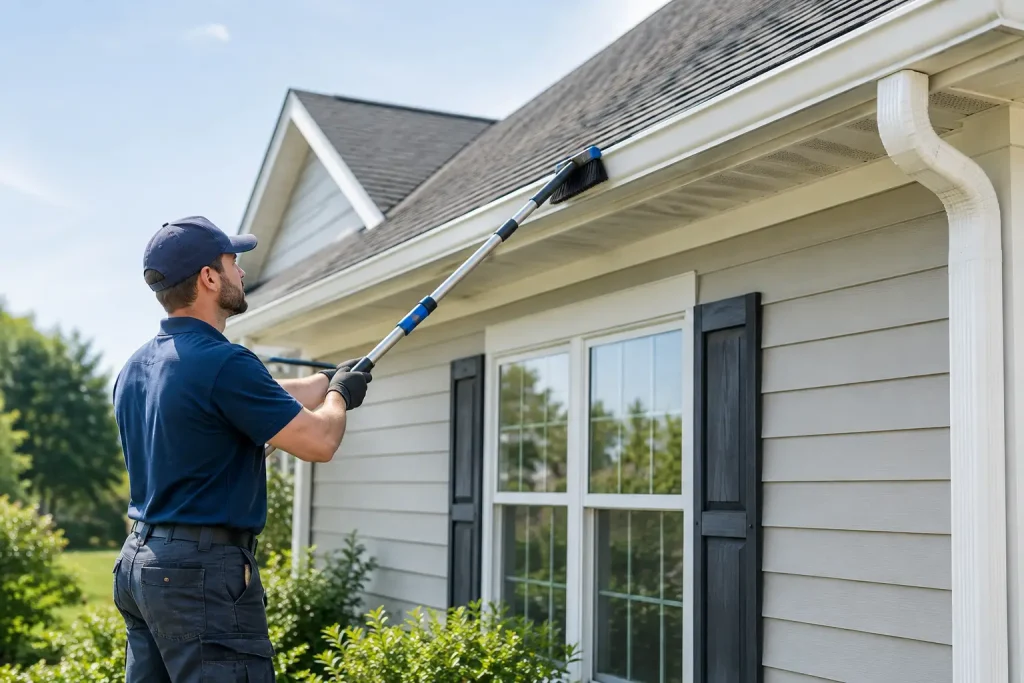
A driveway can look permanently stained after one vehicle leak. A roof can develop dark streaks that hold moisture against the surface. Gutters can appear fine from the ground while debris quietly directs water toward fascia boards, walls, and foundations. Exterior maintenance addresses these small, visible warning signs before they become expensive repairs or premature replacements.
For homes, HOAs, and commercial properties, cleaning is not only about curb appeal. It protects materials, supports safer walkways, and helps maintain the standards tenants, neighbors, and customers notice immediately. The right approach also matters: high pressure is useful on durable concrete, but it can damage roof materials, aged pavers, siding, and painted surfaces when used without care.
Why exterior maintenance is preventive care
Outdoor surfaces are exposed every day to sun, moisture, windblown dirt, vehicle traffic, landscaping debris, bird droppings, algae, and pollution. In coastal Southern California, marine air and morning moisture can add to the problem, especially on shaded walls, patios, roofs, and north-facing areas. What starts as a cosmetic film can retain moisture, create slippery conditions, or work its way into porous surfaces.
Routine professional cleaning helps property owners spot developing issues. During a gutter clearing, for example, a technician may notice a loose downspout connection or a drainage area that is backing up. During paver cleaning, uneven joints, failing sand, or a stain that needs specialized treatment can become apparent. Cleaning does not fix every structural issue, but it makes the condition of the property easier to see and manage.
The maintenance-first mindset is simple: maintain it, don’t replace it. A scheduled cleaning program is usually far less disruptive than replacing stained concrete, refinishing neglected pavers, repainting a heavily soiled building exterior, or addressing water damage caused by clogged gutters.
The right method depends on the surface
“Pressure washing” is often used as a catch-all term, but an experienced exterior cleaning crew chooses the method based on the material, contamination, and surrounding conditions. More pressure is not automatically better. The goal is to remove buildup while preserving the surface underneath.
Concrete, driveways, and parking areas
Concrete can handle more mechanical cleaning than many exterior materials, making professional pressure washing effective for tire marks, dirt, food spills, and general traffic grime. Oil stains are different. They may need pretreatment and targeted work before cleaning, and deeply absorbed oil may improve substantially without disappearing in one visit. Honest expectations matter, particularly on older concrete with years of staining.
For commercial properties, clean sidewalks and parking areas support a more professional appearance while reducing slick grime in high-traffic zones. Scheduling can often be planned around business hours, tenant needs, and foot traffic so the work causes minimal disruption.
Pavers and patios
Pavers collect dirt in joints, develop algae in shaded areas, and can lose their clean, even color over time. Proper paver cleaning removes surface buildup without blasting away joint material or scarring the face of the paver. If restoration is needed, cleaning may be followed by joint-sand replacement or sealing considerations, depending on the paver type and the owner’s goals.
There is a trade-off with sealing: it can enhance appearance and make future cleanup easier, but it must be selected and applied correctly. A poorly chosen sealer can alter color, create an unwanted sheen, or trap issues beneath the surface. The best recommendation follows an on-site assessment rather than a one-size-fits-all package.
Roofs, siding, and delicate building exteriors
Roofs and exterior walls need a surface-specific approach. High pressure on shingles, tile roofs, stucco, painted siding, or aging trim can force water where it does not belong or shorten the life of the material. Soft washing uses low pressure with appropriate cleaning solutions to treat organic buildup more gently, followed by controlled rinsing where appropriate.
This approach is particularly useful for roof soft washing and building washing where grime, algae, mildew, or dark streaks affect appearance. Plant protection, careful application, and thorough rinsing are part of responsible work. A clean roof should not come at the expense of surrounding landscaping.
Gutters, windows, solar panels, and outdoor features
Gutter cleaning protects more than the gutter itself. When debris blocks water flow, runoff can overflow onto walls, pool near foundations, damage fascia, and stain walkways. Clearing gutters before the rainy season is a practical way to reduce avoidable water problems.
Windows, solar panels, patio furniture, play equipment, and common-area fixtures also benefit from periodic care. These are often overlooked until dirt, pollen, bird droppings, or hard-water spotting becomes obvious. For solar panels, cleaning frequency depends on dust, nearby trees, bird activity, and manufacturer guidance. A site with frequent coastal haze or construction dust may need more attention than a sheltered property with minimal buildup.
Build an exterior maintenance schedule around use and exposure
There is no universal calendar for every property. A shaded HOA walkway used by hundreds of residents needs more frequent attention than a lightly used backyard patio. A restaurant-adjacent sidewalk faces different spills than a residential driveway. Still, a seasonal review gives owners and managers a reliable starting point.
Consider these four checkpoints throughout the year:
- Before rainy weather, clear gutters, check drainage paths, and remove debris from roof valleys and hardscapes.
- In spring, clean pollen, leaf residue, winter grime, and organic growth from patios, siding, roofs, and walkways.
- During dry, high-use months, address oil spots, tire marks, spills, and dust on drive lanes, storefronts, pool decks, and common areas.
- Before events, inspections, leasing tours, or holiday traffic, refresh visible entry points, building fronts, sidewalks, and parking areas.
For many homeowners, an annual full-property review plus targeted cleaning as needed is practical. For HOAs and commercial sites, recurring service may be a better fit because traffic patterns, tenant expectations, and safety concerns create a faster buildup cycle. The right frequency should be based on what the property actually experiences, not a generic sales schedule.
Runoff control is part of responsible cleaning
Exterior cleaning moves contaminants. Dirt, oil residue, cleaning products, gum, food waste, and other debris do not become harmless simply because they have been rinsed away. If wash water flows into a storm drain, it can carry those materials toward local waterways.
That is why water recovery deserves attention when choosing a contractor, especially for commercial pressure washing, parking areas, loading zones, and heavily stained concrete. A closed-loop water recovery process captures runoff for proper handling instead of allowing contaminated water to travel into storm drains. It also reduces unnecessary water use by managing the cleaning process more carefully.
Property managers and business owners should not have to choose between clean surfaces and environmental responsibility. Both are achievable when the scope of work, equipment, drainage conditions, and cleanup plan are considered before the job begins.
What professional exterior maintenance should look like
A reliable service experience begins before equipment arrives. The first step is a site assessment that identifies the surfaces, stains, access needs, drainage routes, sensitive landscaping, and any areas that require a gentler method. That assessment leads to a clear, no-obligation estimate so the scope and price are understood upfront.
Next comes scheduling. For an HOA, retail center, or busy commercial property, the timing may need to account for residents, customers, deliveries, and parking availability. For a homeowner, the priority may be coordinating around work hours, pets, gates, or outdoor furniture. Good communication prevents surprises.
The final step is not simply packing up after the wash. Detailed manual finishing, a review of the completed work, and a customer walkthrough help confirm that the areas of concern received attention. Channel Islands Pressure Washing follows this maintenance-focused process because the details matter, from a stubborn oil mark near the garage to grime around a building entrance.
Know when cleaning needs a closer look
Some conditions call for prompt attention rather than waiting for the next scheduled service. Persistent gutter overflow, sudden roof staining, slick green growth on walkways, pooling water, fresh oil leaks, graffiti, or an unexplained stain on stucco are worth assessing early. Waiting can make treatment harder and allow the underlying cause to continue.
A professional cleaner should also be willing to say when cleaning is not the complete answer. Cracked concrete, failed caulking, damaged roofing, loose pavers, or a drainage defect may require repair by the appropriate trade. Cleaning can restore appearance and reveal the true condition, but it should never be presented as a substitute for necessary repairs.
The best time to care for an exterior surface is before neglect becomes obvious. A clean roof, clear gutter, restored paver patio, and safer walkway protect more than appearance – they help a property stay easier to manage, more inviting to use, and less likely to demand a costly replacement later.