
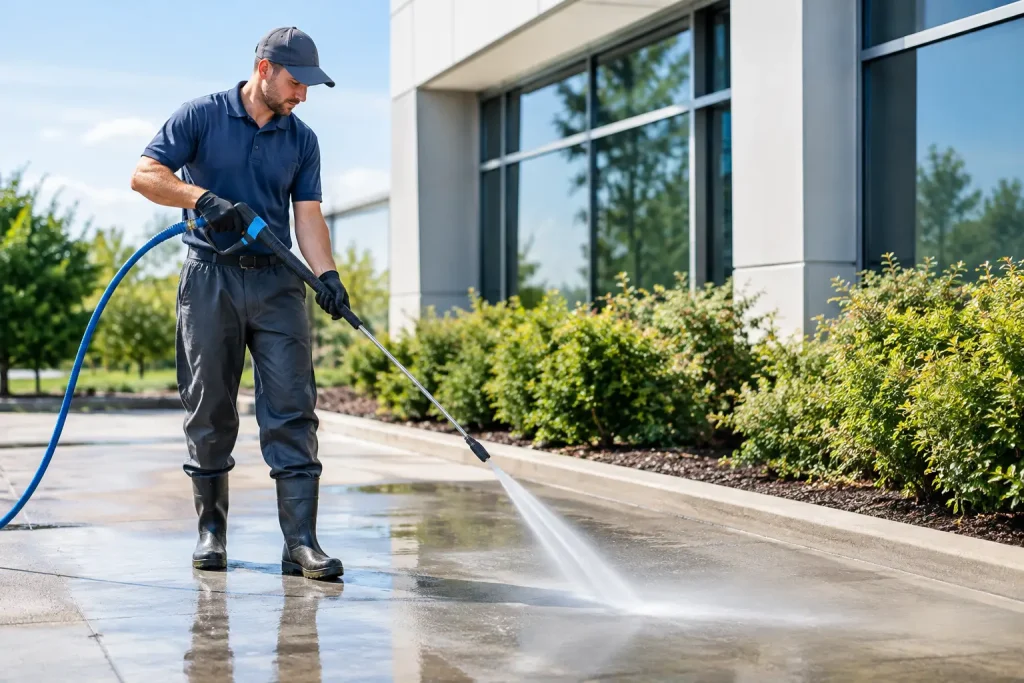
A clean driveway, storefront, roof, or pool deck should not leave dirty water flowing toward the nearest storm drain. That is where stormwater compliance becomes part of responsible property maintenance. Runoff from exterior cleaning can carry oil, sediment, paint particles, algae treatment, detergents, pet waste, and other pollutants directly into local waterways if it is not properly controlled.
For homeowners, HOAs, property managers, and commercial operators, the issue is bigger than appearances. Proper runoff handling protects the property, supports a healthier neighborhood, and helps avoid complaints, cleanup costs, and potential violations. The right cleaning approach restores the surface while keeping the wash water where it belongs.
What Stormwater Compliance Means on Your Property
Storm drains are designed to move rainwater away from streets and parking areas. In many communities, they do not lead to a treatment facility first. Water that enters a curb drain, catch basin, or gutter can travel to creeks, beaches, and the ocean with very little filtering.
Stormwater compliance means managing exterior-cleaning runoff so contaminated water does not enter those drainage systems. It applies to more than large construction sites and industrial facilities. A shopping-center walkway with gum, food residue, and grease, a driveway with motor oil, or an HOA trash enclosure with stained concrete can all create runoff concerns during cleaning.
The exact local requirements depend on the municipality, the type of surface, what is being removed, and where the recovered water can be discharged. That is why a contractor should assess the site before work begins rather than arriving with a pressure washer and sending water downhill.
Why Standard Pressure Washing Can Create a Runoff Problem
High-pressure cleaning is effective, but water pressure alone does not make a job environmentally responsible. When wash water reaches a storm drain, it may carry contaminants that were sitting on the surface long before the cleaning started.
Parking lots and driveways are common examples. Tire marks, leaked vehicle fluids, brake dust, litter, and oil stains can be lifted from concrete and asphalt during washing. Building exteriors may release dirt, oxidation, paint residue, bird droppings, and cleaning solutions. Roof and gutter cleaning can move organic debris, moss, and treatment runoff toward downspouts and landscaped drainage paths.
The trade-off is straightforward: a quick wash-and-rinse approach may look less expensive at first, but it can shift the mess into a drain and create a bigger problem. Responsible cleaning takes more planning, equipment, and labor. It also helps protect the property owner from avoidable risk.
A Compliant Cleaning Plan Starts Before the Water Turns On
Good stormwater compliance is not a final step. It begins with a site review. Before scheduling a commercial pressure washing, concrete cleaning, roof soft washing, or paver restoration project, a qualified contractor should look for drains, slopes, landscaped areas, loading zones, sensitive surfaces, and likely pollutant sources.
A property with a flat patio and contained drainage needs a different plan than a retail center with multiple curb inlets and heavy foot traffic. A lightly soiled residential walkway may require limited water and targeted spot treatment. An oil-stained parking area may require pretreatment, containment, recovery, and approved disposal procedures.
A practical plan typically addresses five questions:
- Where will wash water naturally flow once cleaning begins?
- What contaminants are likely to be present on the surface?
- Which drains, curbs, channels, or landscaped areas need protection?
- Can runoff be captured and recovered at the point of cleaning?
- How will collected water and debris be handled after the job?
These details are especially valuable for HOAs and commercial properties, where a single overlooked drain can affect a large common area. They also help keep the job organized, minimizing disruption for residents, tenants, customers, and staff.
Water Recovery Is the Difference You Can See and Not See
The best exterior cleaning results are visible: brighter concrete, cleaner stucco, restored pavers, and fewer stains around entrances. The most responsible part of the work is often less visible. It is the effort to contain and recover the dirty water instead of allowing it to run across the property.
A closed-loop water recovery system captures wash water during cleaning, separates it from the surface, and keeps it out of storm drains. Depending on the site, this can involve drain covers, berms, vacuum recovery equipment, controlled work sections, and manual cleanup around edges and low points.
Recovery does not mean every project follows one identical process. A roof soft wash, for example, requires careful protection of landscaping, downspouts, and delicate materials. Paver cleaning may call for targeted containment around joints and adjacent planting beds. Concrete cleaning in a busy commercial center may need phased work so entrances and walkways remain accessible.
That is why surface-specific methods matter. More pressure is not always better. Soft washing is often the safer choice for roofs, siding, and painted surfaces, while commercial-grade pressure washing may be appropriate for durable concrete and heavily soiled hardscapes. The method should fit the material, the soil level, and the runoff-control plan.
Stormwater Compliance for HOAs and Commercial Sites
For an HOA board or property manager, exterior cleaning affects more than curb appeal. Common areas must look cared for, but the work also has to respect residents, landscaping, drainage infrastructure, and community standards.
Routine maintenance can reduce the need for aggressive cleaning later. Clearing gutters before they overflow, treating oil spots before they spread, and cleaning walkways before grime becomes embedded are practical ways to protect both the surface and the drainage system. “Maintain it, don’t replace it!” is not just a message about appearance. It is a cost-conscious approach to extending the life of roofs, pavers, concrete, and exterior finishes.
Commercial operators face similar concerns with added public visibility. Customers notice stained sidewalks and greasy entryways, while facility teams have to consider slip hazards, tenant operations, and parking access. Scheduling cleaning during lower-traffic hours and using proper containment can make a significant difference without creating unnecessary disruption.
Documentation may also be useful for larger properties. Keep estimates, service records, notes about runoff controls, and before-and-after photos. If a property is subject to local inspection requirements or receives a complaint, clear records show that maintenance was planned and handled responsibly.
Questions to Ask Before Hiring an Exterior Cleaner
Price matters, but it should not be the only question. A low estimate that excludes recovery, containment, or proper handling of wash water may not reflect the actual needs of the job.
Ask how the contractor will prevent water from entering storm drains, what equipment they use to recover runoff, and whether they adjust their method for roofs, pavers, stucco, and concrete. For commercial sites, ask how they will manage pedestrian access, parking, and work around tenants or customers. A professional should be able to explain the plan in plain language.
It also helps to ask what happens after the cleaning is complete. Careful manual finishing work, drain-area checks, debris removal, and a final walkthrough are signs that the crew is focused on the entire property, not simply on the fastest possible wash.
Keep Clean Waterways Part of Property Care
Stormwater compliance is a practical responsibility, not a paperwork exercise. When exterior cleaning is planned around containment, recovery, and the right method for each surface, your property can look better without passing the dirty work downstream.
For properties across Ventura County and nearby coastal communities, that care matters. Choosing an experienced team such as Channel Islands Pressure Washing means choosing a cleaning plan that respects your roof, concrete, pavers, landscaping, and local waterways. The result is a cleaner property you can feel good about maintaining.