
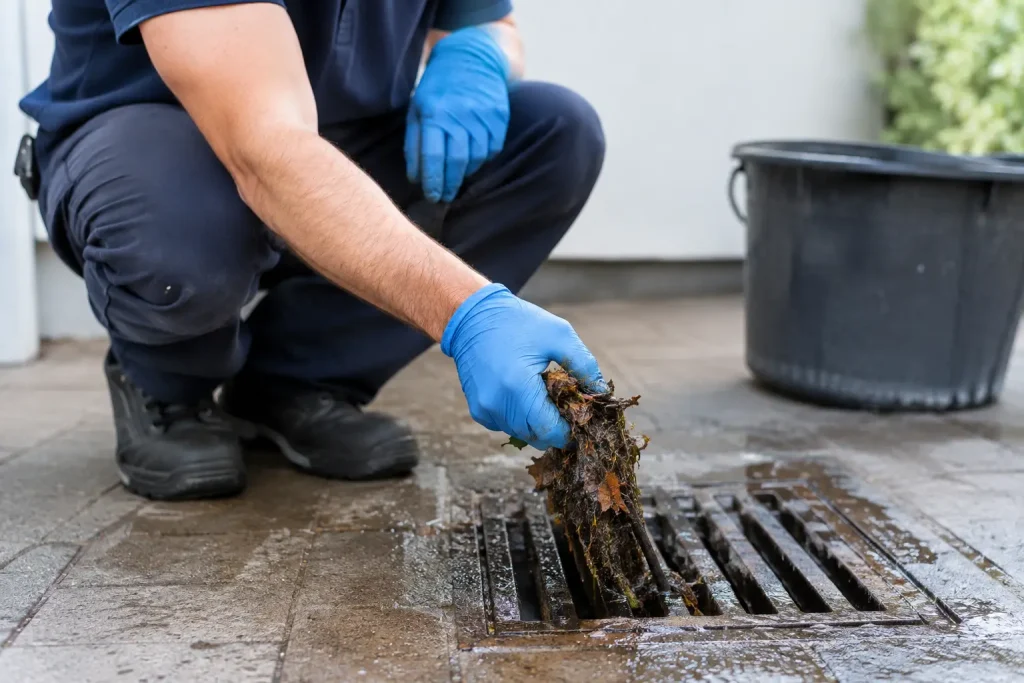
A patio that stays wet long after the rest of the concrete has dried is not just an inconvenience. It can be an early warning that water has nowhere to go. Knowing the five signs drains need cleaning helps homeowners, HOAs, and property managers address drainage issues before they lead to slippery walkways, stained surfaces, landscape damage, or costly repairs.
Exterior drains handle a surprising amount of material. Leaves, roof grit, mulch, soil, litter, pet waste, and sediment can collect in drain grates and catch basins over time. In Southern California, dry periods can hide the problem until the first heavy rain sends water across a driveway, parking area, or common walkway.
Five Signs Drains Need Cleaning
1. Water pools or drains slowly after rain or washing
Standing water is the most visible sign of a blocked or partially blocked exterior drain. Look for puddles near patio drains, garage entrances, parking lots, walkways, pool decks, downspout outlets, and low points in landscaped areas. If a puddle remains well after nearby surfaces have dried, the drain may be obstructed below the grate or overwhelmed by debris around it.
Slow drainage can also show up during routine cleaning. Water may spread across the surface instead of moving steadily toward the intended collection point. That creates a slip hazard and allows dirt, algae, and mineral deposits to settle back onto the concrete or pavers.
One isolated puddle does not always mean a drain is clogged. A surface may have settled, a paver area may need regrading, or an existing drain may simply be undersized for the amount of runoff it receives. Still, cleaning and inspecting the drain is a practical first step before considering larger drainage work.
2. Drain grates are covered with leaves, mud, or landscape debris
A drain cannot do its job if water cannot reach it. Leaves and grass clippings often build up over the grate, while fine soil and mulch work their way through the openings and settle inside. On commercial properties, cigarette litter, wrappers, and parking-lot debris can create the same issue.
This buildup is especially common around gutters, trees, planter beds, and roof valleys. When gutters overflow, they can deposit roof sediment directly around downspout drains. A clear grate may look like a small detail, but it can prevent water from backing up against stucco, doors, curbs, and foundation edges.
Avoid simply pushing debris into the drain opening. That can move the blockage deeper into the system, where it is harder to remove. Loose material should be collected and disposed of properly, while packed sediment may require professional cleaning equipment and manual removal.
3. Unpleasant odors rise from an outdoor drain
A persistent musty, sour, or sewer-like smell near a drain deserves attention. Organic debris can decay inside a catch basin, especially when water sits in the bottom for extended periods. Leaves, soil, food residue from outdoor gathering areas, and pet waste can all contribute to odors.
The cause is not always simple debris. A dry drain trap, damaged pipe, or plumbing-related issue can also create odors, particularly around floor drains or drains connected to a building. If the smell is strong, recurring, or accompanied by wastewater, contact the appropriate drainage or plumbing professional rather than treating it as a surface-cleaning issue.
For exterior storm drains, regular removal of sediment and organic material often reduces odor while helping water flow more freely. Keeping surrounding hardscape clean also limits what gets washed into the system during rain.
4. Algae, staining, or slick surfaces keep returning nearby
Green or black growth around a drain often points to lingering moisture. When drainage is restricted, water stays on concrete, pavers, and shaded walkways longer than it should. That damp environment supports algae and mildew, which can make paths slippery and leave dark staining behind.
This is a common concern at HOA properties, retail centers, and homes with shaded side yards or north-facing patios. Recleaning the surface without correcting the drainage issue may improve appearance for a while, but the growth is likely to return sooner.
A careful cleaning plan should address both the visible buildup and the reason moisture is lingering. Depending on the surface, that may include low-pressure treatment, concrete cleaning, paver cleaning, drain clearing, or adjustments to nearby landscape debris. The right method matters. High pressure is not the answer for every material, and forcing dirty runoff toward a clogged drain can make the situation worse.
5. Water flows toward the building instead of away from it
When rainwater moves toward a garage, storefront, doorway, or lower wall, act quickly. The drain may be blocked, but the issue could also involve a damaged grate, settled concrete, clogged gutter outlet, or grading problem. Water that repeatedly reaches a building can stain stucco, affect thresholds, carry soil against walls, and eventually find its way into places it does not belong.
For commercial sites, this can interrupt foot traffic and create a liability concern. For homeowners, it may mean wet entryways, muddy splashback, and unnecessary wear around the property. Watch what happens during the next rain or while a professional conducts a controlled rinse. The direction and speed of water movement provide useful clues about the underlying problem.
Why Exterior Drain Maintenance Protects More Than the Drain
Cleaning exterior drains is part of property maintenance, not just storm preparation. Clear drainage helps protect concrete from recurring grime, keeps paver joints from collecting sediment, and reduces the chance of dirty water spreading across sidewalks and common areas. It also supports better curb appeal. A clean driveway or storefront loses some of its value when stained water is pooling at the edge.
There is an environmental side to this work as well. Runoff can carry oil residue, dirt, cleaning chemicals, and other contaminants toward storm drains and local waterways. That is why exterior cleaning should be planned with runoff in mind. A responsible contractor uses surface-appropriate methods, manages water carefully, and uses recovery practices when conditions call for it rather than sending contaminated wash water into a drain.
At Channel Islands Pressure Washing, that maintenance-first approach is simple: maintain it, don’t replace it. Keeping drains, gutters, concrete, and exterior surfaces clear can help property owners avoid premature deterioration and protect the investment they already have.
When to Clean Drains and When to Call for Help
A quick visual check every month is useful for homes, especially in areas with trees or active landscaping. Commercial properties and HOAs may need more frequent checks around high-traffic walkways, parking areas, trash enclosures, and common patios. Plan a more thorough inspection before the rainy season and after windstorms, landscaping work, or major leaf drop.
Property owners can safely remove loose leaves and litter from an accessible grate while wearing gloves. Beyond that, use caution. Deep catch basins, heavy grates, unknown pipe conditions, and standing water can create safety concerns. Never enter a catch basin or attempt to flush a suspected blockage with excessive pressure. A serious backup may need drain-specific service, plumbing diagnosis, or repair work rather than surface cleaning alone.
If the area around the drain also needs attention, schedule the work in the right order. Clear the drain first, then clean the surrounding hardscape with a plan for collecting or controlling runoff. This helps prevent loosened grime from becoming the next blockage.
A drain rarely gives much notice before a storm exposes the problem. A few minutes spent checking for pooled water, debris, odors, recurring algae, and water moving toward the building can protect the surfaces and people around it. Clean drainage is one of those quiet maintenance details that keeps a property looking cared for when the weather does not cooperate.
Pingback: How to Prevent Slippery Concrete Walkways – Channel Islands Pressure Washing, LLC