
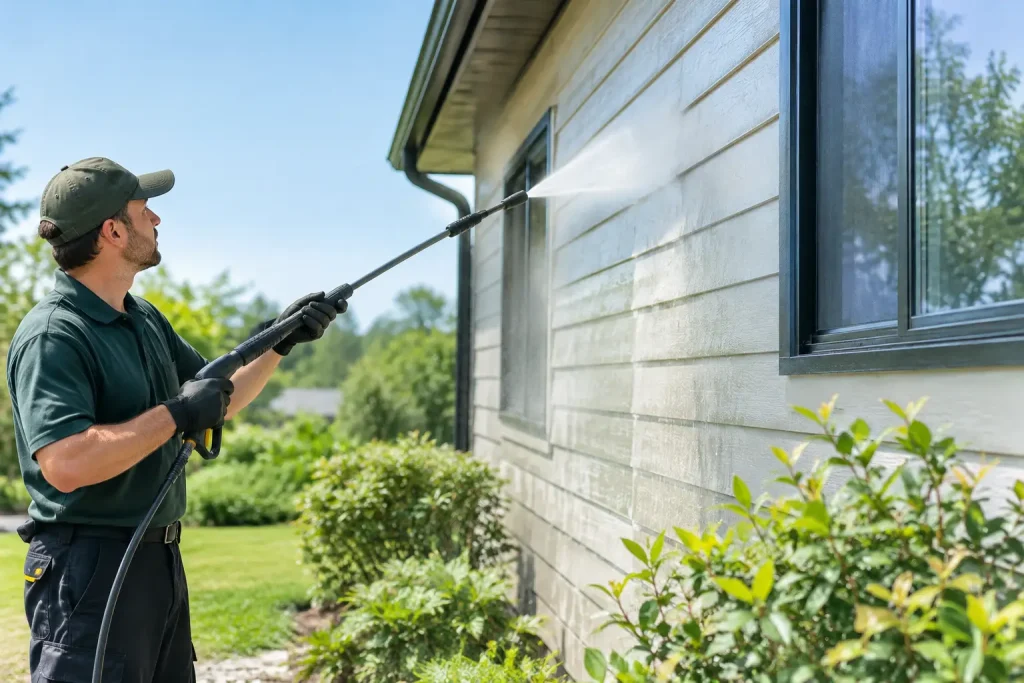
A black streaked roof, oil-marked driveway, or green-stained stucco wall can make an otherwise well-kept property look neglected fast. But cleaning those surfaces should not mean sending dirty water, chemicals, sediment, and vehicle residue into storm drains. Sustainable exterior cleaning trends are changing that expectation by pairing better equipment with surface-specific methods and more responsible runoff control.
For homeowners, HOAs, and commercial property managers, the shift is practical. A properly planned cleaning service can restore curb appeal, help prevent premature surface wear, and support a cleaner outdoor environment at the same time. The goal is simple: maintain it, don’t replace it.
Sustainable Exterior Cleaning Trends Are Raising the Standard
Exterior cleaning used to be judged mainly by one question: does it look clean when the crew leaves? That still matters, but property owners are increasingly asking what happens to the water afterward, whether cleaning methods can damage their siding or roof, and whether recurring maintenance will cost less than waiting for heavy buildup.
The strongest trend is not one new detergent or machine. It is a more careful approach to the entire job. Professionals assess the material, identify the source of staining, select appropriate pressure and cleaning solutions, control runoff, and finish the work with close attention to edges, joints, drains, and landscaping.
This matters especially in Southern California’s coastal and inland communities, where dust, salt air, irrigation overspray, algae, mold, vehicle traffic, and seasonal winds can quickly build up on homes and commercial properties. One aggressive cleaning method does not fit every surface.
Water Recovery Is Moving From Extra Feature to Smart Practice
Water use is often the first concern people raise, but the bigger environmental issue is frequently contaminated runoff. Water washing over a driveway or parking lot can pick up oil, grease, tire residue, loose paint, detergents, and sediment before entering a storm drain. Those drains generally lead to local waterways, not a treatment plant.
Closed-loop water recovery addresses that risk. Rather than allowing wash water to flow freely across the property, a trained crew captures the runoff for proper handling. This practice is particularly valuable for commercial pressure washing, concrete cleaning, parking areas, dumpster pads, loading zones, and oil-stain treatment.
Water recovery does require more setup, equipment, and site planning than a quick rinse-and-go job. On a large retail center or busy HOA, crews may need to stage work in sections, manage pedestrian access, and account for slopes and drain locations. That preparation is worthwhile because it helps protect the property, supports environmental responsibility, and avoids turning a cleaning project into a runoff problem.
Soft Washing Is Replacing High Pressure Where It Does Not Belong
Another major trend is the move away from treating pressure as the answer to every stain. High pressure can be effective on durable concrete and certain hardscape surfaces when used correctly. It can also damage roof materials, force water behind siding, etch decorative concrete, strip paint, disturb paver joint sand, and scar softer wood if handled carelessly.
Soft washing uses low pressure with cleaning solutions selected for the surface and the type of organic growth being removed. For roof soft washing, stucco, painted siding, vinyl, and delicate exterior finishes, this method can deliver a thorough clean without the unnecessary force of a traditional high-pressure wash.
The trade-off is that soft washing is not simply “spray and walk away.” The application, dwell time, rinsing process, plant protection, and final inspection all matter. A professional should explain why a particular method is appropriate for your roof, building exterior, or siding instead of offering the same approach for every job.
Why surface-specific cleaning protects the investment
A roof replacement, paver rebuild, or repainting project can be expensive. Regular cleaning cannot fix every existing defect, but it can remove the buildup that holds moisture, obscures deterioration, and makes a property appear older than it is.
For paver cleaning and restoration, the process may include cleaning embedded dirt, treating algae or stains, restoring joint material where needed, and discussing whether sealing is suitable. For concrete, removing oil spots, tire marks, and slippery organic growth can improve appearance and help reduce slip concerns. The right service is based on the condition of the surface, not a one-size-fits-all package.
Maintenance Plans Are Replacing Emergency Cleanups
Property owners are also moving toward planned maintenance rather than waiting until stains become severe. This is especially true for HOAs, shopping centers, apartment communities, and facilities with visible common areas. When walkways, entries, trash enclosures, storefronts, and building exteriors are cleaned on a consistent schedule, each service is typically more manageable than a major catch-up project.
Maintenance-first cleaning also makes budgeting easier. A property manager can schedule exterior work around tenant needs, peak business hours, seasonal weather, and inspections. Homeowners can address gutters before overflow stains develop, clean roofs before organic growth becomes widespread, and keep patios or pool decks ready for regular use.
The ideal frequency depends on the property. A shaded home with mature trees may need gutter cleaning more often than an open property. A restaurant-adjacent sidewalk or a high-traffic retail walkway will generally need more attention than a quiet office entry. Coastal exposure, irrigation patterns, landscaping, roof pitch, and traffic levels all affect the schedule.
Detail Work Is Becoming Part of the Expected Result
Sustainable cleaning is not only about what equipment is used. It is also about avoiding wasteful repeat work. A surface that is rushed, inconsistently cleaned, or damaged during service may need another visit sooner than necessary.
That is why detailed manual finishing work remains valuable. Equipment can remove broad areas of grime, but corners, edges, paver joints, exterior fixtures, gutter outlets, and transitions near landscaping often need a trained eye. Before-and-after results are strongest when the crew handles those visible details instead of stopping after the main surface looks better from a distance.
For commercial properties, finishing work can include addressing gum, stains near entrances, tire tracking, and neglected perimeter areas. For residential clients, it may mean carefully treating dog-urine splatter, mud stains on stucco, grime under eaves, or the oil spots that stand out on a clean driveway.
What to Ask Before Hiring an Exterior Cleaning Company
A responsible cleaning provider should be able to describe how they will protect the property and where the wash water will go. Start by asking whether the crew uses water recovery when site conditions and contaminants call for it. Then ask how they adjust their method for roofs, painted surfaces, pavers, concrete, and landscaping.
It is also reasonable to ask what is included in the estimate. A clear quote should identify the surfaces to be cleaned, any stain treatment involved, access considerations, and whether the project requires specialized runoff management. The lowest price is not always the lowest long-term cost if it leaves stains behind, damages a surface, or ignores cleanup details.
A dependable provider will schedule around the needs of the home or facility, arrive prepared, complete a walkthrough when appropriate, and follow up on satisfaction. Those service steps are not extras. They are part of making sure the result holds up after the equipment is packed away.
A Cleaner Property Without a Careless Process
The best sustainable exterior cleaning trends are not flashy. They are practical habits: recover contaminated water, use low pressure where low pressure is safer, treat stains based on their cause, and maintain surfaces before replacement becomes the only option.
Whether you oversee an HOA, manage a commercial site, or care for your own home, choose cleaning that respects both the surface and the surroundings. A well-maintained property should look refreshed without creating a new problem downstream.