
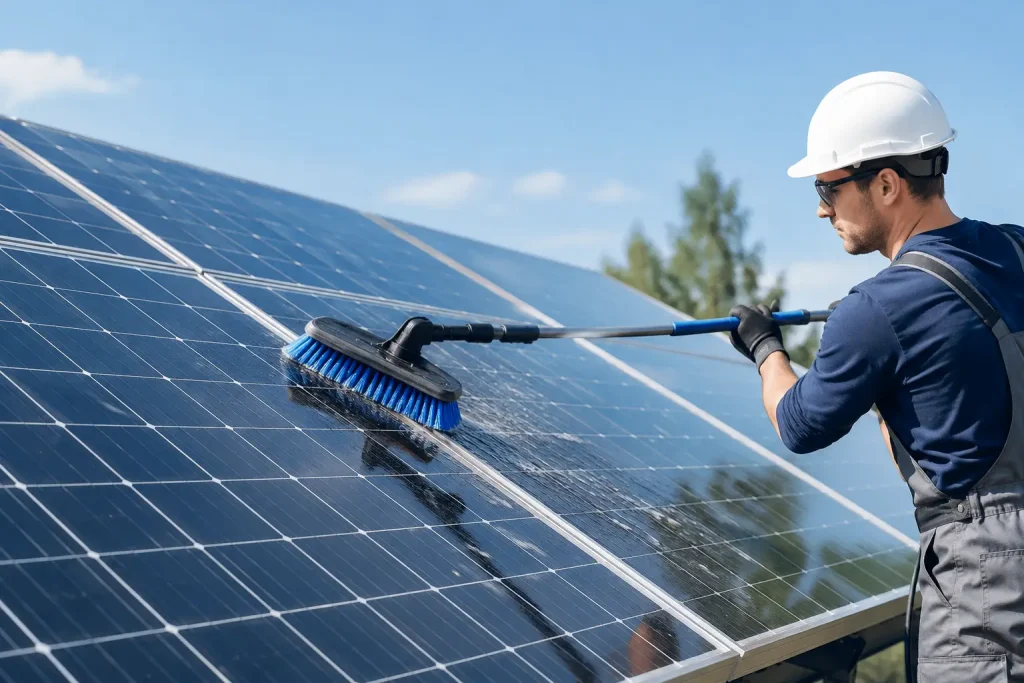
A layer of coastal dust, pollen, bird droppings, or salty residue can make an otherwise clean roof look neglected. More importantly, heavy buildup can limit the sunlight reaching your system. Knowing how to wash solar panels safely means protecting the panels, your roof, and the people doing the work – not simply spraying everything clean.
Solar panels are built for outdoor exposure, but that does not make them maintenance-free or safe to clean with every exterior-cleaning method. The wrong pressure, harsh chemical, abrasive brush, or risky ladder setup can create a much more expensive problem than dirty glass.
Why safe solar panel cleaning matters
Solar panels rely on clear access to sunlight. A light, even coating of dust may not cause a dramatic drop in production, especially after a good rain. But grime that sticks around – bird droppings, soot, salt spray, tree sap, and mineral deposits – can block light in concentrated areas and leave the system looking poorly maintained.
The goal is not to clean panels as often as possible. It is to clean them when buildup is visible or production seems lower than expected, using a method that does not scratch the glass, disturb wiring, flood roof penetrations, or send dirty runoff into landscaping and storm drains.
For homes and commercial properties near Ventura County and the Southern California coast, salt air and dry, windy conditions can make periodic cleaning worthwhile. Panels beneath trees or near busy roads may need attention more often than open, unobstructed systems. Your installation manual, warranty terms, and local conditions should guide the schedule.
How to wash solar panels safely
Start with the manufacturer’s care instructions. Some panel makers have specific requirements for water temperature, approved cleaning products, and access around electrical components. If the panels are leased or covered by a service agreement, check whether the provider requires professional cleaning or has a preferred maintenance process.
Choose a cool time of day, preferably early morning. Cleaning hot panels with cold water can create unnecessary thermal stress, and water can dry quickly enough to leave mineral spotting. A cool, overcast morning is often ideal, but never work during wet, windy, or stormy conditions.
Before any washing begins, assess the roof and panel location from the ground. A steep roof, fragile tile, wet roofing material, overhead power lines, damaged mounts, or difficult access changes the job completely. Reaching for a hose is easy. Working safely at roof height is not.
If you can safely reach the panels from the ground with appropriate equipment, use clean, low-mineral water and a soft, nonabrasive brush or microfiber pad designed for solar glass. Let the water loosen ordinary dust before making contact with the surface. Use gentle passes, not hard scrubbing. A soft squeegee may help remove excess water, but only if its edge is clean and meant for glass.
Avoid standing, leaning, or placing equipment on the panels. Do not step on them, even if they appear sturdy. The glass may withstand weather, but concentrated body weight and point pressure can damage cells, frames, or mounting hardware.
What not to use on solar panels
A solar panel is not a driveway, stucco wall, or concrete walkway. It should never be treated with high-pressure washing. Pressure can force water where it does not belong, damage seals, disturb wiring, or drive grit across the glass.
Stay away from abrasive pads, steel wool, powdered cleaners, and stiff bristle brushes. These can create fine scratches that collect dirt and reduce clarity over time. Household glass cleaners can also be a poor choice because they may leave residue, contain chemicals not approved for panel coatings, or run off onto the roof and surrounding landscape.
Do not use strong degreasers, bleach, acidic cleaners, or detergents unless the panel manufacturer specifically approves them. Bird droppings and tree sap can be stubborn, but forceful scraping is not the answer. Soften the spot with water and use a clean microfiber cloth with light pressure. If it will not release easily, stop before turning a small cleaning issue into surface damage.
Hot water deserves caution as well. It may seem useful for stuck-on grime, but a large temperature difference between the water and panel surface can be risky. Cool or lukewarm water is the safer choice.
Roof and electrical safety come first
Many homeowners can rinse ground-level or easily accessible panels. Roof-mounted systems are different. The most serious risk is usually not the panel itself – it is a fall from a ladder or roof.
Do not climb onto a roof without proper fall protection, stable access, and confidence in the roofing material beneath you. Tile, aged shingles, metal roofing, and damp surfaces can become slippery or break underfoot. A person trying to reach a panel with one hand while holding a hose or brush with the other has very little margin for error.
Also avoid opening electrical boxes, disconnecting wires, or spraying directly into junction boxes, conduit connections, inverters, and other electrical equipment. If you see cracked glass, loose wiring, exposed components, damaged mounts, water intrusion, or unusual changes in system performance, cleaning should wait until a qualified solar technician evaluates the problem.
Turning off a system is not always necessary for a simple manufacturer-approved cleaning process, but it depends on the equipment and instructions for your system. Do not make assumptions about electrical shutoff procedures. Follow the panel and inverter manufacturer’s guidance or have a trained professional handle the work.
Use water responsibly while you clean
Solar panel washing should improve the property without creating a runoff problem. Water moving across a roof can carry dust, bird waste, cleaning residue, and roof debris into gutters, downspouts, planted areas, or storm drains.
Use only the water needed to rinse the panels. If cleaning a large commercial array or a system with heavy buildup, plan for water control rather than allowing contaminated runoff to travel across the site. This is especially relevant at multifamily communities, retail centers, and properties with drains near parking areas or landscaped slopes.
Professional exterior cleaners can provide a better option when access is difficult or runoff needs to be managed. Channel Islands Pressure Washing uses surface-specific methods and water-recovery practices that help keep collected runoff out of waterways. That approach matters when cleaning extends beyond the panels to roofs, gutters, building exteriors, walkways, or concrete.
When professional solar panel washing is the better call
A professional service is a practical choice when panels are on a steep or high roof, mounted over fragile tile, part of a large array, or affected by heavy mineral buildup. It also makes sense for HOAs and commercial property managers who need scheduled maintenance, consistent documentation, and a cleaner site without creating avoidable safety or runoff concerns.
A careful provider should explain the method before work begins. Ask whether they use low pressure, what tools touch the panel surface, how they protect landscaping and roof materials, and how they handle runoff. A clear estimate and site assessment are signs that the company is evaluating the property rather than applying one cleaning method to every surface.
The best result is not just cleaner-looking panels. It is a job completed without scratched glass, damaged roofing, unsafe ladder work, or dirty water left to travel where it should not.
Keep panels cleaner between washings
You cannot stop dust or coastal air from reaching a roof, but you can reduce the conditions that cause stubborn buildup. Keep nearby trees trimmed back where appropriate, especially branches that shade panels or attract birds. Have gutters cleared so roof debris and standing water do not create a mess around the installation.
Check the panels visually from the ground several times a year. Look for obvious grime, bird droppings, leaves, or new shading. If your monitoring system shows an unexplained production change, compare it with weather conditions and seasonal daylight before assuming the panels need cleaning. A drop may point to dirt, but it can also indicate shading, equipment issues, or a system fault.
Treat solar panel care as part of the property’s overall maintenance plan. A careful wash at the right time can preserve curb appeal and help the system receive the sunlight it was designed to capture. Maintain it, don’t replace it – and leave high-risk roof work to people equipped to do it safely.