
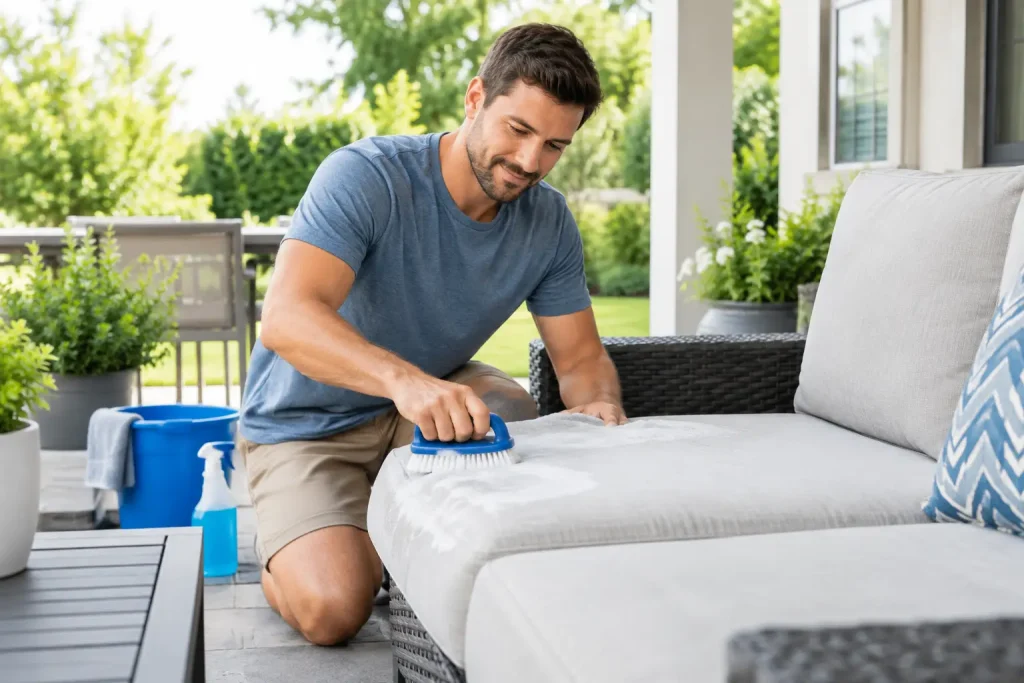
A patio can be freshly swept, the pavers can look great, and the view can be perfect – but stained cushions, green mildew on chair legs, or a grimy dining table will still make the whole space feel neglected. Outdoor furniture cleaning restores the part of your property where people actually gather, while helping protect materials that are expensive to replace.
In coastal Southern California, furniture takes a beating from salt air, pollen, windblown dirt, sunscreen, food spills, pet residue, and moisture. The right cleaning approach depends on what the furniture is made of. Using too much pressure or the wrong cleaner may leave permanent marks, faded fabric, damaged finishes, or moisture trapped where it does not belong.
Why Outdoor Furniture Gets Dirty So Quickly
Outdoor furniture is designed to handle changing weather, not to stay spotless without maintenance. Fine dust settles into textured wicker and sling fabric. Tree debris and pollen collect in corners. Morning moisture creates conditions where mildew can develop, especially on shaded patios, pool areas, and furniture stored close together.
Near the coast, airborne salt adds another concern. It can leave a dull film on metal and accelerate corrosion when it is allowed to remain on frames and hardware. On commercial patios, HOA common areas, and restaurant seating, high use introduces grease, drink spills, shoe marks, and heavier ground-in dirt.
Cleaning is not only about appearance. Mildew and organic buildup can shorten the life of fabric, weaken protective coatings, and make surfaces unpleasant to touch. Regular care supports the simple, cost-conscious approach: Maintain it, don’t replace it!
Start With the Material, Not the Machine
The fastest way to create a cleaning problem is to treat every chair, table, and cushion as if it were concrete. Hardscape surfaces can often tolerate professional pressure washing. Furniture usually requires a gentler, more controlled method.
Aluminum, steel, and wrought iron
Powder-coated aluminum is common because it is lightweight and rust-resistant, but its finish can still be scratched by abrasive pads or damaged by harsh chemicals. A mild surface cleaner, soft brush, and low-pressure rinse are usually enough for routine soil. Pay close attention to joints, feet, screws, and underneath the arms, where salt and moisture tend to collect.
Steel and wrought iron deserve extra inspection. Small chips in paint or coating can expose metal and lead to rust. Clean the furniture gently, dry it thoroughly, and address chipped areas before corrosion spreads. If rust has already developed, cleaning alone may not solve the problem. The surface may need rust treatment and refinishing.
Teak, eucalyptus, and other wood furniture
Wood furniture changes color outdoors, often developing a soft gray patina. That is not always damage. Some owners prefer the weathered look, while others want to preserve a warmer wood tone. The cleaning method should match that preference.
Use a wood-safe cleaner and a soft brush, working with the grain. Aggressive pressure can raise wood fibers, create uneven streaks, and strip away natural oils. After the piece is clean and fully dry, an appropriate protectant or oil may help maintain the desired finish. This is one area where stronger is not better.
Resin wicker and plastic furniture
Resin wicker is durable, but its woven texture holds dust, leaves, and mildew in places a quick rinse misses. A soft detailing brush can reach the crevices without fraying the material. Plastic chairs and tables may seem indestructible, yet strong solvents can cause discoloration or a chalky appearance.
For both materials, use a mild cleaning solution, gentle agitation, and a controlled rinse. Avoid leaving cleaner to dry on the surface, particularly in direct sun.
Outdoor cushions, umbrellas, and sling fabric
Fabric needs patience. First, check the manufacturer’s care tag if it is available. Brush away loose dirt before wetting the material so it does not turn into embedded mud. Spot-test any cleaner in a hidden area, especially on bright colors or older fabric.
Mildew staining may need a fabric-appropriate treatment, but oversaturating cushions can create a new problem if the foam does not dry completely. Clean on a dry day, stand cushions on edge for airflow, and do not return them to storage until they are fully dry. If cushions have deep odors, extensive mold growth, or deteriorating seams, replacement may be more practical than repeated cleaning.
A Safe Process for Routine Patio Furniture Care
Most furniture benefits from a seasonal cleaning, with lighter rinsing or wipe-downs between deeper services. Before beginning, move furniture away from walls, planters, pools, and delicate landscaping. Remove cushions, umbrella canopies, and loose accessories when possible.
Start dry. Vacuum cushions with an upholstery attachment, sweep away leaves, and use a soft brush to loosen dirt from frames. Then apply the appropriate cleaner in manageable sections. Allow it to work briefly, but never let it dry on the surface. Gently brush areas with visible buildup and rinse thoroughly at low pressure.
The final step matters: drying. Wipe metal frames to reduce water spots and inspect them for chips or corrosion. Let wood and fabric dry naturally with good airflow. Do not stack furniture or cover it immediately, since trapped moisture encourages the mildew you were trying to remove.
A standard garden hose may be sufficient for occasional maintenance. Pressure equipment can be useful around the patio, pavers, and concrete, but it should be kept at a safe distance from furniture and used only with the correct pressure, tip, and technique. High pressure can tear sling fabric, force water into joints, splinter wood, and peel paint in seconds.
When DIY Cleaning Is Not Enough
Routine washing is manageable for many homeowners. The decision becomes different when furniture is part of a larger exterior-cleaning project, when mildew is widespread, or when the property has runoff concerns.
Professional outdoor furniture cleaning makes sense when a patio, pool deck, courtyard, or common area needs detailed attention alongside paver cleaning, concrete cleaning, building washing, or exterior maintenance. A trained crew can choose surface-specific methods instead of applying one high-pressure setting to every material. That is especially valuable for delicate wood, coated metal, older furniture, and fabric seating in shared spaces.
For HOAs, retail centers, apartment communities, and hospitality properties, there is also a practical accountability issue. Cleaning runoff can carry soil, oils, cleaning products, and contaminants toward storm drains. Responsible cleaning plans should account for where that water goes. Channel Islands Pressure Washing uses closed-loop water recovery on appropriate projects to capture runoff and help keep contaminated water out of local waterways.
Professional service does not mean every piece can be restored. Sun-faded fabric, rusted-through frames, cracked plastic, and severely weathered wicker may be beyond cleaning. A careful assessment should be honest about that distinction. The goal is to restore what can be restored, protect what is worth keeping, and avoid spending money on a temporary cosmetic fix when replacement is the better choice.
Preventing the Next Round of Buildup
The easiest cleaning job is the one that never becomes a restoration project. Keep furniture clear of dense shrubs and sprinkler overspray. Brush off leaves after windy days, wipe food and sunscreen spills promptly, and avoid covering damp furniture. If covers are used, choose breathable ones and make sure the furniture is dry first.
For property managers, a scheduled exterior-maintenance plan is often more efficient than responding only when a resident or tenant complains. Coordinating furniture cleaning with walkway, patio, gutter, and building cleaning keeps common areas presentable and helps crews address runoff responsibly in one planned visit.
Your outdoor space should feel ready when family visits, residents use the courtyard, or customers step onto a patio. A little regular care protects that experience – and gives your furniture a much better chance of lasting through many more seasons outside.