
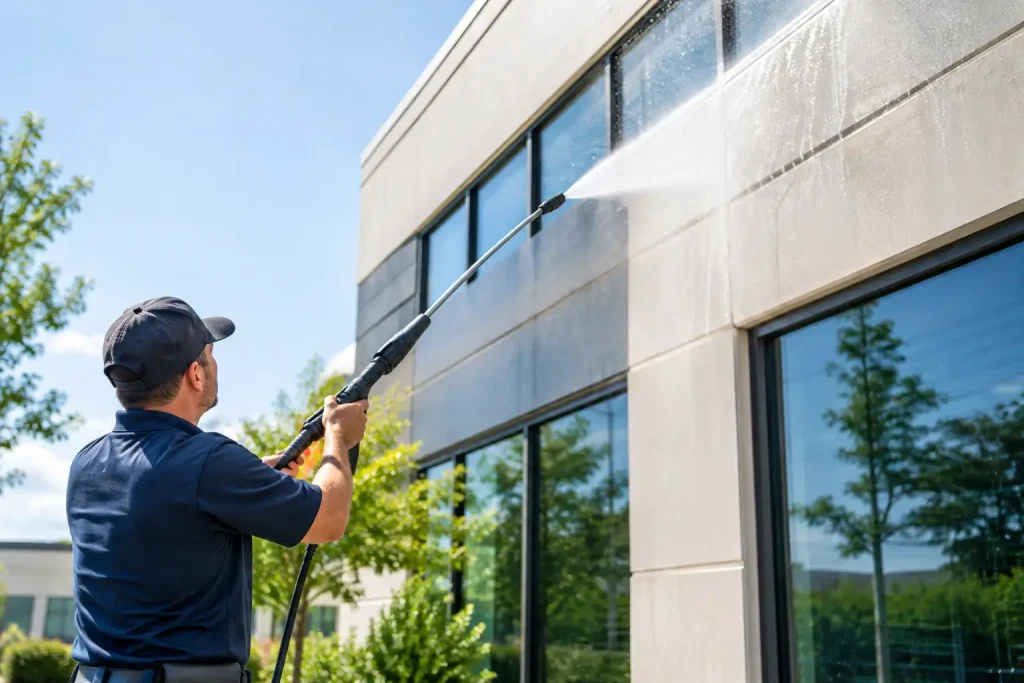
A building can look neglected long before it needs paint, repairs, or replacement. On Camarillo properties, windblown dust, irrigation overspray, vehicle residue, algae, and coastal moisture can leave stucco, siding, masonry, and entryways visibly stained. Professional Camarillo building washing removes that buildup with the right method for the material, helping owners protect curb appeal without creating unnecessary damage or wastewater runoff concerns.
For a homeowner, the issue may be dingy stucco around the patio or dark marks below gutters. For a retail center or HOA, it may be stained walkways, tire marks near loading areas, grime at storefront entrances, and a property that no longer reflects the standard tenants and residents expect. The best response is not simply more pressure. It is a planned cleaning process that matches water pressure, detergents, tools, and runoff control to the building and the site.
Why Building Exteriors Get Dirty So Quickly
Exterior buildup is rarely just surface-level dust. Water moving across a wall can carry minerals, dirt, and organic material into cracks, ledges, and textured finishes. Shade and damp conditions can encourage algae and mildew. Near busy streets and parking areas, exhaust residue and tire debris settle onto lower walls, columns, curbs, and sidewalks.
Camarillo’s dry periods do not eliminate the problem. Dust adheres to surfaces, then irrigation or seasonal rain turns it into stubborn streaking. Light-colored stucco can show runoff lines quickly, while painted trim and siding can develop a dull film that makes the entire property appear older than it is.
Regular cleaning is a maintenance decision, not just a cosmetic one. Removing organic growth and embedded grime helps surfaces stay easier to inspect and maintain. It can also reveal cracked sealant, failing paint, drainage issues, or staining sources that should be addressed before they become larger repairs. Maintain it, don’t replace it.
Camarillo Building Washing Is Not One-Pressure-Fits-All
High pressure has a place, particularly on durable concrete and certain masonry surfaces. But using excessive pressure on stucco, painted exteriors, window seals, older mortar, or siding can force water behind surfaces, remove paint, scar finishes, and spread damage that was not there before.
That is why a professional assessment matters. The cleaning approach should account for the building material, its condition, the type of staining, nearby landscaping, drainage paths, and whether people will be moving through the area during service. A storefront facade with painted lettering needs a different approach than a concrete block wall behind a service lane.
Soft washing is often the safer choice for delicate exterior surfaces. This low-pressure process applies an appropriate cleaning solution, allows it time to work on organic buildup, and rinses carefully. The goal is to clean the surface rather than blast it. Manual brushing and detail work may also be needed around trim, signs, fixtures, corners, and heavily soiled areas where equipment alone cannot deliver a finished appearance.
Some stains require more than a standard wash. Rust, oil, irrigation mineral deposits, graffiti, and dark runoff marks may need targeted treatments. Results depend on the stain, the surface, how long it has been present, and whether a prior coating or repair has changed the material. A reliable contractor should set clear expectations instead of promising that every permanent stain will disappear completely.
Cleaner Exteriors, Smarter Water Management
Runoff is one of the most important parts of commercial building washing, especially around parking lots, sidewalks, loading zones, and landscaped common areas. Washing water can pick up dirt, oil residue, detergent, gum, and other contaminants as it moves toward a storm drain. That water should not be treated as harmless simply because the work is being done outdoors.
Channel Islands Pressure Washing uses a closed-loop water recovery process designed to capture wash water and keep contaminated runoff out of local waterways. Recovery equipment, containment practices, and site planning help control where water travels while reducing unnecessary water use. This is particularly valuable for property managers and HOAs responsible for shared spaces, drainage-sensitive sites, and properties with regular exterior maintenance needs.
The exact setup depends on the job. A small residential wall may require different containment than a shopping center entry or multi-building condominium community. Access to drains, slope, parking conditions, landscape beds, and the type of cleaning being performed all affect the plan. What should not change is the commitment to managing water responsibly rather than sending it down the nearest gutter.
Where Professional Building Washing Makes a Visible Difference
Building washing is most effective when it addresses the full appearance of the property, not only the most obvious wall. For residential properties, that can include stucco, siding, exterior trim, patios, fences, walkways, gutters, and driveway-adjacent walls. Cleaning these connected surfaces helps avoid the uneven result of a bright wall next to a stained path or dirty entry.
For commercial and multifamily properties, attention often extends to storefronts, breezeways, building entries, common-area walls, dumpster enclosures, exterior stairs, courtyard surfaces, and parking-area edges. These are the places residents, customers, tenants, and visitors see up close. A clean entry signals care before anyone walks through the door.
Paver cleaning and concrete cleaning can be especially useful alongside exterior washing. Pavers collect grime in joints and low areas, while concrete holds oil spots, tire marks, gum, and dark foot-traffic paths. Restoring these hard surfaces can improve the overall result more than washing the facade alone. If pavers are faded or joints are compromised, cleaning may be the first step before restoration or sealing, not a substitute for necessary repairs.
A Practical Maintenance Schedule for Your Property
There is no single schedule for every building. A shaded home with mature landscaping may need attention more often than a sunny property with limited tree cover. A restaurant patio, medical office, retail center, or HOA common area usually sees more frequent traffic and spills than a private side yard.
Most properties benefit from an annual exterior review, even if they do not need a full wash every year. During that review, look for dark streaks below rooflines, algae on shaded walls, irrigation staining, buildup around downspouts, sticky or slippery walkways, and grime collecting near entrances. Waiting until staining is deeply embedded can make cleaning more involved and may limit how much can be restored.
For high-traffic commercial sites, scheduled cleaning can be more efficient than emergency service after complaints arise. Routine visits help keep entrances presentable, reduce slip concerns from organic buildup, and spread maintenance costs more predictably across the year. For HOAs, a consistent plan also helps maintain a uniform appearance across shared buildings and common spaces.
What to Expect From a Professional Service Visit
A good building washing project starts with a site assessment and a no-obligation estimate. The contractor should identify the surfaces to be cleaned, note staining concerns, discuss access and scheduling, and explain any limitations before work begins. Clear pricing and a defined scope prevent surprises later.
On service day, the team should protect surrounding areas, manage water flow, use appropriate cleaning methods, and work carefully around landscaping, windows, outdoor furniture, and pedestrian areas. Commercial projects may need to be scheduled around customer traffic, tenant operations, deliveries, or quiet hours. Flexibility matters because a clean property should not come at the expense of disrupting the people who use it.
The final walkthrough is where details count. This is the time to inspect treated areas, point out any stains that were permanent or only partially removable, and make sure the finished work meets the agreed scope. Follow-up also makes it easier to plan recurring maintenance before buildup becomes a bigger problem.
A cleaner exterior does more than improve a photograph or prepare a property for visitors. It gives owners a practical chance to protect the surfaces they already have, catch small concerns early, and keep the property looking cared for in every season.