
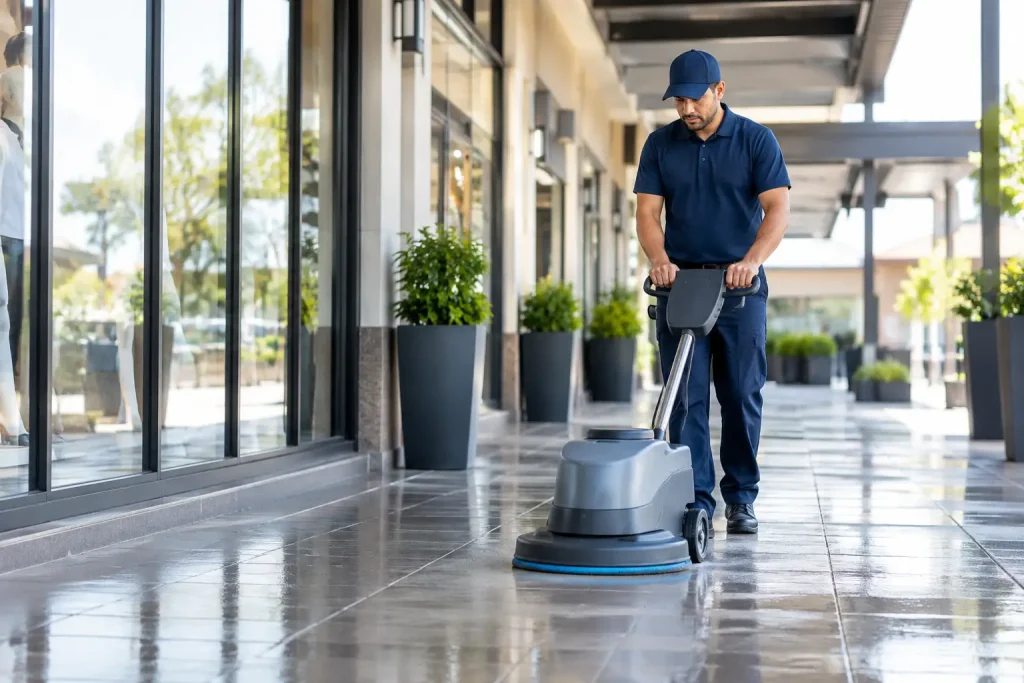
A customer may not comment on a clean walkway, but they notice a dirty one immediately. Gum spots, dark foot traffic, drink spills, oil residue, and algae can make an otherwise well-managed shopping center feel neglected. Professional retail walkway cleaning restores the first few steps customers take toward your business while helping property managers address safety, appearance, and surface wear before they become larger expenses.
For retail centers, storefronts, and mixed-use properties, the walkway is not a background detail. It is a high-contact part of the customer experience. It also collects more than ordinary dust. Food grease from nearby restaurants, tracked-in tire residue, pet stains, landscaping debris, and runoff can settle into concrete, pavers, tile, and decorative hardscape. Coastal moisture and shaded areas can add algae and mildew to the problem.
Why Retail Walkways Need More Than a Quick Rinse
A hose or occasional spot treatment may improve the surface for a day, but it rarely removes the buildup embedded in pores and joints. Concrete is especially prone to holding dark grime, while pavers can collect debris and organic growth along their edges. When these contaminants remain in place, the walkway can become slippery when wet and harder to restore over time.
There is also a difference between cleaning for appearance and cleaning for the condition of the surface. High pressure used carelessly can scar concrete, dislodge joint material, damage decorative coatings, or force dirty water into landscaping and storm drains. The right approach depends on the material, the stain, pedestrian traffic, nearby businesses, and where wash water will go.
That is why a professional assessment matters. A heavily soiled restaurant-front sidewalk needs a different plan than a lightly stained paver plaza outside a boutique. The goal is not simply to make every surface look brighter. It is to remove the contaminants safely, preserve the material, and leave the area ready for customers.
What a Professional Retail Walkway Cleaning Service Should Address
Retail properties tend to develop predictable trouble spots. Entry paths and curb ramps receive constant foot traffic. Outdoor dining areas can accumulate grease. Trash enclosures and service corridors often have spills that travel toward public walkways. Planters create damp, shaded edges where algae grows faster. A proper cleaning plan looks at all of these areas rather than treating the visible center of the sidewalk alone.
Grease, Gum, and Food Spills
Grease is one of the most common sources of dark, slippery staining around restaurants, cafes, and grocery tenants. It needs appropriate treatment before washing, especially when it has been repeatedly tracked across concrete. Gum removal also requires targeted work. Simply blasting it can spread residue or leave a noticeable shadow on the pavement.
Experienced technicians match detergents, heat when appropriate, pressure, and rinsing methods to the stain and surface. This produces a more consistent result than trying to remove every problem with maximum pressure.
Algae, Mildew, and Organic Growth
In shaded walkways, near irrigation, or along coastal properties, algae and mildew can return quickly. These growths affect curb appeal, but they also create a traction concern when moisture is present. Cleaning should include treatment that addresses the organic buildup, not just a surface rinse that leaves the source behind.
Recurring growth does not always mean the cleaning failed. It can point to overspray from irrigation, poor drainage, dense landscaping, or a walkway that receives little sun. In those cases, adjusting maintenance frequency and addressing the surrounding condition can keep the surface cleaner longer.
Tire Marks and General Traffic Film
Walkways near parking areas often collect tire marks, exhaust film, dirt, and residue transferred from carts and shoes. The result is a gray or black traffic pattern that makes light-colored concrete look permanently worn. Targeted pre-treatment and even cleaning passes can restore a more uniform appearance without making the surface look patchy.
Water Recovery Is Part of Responsible Walkway Cleaning
Dirty wash water does not disappear when it reaches a storm drain. It can carry oil, cleaning agents, food waste, sediment, and other contaminants toward local waterways. For commercial properties, runoff handling is an operational responsibility, not an afterthought.
Channel Islands Pressure Washing uses a closed-loop water recovery approach designed to capture runoff during applicable cleaning work. This helps keep contaminated water out of drains while reducing unnecessary water use. It is especially valuable around retail centers where walkways connect directly to parking lots, curb lines, and drainage inlets.
Water recovery also supports a cleaner job site. Instead of pushing dirty water from one section of the property to another, the crew can manage it at the source. For property managers and owners, that means a cleaning plan that respects both the property and the surrounding community.
Choosing the Right Schedule for Retail Walkway Cleaning
There is no single schedule that fits every retail property. A busy dining corridor may benefit from monthly or quarterly service, while a professional office storefront with limited public traffic may need seasonal cleaning. The right interval depends on tenant mix, foot traffic, shade, irrigation, weather, and the condition standards expected at the property.
Frequent light maintenance can be more cost-effective than waiting for stains to become deeply embedded. It also helps managers avoid scheduling an emergency cleaning before an inspection, grand opening, tenant event, or holiday shopping period. Maintain it, don’t replace it. Regular care can extend the useful life of concrete, pavers, and exterior finishes that would otherwise need premature repair or replacement.
A practical maintenance plan often combines full walkway cleaning with attention to adjacent curbs, entry pads, dumpster areas, parking-space edges, and building exteriors. When these connected surfaces are cleaned together, the property looks consistently cared for instead of freshly cleaned in only one narrow strip.
How to Prepare a Retail Property for Service
Good preparation protects tenants, customers, and the cleaning crew. The work should be scheduled for lower-traffic hours whenever possible, particularly at active storefronts. Managers should identify delivery windows, accessible water connections, sensitive landscaping, drainage points, outdoor furniture, and areas where customers may need an alternate path.
Clear communication with tenants makes a noticeable difference. A short notice allows businesses to move signs, merchandise, or outdoor seating before service begins. It also prevents surprises when certain sections need to be temporarily closed for cleaning and drying.
Professional crews should use visible safety controls, manage hoses carefully, and keep work areas orderly. A clean walkway is the goal, but so is a service visit that respects business operations from arrival through final inspection.
A Straightforward Way to Get Better Results
The process should be simple. First, schedule a site assessment so the contractor can identify the surfaces, staining, traffic patterns, and runoff considerations. Next, review a clear, no-obligation estimate that explains the recommended scope and any ongoing maintenance options. Finally, schedule the work around your property’s needs and inspect the results once cleaning is complete.
Do not judge a walkway cleaning provider by equipment alone. Ask how they handle water recovery, how they protect delicate surfaces, whether they treat stains before washing, and how they manage active pedestrian areas. Those details separate a quick wash from maintenance that genuinely protects the property.
A clean retail walkway gives customers a safer, more welcoming path to the door. When it is maintained consistently and cleaned with responsible runoff practices, it also shows tenants and visitors that the property is being cared for in the details that matter.