
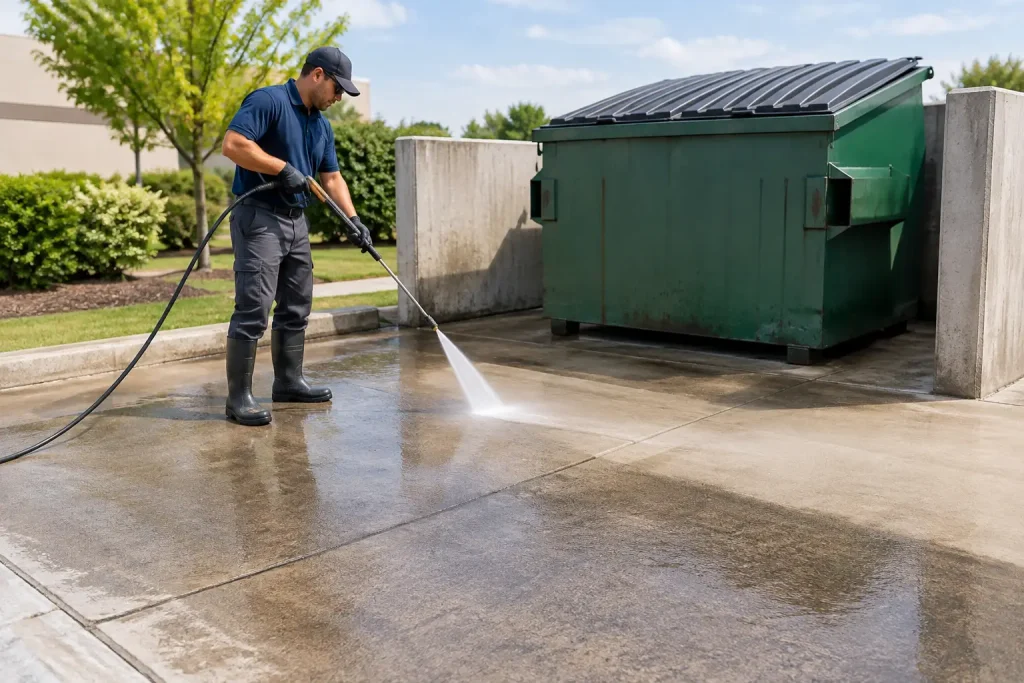
A dumpster pad can make an otherwise well-kept property look neglected in a matter of days. Leaking bags, cooking grease, beverage spills, and windblown debris create stains and odors that pressure washing alone may not solve. Knowing how to clean dumpster pads correctly means treating the grease, protecting the concrete, and keeping contaminated wash water out of nearby storm drains.
For retail centers, restaurants, multifamily properties, and HOAs, this is more than a cosmetic job. A clean enclosure supports tenant satisfaction, reduces slip hazards, discourages pests, and helps maintain a professional appearance behind the building as well as in front of it.
Why Dumpster Pads Need More Than a Quick Rinse
Dumpster areas collect a difficult combination of contaminants. Oils and fats soak into porous concrete. Food residue feeds bacteria and leaves persistent odors. Liquids from trash bags can travel across the pad, under gates, and into cracks around the enclosure. In coastal Southern California, warm conditions can make odor and pest activity worse quickly.
A cold-water rinse may move loose debris, but it can also spread oily wastewater into the parking lot or toward a storm drain. That is the central trade-off in dumpster-pad cleaning: using enough water and pressure to clean the surface without sending contaminated runoff where it does not belong.
Regular maintenance also protects the concrete itself. Grease, acidic liquids, and neglected buildup can discolor a pad permanently and make future cleaning more difficult. Maintain it, don’t replace it. Routine cleaning is usually far less costly than major concrete restoration or replacement.
How to Clean Dumpster Pads Safely and Thoroughly
The best process begins before a pressure washer is started. Schedule service for a time when the dumpster can be moved or when trash pickup will not interfere. Restrict access to the enclosure, place visible wet-surface warnings, and make sure no one parks or walks through the work area.
Start With Dry Cleanup and Inspection
Remove loose trash, cardboard, broken glass, organic debris, and standing items from the pad. Sweep the perimeter, including behind the dumpster and along walls where liquid often collects. This step prevents debris from clogging drains, recovery equipment, or pressure-washer nozzles.
Inspect the area for cracked concrete, damaged drain covers, exposed utility connections, and low spots where wastewater pools. Also identify the nearest storm drain. If there is any path for wash water to leave the service area, plan for containment and recovery before applying cleaner.
Workers should wear appropriate gloves, eye protection, slip-resistant boots, and clothing suited for chemical handling. Dumpster areas can contain sharp objects, unknown liquids, and biological contaminants, so basic protective equipment is not optional.
Treat Grease Before Pressure Washing
Apply a commercial degreaser suited to concrete and the type of buildup present. Heavy restaurant grease may need a stronger product and more dwell time than a residential or office dumpster area. The goal is to loosen oils so they can be lifted from the surface rather than simply pushed around.
Follow product directions closely, especially for dilution and dwell time. Do not let degreaser dry on the concrete, and do not mix cleaning chemicals. Bleach, acids, degreasers, and sanitizers can react dangerously when combined. If odor treatment is needed, use a compatible deodorizing or enzyme-based product after the grease and organic residue have been removed.
Agitate the worst spots with a stiff deck brush or surface-cleaning equipment. Focus on the areas directly beneath the dumpster, around door thresholds, near the enclosure gate, and at the pad edges. These are usually the places where grime becomes embedded.
Use the Right Pressure and Water Temperature
Hot-water pressure washing is often the most effective method for greasy dumpster pads because heat helps break down fats and oils. A professional surface cleaner can produce a more even result than a wand alone and helps limit striping across the concrete.
Pressure must match the condition of the concrete. Sound commercial concrete can tolerate more pressure than aged, cracked, or deteriorating surfaces. Excessive pressure can etch the surface, expose aggregate, damage grout or caulk, and leave visible cleaning lines. When the enclosure includes painted walls, stucco, gates, or adjacent landscaping, those surfaces need separate protection and lower-pressure methods.
Work in controlled sections rather than flooding the whole pad at once. This gives the cleaner time to work and makes wastewater easier to manage.
Capture and Recover the Wastewater
This is the step that separates responsible dumpster-pad cleaning from simply moving pollution out of sight. Wash water from a greasy trash area can contain oils, food waste, bacteria, chemicals, and sediment. It should not be allowed to enter a storm drain or flow into landscaping.
Use berms, drain covers, vacuum recovery equipment, or a closed-loop recovery system to contain water on the pad and collect it for proper disposal. The exact requirements can depend on the property and local regulations, but the practical standard is clear: plan where the water will go before washing begins.
A recovered-water approach also makes sense for properties near curbs, catch basins, waterways, or busy parking areas. It protects the site, helps reduce unnecessary water use, and shows residents, tenants, and customers that property maintenance is being handled carefully.
Rinse, Detail, and Inspect the Surrounding Area
Once the main pad is clean, detail the wall bases, gate tracks, bollards, dumpster wheels, and the concrete just outside the enclosure. A clean square in the middle of a dirty perimeter still leaves the area looking unfinished.
Use only the water needed for a final rinse, while continuing to recover runoff. Then inspect the area for remaining oil shadows, odor sources, splatter on walls, or debris pushed into corners. A final walkthrough should include checking nearby drains and making sure the surrounding pavement is dry and safe for traffic.
Common Mistakes That Make Dumpster Pads Worse
The most common mistake is rinsing first and asking questions later. Water can carry grease farther into concrete pores, across parking lots, and toward storm drains. Skipping degreaser or using too little dwell time usually leaves a thin film behind that attracts new dirt quickly.
Another problem is using maximum pressure everywhere. More pressure is not always better. It may remove surface grime while roughening the concrete, creating a texture that holds dirt and grease even more easily afterward.
Odor is often mishandled, too. Fragrance products can cover a smell briefly, but they do not remove the food residue, grease, or bacteria causing it. Clean first, then use an appropriate odor-control treatment if necessary.
Finally, avoid treating dumpster-pad service as a once-a-year emergency. When buildup becomes thick, cleaning takes longer, odors intensify, and stains are more likely to become permanent.
Set a Cleaning Schedule That Fits Your Property
The right frequency depends on what goes into the dumpster and how much traffic the property receives. A restaurant, grocery-adjacent retail center, or large multifamily community may need monthly or even more frequent service. A low-traffic office building or small HOA may be well served by quarterly cleaning, with spot treatment after spills.
Watch for warning signs between scheduled visits: greasy footprints leaving the enclosure, flies or rodents, black residue around the dumpster wheels, strong odors, visible runoff trails, and slippery areas after warm weather. These are maintenance signals, not issues to wait on.
Property managers can also reduce cleanup needs by keeping lids functional, requiring bags to be tied, repairing damaged enclosure gates, and making sure the dumpster is sized appropriately for the property. Overflowing containers create messes that no cleaning schedule can fully prevent.
When Professional Dumpster-Pad Cleaning Is the Better Choice
A small, lightly soiled pad may be manageable for an experienced maintenance team with the right equipment and an approved wastewater plan. But professional service is the safer choice when there is heavy grease, recurring odor, multiple dumpsters, nearby storm drains, tenant traffic, or a need for water recovery.
Channel Islands Pressure Washing uses commercial cleaning methods and closed-loop water recovery to help property owners clean hard-working areas without sending contaminated runoff into waterways. The work starts with a site assessment, followed by a clear estimate and service scheduled around your property’s needs.
A dumpster pad will never be the showpiece of a property, but it should never be the reason someone questions how the property is managed. Keep it clean, keep runoff controlled, and address buildup while it is still a maintenance task instead of an expensive repair.