
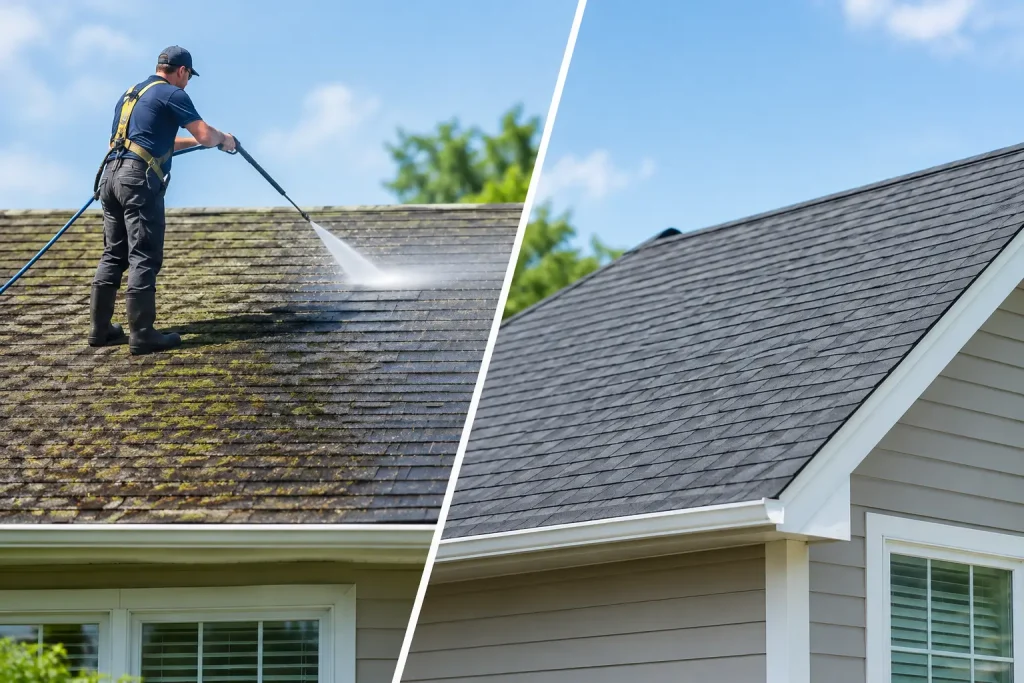
A dark, streaked roof can make an otherwise well-kept property look neglected. It can also trigger an expensive question: is this roof simply dirty, or is it time to replace it? In the roof washing vs replacement decision, appearance matters, but the condition of the roofing materials matters much more. A professional assessment can separate surface growth and buildup from genuine deterioration, helping you avoid replacing a roof that still has useful life left.
For many homes, HOAs, and commercial properties, careful roof soft washing is the practical first step. It removes algae, mildew, moss, dust, and airborne grime without the force that can damage shingles, tile, or other delicate materials. But cleaning is maintenance, not a cure for leaks, failing underlayment, or worn-out roofing. The right choice depends on what is happening beneath the stains.
Roof Washing vs Replacement: Start With the Roof’s Condition
Roof stains are common throughout Southern California, especially in coastal and shaded areas where moisture, salt air, tree debris, and airborne contaminants settle on the surface. Black streaks are often algae. Green patches may be moss, lichen, or mildew. These issues can make a roof look older than it is.
If the roofing material is still intact, a low-pressure cleaning can restore a much cleaner, more cared-for appearance. It can also remove organic material that holds moisture against the roof surface. That is particularly valuable for tile roofs, where debris can collect in valleys and along edges, restricting drainage and allowing moisture to linger where it does not belong.
Replacement becomes the more sensible option when the roof has reached the end of its functional life or has structural damage. Cleaning cannot repair cracked tiles, brittle shingles, missing sections, damaged flashing, sagging roof decking, or an underlayment that is no longer protecting the property. A clean roof with an active leak is still a failing roof.
A site assessment should consider the roof’s age, material, visible condition, drainage, and history of leaks or repairs. This is why a quote should never be based on a quick guess from the street. The method needs to fit the surface, and the recommendation needs to fit the actual problem.
When Roof Washing Is the Better Investment
Roof washing is usually worth considering when stains, organic growth, or accumulated debris are the main concerns and the roof remains structurally sound. The goal is not to make an aging roof look brand new. The goal is to remove damaging buildup, improve curb appeal, and maintain the materials that are still doing their job.
A professional soft wash uses low pressure and surface-appropriate cleaning solutions rather than aggressive blasting. High pressure can strip granules from asphalt shingles, crack older tile, force water beneath roofing materials, and damage seals around penetrations. A roof is not a driveway. It requires a controlled process and technicians who understand where pressure does and does not belong.
Cleaning can be especially useful in these situations:
- Dark algae streaks or discoloration are visible, but shingles or tiles are intact.
- Leaves, needles, dirt, and moss have gathered in roof valleys or around drainage paths.
- The property is being prepared for sale, a tenant turnover, an HOA inspection, or exterior painting.
- The roof has been inspected and no active leak, widespread breakage, or failing underlayment has been identified.
For a commercial building or HOA community, roof washing can also support a consistent property standard across visible structures. Clean roofs complement washed stucco, refreshed walkways, clear gutters, and maintained common areas. That level of care affects how residents, tenants, customers, and visitors perceive the property.
Signs Cleaning Will Not Be Enough
A roof can look dirty and still be healthy. The reverse is also true: a roof can look fairly clean while hiding costly problems. Replacement or significant roofing repair should be discussed with a qualified roofer when you see recurring leaks, damaged or missing materials, soft spots, interior water stains, or repeated failures around flashing and vents.
Age is another major factor. Every roofing material has an expected service range, but installation quality, sun exposure, ventilation, storms, and maintenance all affect how long it lasts. An older roof may still benefit from a gentle cleaning if it is stable and the roofer approves it. However, spending heavily to improve the appearance of a roof that needs replacement within a short period may not be the best use of your budget.
Pay attention to shingle condition. Curling, cracking, bald areas where granules are gone, or widespread looseness point to material wear rather than surface dirt. On tile roofs, broken, slipped, or missing tiles may be repairable, but they should be addressed before or alongside cleaning. On flat or low-slope roofs, ponding water, seam failures, and membrane damage call for roofing expertise, not exterior cleaning alone.
Moss deserves particular caution. Small surface growth can often be treated carefully. Heavy moss that has worked beneath shingles or tiles may reveal existing vulnerabilities when it is removed. That does not mean it should be left in place. It means the removal process should be measured, and the roof should be inspected for repairs afterward.
Cost Is More Than the Initial Price
Replacement is one of the largest exterior investments a property owner can make. When a roof is sound but stained, maintenance can delay that expense while improving the building’s appearance. This is the practical meaning behind the maintenance-first approach: maintain it, don’t replace it.
Still, choosing washing solely because it costs less can backfire if the roof is already failing. Cleaning an active problem does not stop water intrusion. Delaying necessary repairs can lead to damaged insulation, drywall, framing, electrical components, inventory, or tenant spaces. The lower upfront price is not a savings if it allows a larger issue to spread.
The best comparison is not simply cleaning cost versus replacement cost. Consider the roof’s remaining lifespan, the likely repair needs, curb-appeal goals, safety concerns, and the impact of postponing work. For a property listed for sale, a carefully cleaned roof may improve presentation without the need for premature replacement. For a building with documented leaks and end-of-life materials, replacement may protect the budget over the long term.
Protect Landscaping, Waterways, and the Roof Itself
A responsible roof-washing plan accounts for more than the roof. Runoff, surrounding landscaping, gutters, downspouts, solar panels, windows, and exterior walls all need attention. Cleaning solutions and debris should be managed carefully, particularly near storm drains and landscaped areas.
Channel Islands Pressure Washing uses surface-specific soft-wash methods and water-recovery practices designed to reduce unnecessary water use and keep contaminated runoff out of waterways where conditions allow. This is especially relevant for multifamily communities, retail centers, and commercial sites with extensive hardscape and drainage systems. A clean property should not come at the expense of the surrounding environment.
Before work begins, a professional crew should identify sensitive plants, drainage routes, roof access points, and areas needing manual debris removal. Gutters may need clearing first so water can move properly after the roof is cleaned. A final walkthrough gives the property owner or manager a chance to review the visible results and raise any concerns before the job is complete.
How to Make the Right Call
If your roof is stained but otherwise intact, schedule an assessment before assuming replacement is necessary. Ask whether the staining is cosmetic, whether organic growth is retaining moisture, and whether the roof material can safely be soft washed. If leaks, material failure, or underlayment problems are present, consult a roofing professional before authorizing cosmetic cleaning.
For property managers and HOAs, it is often wise to pair roof evaluations with gutter clearing and exterior maintenance planning. Addressing buildup early can prevent a cycle where debris, drainage problems, stains, and neglected surfaces become larger capital expenses.
A roof does not need to look perfect to protect a building well, but it should be clean enough to inspect, drain, and perform as intended. Treat surface buildup promptly, take structural warning signs seriously, and let the condition of the roof – not just its color – guide the decision.